Operations | Monitoring | ITSM | DevOps | Cloud

The latest News and Information on APIs, Mobile, AI, Machine Learning, IoT, Open Source and more!

Troubleshooting a Blockchain App Outage Across Five Failure Layers

A blockchain application can stop working while the chain beneath it continues finalizing blocks. A frozen balance may come from an indexer running behind. A failed transaction may never have reached a remote procedure call (RPC) endpoint; an absent signing prompt points toward the wallet or interface. During an incident, start with scope rather than the most visible symptom. Confirm what still works, then test from the public chain toward the user interface. One broken access path should not be mistaken for a network-wide halt.

5 IT Asset Management Mistakes That Start With Bad Physical Storage

Most IT asset management conversations happen in software. Spreadsheets, ticketing systems, asset tags, audit trails. None of it accounts for the fact that a lot of asset management failures start somewhere much simpler: a spare drive stored badly enough that it's damaged before anyone gets to use it.

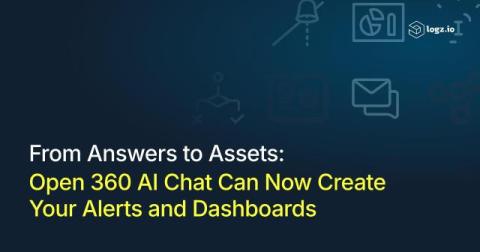
From Answers to Assets: Open 360 AI Chat Can Now Create Your Alerts and Dashboards

Open 360 AI chat can now do more than investigate and explain. With new Logz.io API skills, the agent can create and manage Open 360 and Cloud SIEM objects, such as alerts and dashboards, directly from the conversation. Find an error pattern worth watching? Ask the agent to create the alert. Need a view of a service you just investigated? Ask for the dashboard. The insight and the follow-through now happen in the same place.

Common Mistakes Companies Make When Choosing Email Marketing Software

Every email marketing platform promises roughly the same thing. Better automation. Higher open rates. More conversions. Easier customer communication. Browse a few vendor websites and you'll quickly notice a pattern: every platform claims to be intuitive, powerful, AI-driven, and trusted by thousands of businesses. Feature comparison pages list hundreds of capabilities, pricing tables look straightforward, and customer testimonials make every solution sound like the obvious choice.

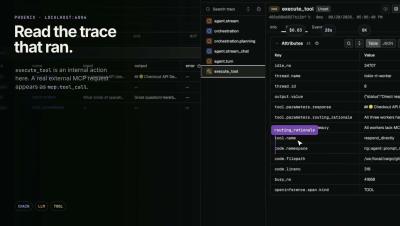
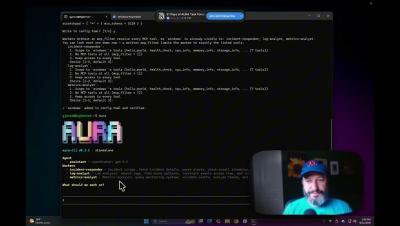
Trace an AI SRE Agent: AURA Docker Quickstart with Phoenix and OTel

You get an answer from the agent and no way to check how it got there. The route it took is recorded, and so is the reason it gave for taking it. AURA emits OpenTelemetry spans, and the Docker quickstart wires them straight into Phoenix. Four services come up together: AURA Web Server as the persistent agent harness, LibreChat as a browser interface for chatting with the agent, Phoenix to receive the spans, and MongoDB to store stateful data for LibreChat. The Compose file arrives pre-configured to point AURA at Phoenix and to enable content recording for the local demo.

Building Quality and Compliance Systems That Hold Up to an FDA Inspection

For any company operating in an FDA-regulated industry, the inspection is the moment of truth. It is when the quality and compliance systems a company has built, or failed to build, are examined by investigators trained to find exactly the gaps a company hopes it does not have. A successful inspection reflects systems that were designed to withstand scrutiny; a difficult one, with findings and follow-up, reflects systems that were not. The difference is rarely luck. It comes down to whether a company has built genuine, robust quality and compliance systems well before an inspector ever arrives.

Why Organisations Emulate Legacy Systems Instead of Rewriting Them

There is a persistent assumption in technology that old systems should be replaced. Legacy is treated as a synonym for obsolete, and the instinctive response to an ageing system is to rewrite it in something modern. Yet across industry after industry, organisations running critical legacy systems repeatedly choose a different path: rather than rewriting, they emulate. Understanding why reveals a great deal about how risk, cost, and continuity actually weigh against the appeal of a clean rewrite, and why emulation is so often the wiser engineering decision.