Operations | Monitoring | ITSM | DevOps | Cloud

Cost per Tenant: A Key Part of the AWS Well-Architected Strategy SaaS Lens

Multi-tenancy is one of the key properties of any effective SaaS solution. It gives companies the economies of scale, elasticity, and operational efficiency to offer competitive products with strong margins. However, multi-tenancy has a tradeoff: cost visibility. Because customers share AWS resources in multi-tenant architecture, the billing data shows the resources you’ve utilized, but not by who or to do what. It’s possible to build this kind of visibility in.

The Evolution of Cloud Cost Optimization - and The Next Strategic Advantage

Every CEO is looking for an edge. Every change in IT — whether we’re talking about the move away from company owned data centers to VMs, or the latest digital transformation we’re seeing today — has always been about gaining a strategic advantage. Companies want to do more at a lower cost, and they want the freedom to pivot quickly without fixed costs.

What Is Profitable Innovation and How Can Your Business Achieve It?

In the context of businesses, the ultimate goal of innovation for technology companies is to drive a profit. This means that even though many software engineering problems can be solved with enough time and budget — just because a business can solve a problem doesn’t mean that they should. Sometimes, even once a team has figured out how to solve an engineering problem, it doesn’t make sense to deploy the solution — because it costs so much to operate.

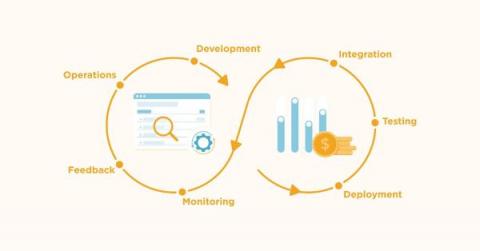
2020 State of DevOps Report: The Newest Metric To Make It Into the DevOps Evolution

Every year, I look forward to the release of the annual State of DevOps report (that’s the kind of exciting life I lead!). The evolution and adoption of DevOps in the past decade has been incredible — and this report always helps show what’s the next big thing that high-performing teams are adopting. The 2020 State of DevOps report was just released a couple weeks ago and as usual, it was filled with all kinds of insights.

4 Ways Cloud Costs Should Influence Your SaaS Pricing and Product Roadmap Strategy

On a day-to-day basis, both engineering and product management in software companies involves constant trade-offs. Everyone has a long backlog of tasks and needs to make decisions about what to prioritize on a daily, weekly, and monthly basis. Figuring out what to tackle first, what to put off for later, and what to say no to is critical both to managing daily workloads as well as to creating product roadmaps that reflect what customers want.

New CloudZero CRO Steve Lewis Shares Why Cloud Cost Management Is Ripe for Disruption

This month, I made the decision to join CloudZero as their new chief revenue officer — a choice I’m incredibly excited about. In the past week, a number of colleagues have asked me to share why I joined the company. After answering the question a few times, I decided to take a minute to collect my thoughts and explain why this incredible company is the next step in my career.

How Our Roots in Observability Set Us up To Calculate Cost per Tenant on AWS

It’s safe to say that cost per tenant (also known as cost per customer) on AWS has been a challenging metric to obtain. Until now, your best bet has usually been to either make a best guess or build some sort of homegrown system. As of November 4, 2020, when you google “cost per tenant,” you get a few things at the top of the page. The first is a couple of blogs by AWS, where they describe an extraordinarily complex system, which you can build yourself.

How 2020 Turned Cloud Unit Economics Upside Down

Do you know how much it costs to operate your software per customer, at each pricing tier? The past six months have been highly unusual to say the least. For some companies, the disruption and shift to work from home meant 100x in usage almost overnight; for others usage completely collapsed in the same time period. These sharp swings in utilization have been disruptive to cloud unit economics. Both scenarios are risky and require extreme elasticity from the technical infrastructure.

Introducing: Automated Cost per Customer for SaaS Companies

If you’re a SaaS business — especially B2B — you know that your profitability can vary significantly from customer to customer. We all have a sense of our “expensive customers,” who use the product heavily and push things to the limit. That also means there are more profitable customers. Who are they? And how do they use the product?

SaaS Leaders: Do You Know Who Your Least Profitable Customers Are? Here Are 4 Reasons You Should

At CloudZero, we talk to leadership teams at SaaS and companies every day. When it comes to individual customer profitability, the vast majority of them fall into two camps: they’re either taking their best guess — or they have no idea. Typically only the largest companies - those with the resources to dedicate a 5-10 person engineering team to calculating cost - have this level of insight. And you can be sure they yield that knowledge to their competitive advantage!