Operations | Monitoring | ITSM | DevOps | Cloud

5G Real-time Analytics: The Last Mile of Automation

5G promises to unlock a broad set of new services across consumer, enterprise, and industrial domains at lower costs and higher velocity. It will accomplish this by adopting cloud-native, fully automated networks with end-to-end traffic engineering. Cloud native functions, DevOps, and slicing enable 5G networks to scale-in/out, support many use cases, and billions of devices, to deliver on the promise. Unfortunately, as network functions, devices, and SLAs explode, the challenge of operational troubleshooting also increases, by orders of magnitude.

Ribbon Connect for Operator Connect

The Fastest Way to Enable Microsoft Operator Connect Operator Connect uses an API-centric integration model to enable service providers (operators) to deliver telecom services to Microsoft Teams customers. Ribbon Connect for Operator Connect takes the complexity out of that integration process, it accelerates time to market and eliminates the need for providers to initiate significant IT programs. Ribbon Connect also provides web portals and automated workflows that make it easier for businesses to get engaged with a provider and deploy telecom services.

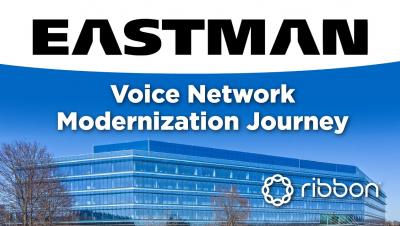
Eastman Discusses Their Voice Network Modernization Journey and Decisions

Founded in 1920, Eastman is a global specialty materials company that produces a broad range of products found in items people use every day. The company's innovation-driven growth model takes advantage of world-class technology platforms, deep customer engagement, and differentiated application development to grow its leading positions in attractive end-markets such as transportation, building and construction, and consumables. As a globally inclusive and diverse company, Eastman employs approximately 14,000 people around the world and serves customers in more than 100 countries.

Voice Network Fraud: How to Fight Back with Automated Threat Prevention

Telecommunications fraud is estimated to be a $39 billion a year problem according to the Communications Fraud Control Association. Despite that, less than 50% of enterprises* have implemented any sort of strategy to address fraud in their voice infrastructure. Firewalls and SBCs are not enough to provide a secure voice network. Enterprises need a more complete approach to network security—one that encompasses the unique vulnerabilities of real-time communications systems—to preempt issues and protect the organization as a whole.