Operations | Monitoring | ITSM | DevOps | Cloud

Graph Observability: Honeycomb and Apollo GraphQL With OpenTelemetry

With David Pickavance, Senior Sales Engineer at Apollo GraphQL Learn how to use Honeycomb, Apollo Studio, and Open Telemetry to optimize GraphQL performance for a federated graph. See how to debug a federated GraphQL query across subgraphs and down to the database layer using Honeycomb.

The State of Observability 2021: Mature Teams Ship Better Code Faster and You Can Too

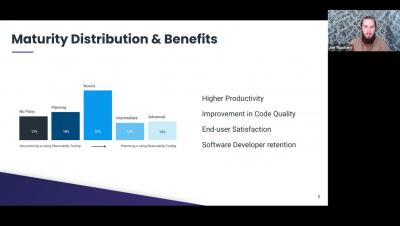
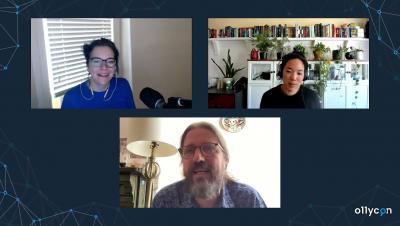
The 2021 Observability Maturity Community Research report is the first year-over-year look at the observability landscape and how practices are evolving. And they are 3X more likely to deliver high customer satisfaction. Which practices make all the difference when it comes to advancing the impact of your observability practice? Honeycomb's VP of Engineering, Emily Nakashima leads a discussion with Redmonk Co-founder James Governor, Honeycomb CTO and Co-founder Charity Majors, and Eaze's Sr. Software Engineer, Joe Thackery.

o11ycon Keynote

presented at o11ycon+hnycon, June 9-10, 2021 Nora Jones, CEO @ Jeli, Charity Majors, CTO & Co-founder@ Honeycomb o11ycon Keynote Nora Jones and Charity Majors will share their experiences leading major movements shaping the future of shipping software. Nora Jones is CEO of Jeli, and former engineer at Netflix and Slack will share her research and experience with Chaos Engineering, human factors, and site reliability. Charity Majors is Honeycomb's CTO and co-founder, who pioneered Observability as a software practice for modern teams.

OpenTelemetry, Not Just for Production Troubleshooting

OpenTelemetry, Not Just for Production Troubleshooting: How to Prevent Downtime as Early as Local Dev OpenTelemetry is a great tool for observability and debugging in production. It provides you with data that empowers understanding of what is slow or broken, as well as what you can do to fix problems that occur in production. But what if you could leverage those same OpenTelemetry capabilities in pre-production? What if you could use those capabilities during development and testing phases to proactively prevent downtime in production?

Conditional Distributed Tracing

Distributed tracing is generally a binary affair—it's off or on. Either a trace is sampled or, according to a flag, it's not. Span placement is also assumed to be an "always-on" system where spans are always added if the trace is active. For general availability and service-level objectives, this is usually good enough. But when we encounter problems, we need more. In this talk, I'll show you how to "turn up the dial" with detailed diagnostic spans and span events that are inserted using dynamic conditions.