Martin opens up about leaving full-time roles for the flexibility of freelancing. He shares how long-term projects, strong networks, and a bit of boredom drove the shift.
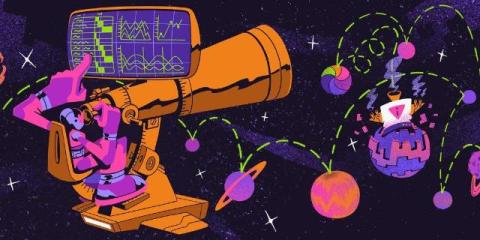
This series of articles discusses the development of a SOTA Open Smart Ring - a tiny wearable packed with electronics that fits on your (even the smallest) finger. We dive deep into what it means to develop such a product, its challenges, and ultimately, how to make it a manufacturable and usable piece.
Maximilian Köhl shares how his frustration with complex update systems led him to build for embedded developers like himself. When devs build tools they need, the whole ecosystem benefits.
Sentry’s auto-instrumentation, using BrowserTracing, is convenient. You can get interesting insights about your frontend application out-of-the-box, such as whether slow and failing API calls are hurting your user experience (summarized in Network Requests), or how your website stacks up against industry standards for performance (summarized in Web Vitals).
Martin explains why he moved to Zephyr after running into deprecated SDKs and the pain of restarting every time he switched MCUs. Zephyr offers consistency when platforms change.
In today's Coredump Session, we explore the wild early days of Pebble and what it takes to scale a hardware startup against industry giants. From scrappy hackathons to 100+ person engineering teams, Kean Wong, former VP of Software at Pebble and now CTO at Eagor, joins Memfault’s François and Chris to unpack how startups can outpace Big Tech by staying nimble, hiring wisely, and embracing constant change.
There's a lot more context to an error than the message blinking in red on your screen. Seer understands the context of your application and everything behind that error. Seer collects information from the Stack Trace, Logs, Traces and Spans, Profiles, and the code from your GitHub repo and uses it to understand what's causing your issues, and propose fixes.
Maximilian Köhl breaks down how RugX uses adaptive data updates to deliver deltas without heavy infrastructure. No static compression or custom pipelines—just smart chunking and HTTP range requests.
Pat Wolfe explains the gap in expertise and tooling for embedded Linux OTA systems. He shares how RugX makes it easier to get robust A/B and delta updates running without deep U-Boot work or complex board configs.