
Operations | Monitoring | ITSM | DevOps | Cloud

Is Your Attack Surface Growing Faster Than Your Security?

In today's digital-first business environment, the race to adopt new technologies often outpaces the strategies to secure them. From cloud services to remote work tools, organizations are rapidly expanding their digital presence. However, with every new tool, platform, or endpoint comes a new potential vulnerability. This expanding "attack surface" can leave businesses exposed, especially if they don't actively monitor and manage it.

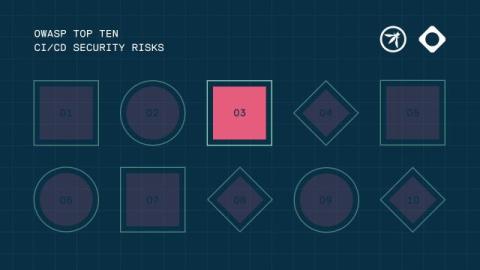
OWASP CI/CD Top 10: Inadequate IAM

In the race to ship software faster, many teams have turned to automation, decentralised tools, and powerful pipelines. But lurking under the surface of these streamlined processes is a growing and often invisible Identity and Access Management (IAM) threat vector. — a core vulnerability in modern CI/CD security.

Vulnerability Remediation: Automate VR Workflows with Puppet

Secure and resilient infrastructure is non-negotiable. Puppet Enterprise Advanced automates critical tasks like patching, configuration management, and compliance, strengthening your security posture and bridging the gap between security and operations. Deploy essential updates quickly, minimizing threats and maximizing efficiency.

Why Puppet Vulnerability Remediation is a Game-Changer for Enterprise Infrastructure Ops

Effective vulnerability management has become a growing priority for organizations. Aided in part by AI, threats and vulnerabilities grow in speed and sophistication while IT environments become more complex. The skill gap for cybersecurity keeps widening (further worsened by a sprawling toolkit), exposing critical systems to exploitation. Managing secure infrastructure manually just isn’t possible at the scale and speed today’s enterprises demand.

Automating vulnerability scanning for Gradle dependencies with CircleCI

Detecting dependency vulnerabilities in a Gradle-based project is crucial because it prevents applications from using libraries (dependencies) with security holes. Imagine an application as a house. Each dependency, or library used in the project, is like building material (such as wood, glass, or bricks). If there’s a flawed or easily penetrable material, the house can become unsafe, such as being more vulnerable to thieves or collapsing during an earthquake.

OWASP CI/CD Top 10: Inadequate Flow Control in CI/CD Pipelines

With the recent shake-up around CVE funding and broader questions about long-term support for cybersecurity infrastructure, one thing is clear: controlling what you can is more important than ever. This is abundantly clear in modern software development practices which rely heavily on CI/CD systems, which in turn serve as the primary conduit from a developer’s local environment to production.

Cloudsmith introduces EPSS Scoring in Enterprise Policy Management (EPM)

Cloudsmith’s Enterprise Policy Management (EPM) now supports the Exploit Prediction Scoring System (EPSS), a data-driven metric designed to estimate the probability of a software vulnerability being exploited in the wild. Using EPM in Cloudsmith, you can now use a package’s EPSS score to inform your package workflows, including those around Package Promotion and Package Quarantine.

Understanding Zero Day Malware: The Invisible Threat

In today's rapidly evolving digital landscape, cybersecurity threats continue to grow in both sophistication and impact. Among these threats, zero day malware stands out as particularly dangerous because it exploits previously unknown vulnerabilities in software or hardware. These vulnerabilities, known as "zero day vulnerabilities," have not yet been patched by vendors, leaving systems completely exposed with no existing defenses. This creates a critical window of opportunity for attackers to compromise systems before security teams can respond.