Operations | Monitoring | ITSM | DevOps | Cloud

Ruby vs Rust: Choosing the Right Language for Your Next Project

Ruby is a high-level, interpreted programming language designed for quick, simple coding and development, and is often used by teams for web backends and APIs, as well as for other projects where features need to be deployed quickly. Ruby powers 6.6% of all websites with a known server-side programming language. Rust is a compiled systems programming language focused on speed and memory safety, chosen for services, infrastructure, and software that require stability and efficiency.

Scaling Infrastructure Teams: The Increasing Need for Rust Engineers

The Infrastructure teams have had to continuously improve current systems to make them faster, safer, and more reliable. With the growth of cloud services, the complexity of applications, and the demand for low-latency processing, engineering teams still need the best tools and languages to build these systems. The traditional languages that have been used for decades to power system-level development, i.e., C, C++, and Java, have long been the standard. But as software system complexity becomes unsustainable, the factors that limit safety, memory management, and concurrency are becoming increasingly obvious.

Top Legacy Application Modernization Companies

Here's the uncomfortable truth: most large enterprises are powered by technology older than their digital ambitions. Banks clear payments on legacy cores. Airlines coordinate fleets on systems built before cloud computing. Healthcare providers rely on infrastructure never designed for today's cybersecurity climate. According to multiple enterprise IT studies, organizations spend the majority of their technology budgets maintaining existing systems rather than building new ones. In some sectors, maintenance absorbs close to 70% of total IT spend.

Top 6 Enterprise Web Development Agencies for Scalable Digital Growth

Enterprise web experiences now drive revenue, retention, and brand reputation. Research firm Monocubed values the global web-development market at $82.4 billion by 2026, yet roughly 67 percent of large enterprise projects fail when teams underestimate scope, according to a Monterail analysis. Even a one-second page-load delay can cut conversions by 4.4 percent, finds a 2023 Portent study.

Backstage Alternatives: IDP Options for Engineering Leaders | Harness Blog

Backstage alternatives fall into three real choices: build and own a framework, buy a fully managed IDP product, or choose a hybrid path that reduces maintenance but keeps Backstage at the core. The trade-off is not "free vs paid" but engineering headcount, governance maturity, time to value, and how actionable your portal is across CI/CD, IaC, and environments. The best commercial IDPs go beyond catalog and documentation.

Top 9 Observability Tools for AI-Assisted Development & Deployment

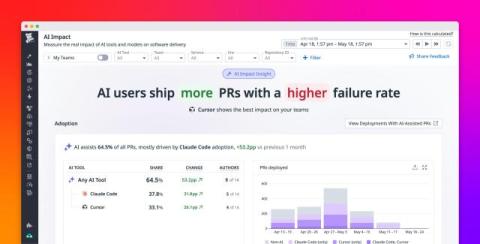
AI-assisted development is rapidly becoming the default way software is built. Code generation, AI copilots, agentic pull requests, and automated refactoring are now embedded directly into engineering workflows. While this shift dramatically increases delivery speed, it also introduces a new operational reality: production systems are changing faster than humans can fully reason about them. This is where observability becomes mission-critical.

How to Plan a Successful UAT: Roles, Timeline, and Readiness Checklist

You're two weeks from launch. Development says they're done. QA signed off. Then you hand the system to actual users and watch everything fall apart. Buttons nobody clicks. Workflows nobody understands. Features that technically work but make zero sense in real life. That's what happens when you skip proper User Acceptance Testing planning. UAT isn't just the final testing phase. It's your last chance to catch the gap between what you built and what users actually need. Miss this step and you're fixing production issues while angry customers flood your support inbox.
Sponsored Post

What Do You Use for AI Agent Infrastructure? The Complete Guide to Building Production-Ready Agent Systems

The question "what do you use for AI agent infrastructure?" has become one of the most searched queries in the DevOps and platform engineering space. And for good reason: the global AI agent market is projected to grow from $5.1 billion in 2024 to $47.1 billion by 2030, representing a compound annual growth rate of nearly 45%. With 85% of enterprises expected to implement AI agents by the end of 2025, getting the infrastructure right has never been more critical.

Top API Auth Mistakes (JWT, OAuth, keys)

APIs are the connective tissue of the modern digital world. They power our mobile apps, enable microservices to communicate, and connect us to third-party data. But this central role also makes them a prime target for attackers. While we build powerful functionalities, it's often the simplest oversights in authentication that leave the front door wide open.