

Operations | Monitoring | ITSM | DevOps | Cloud

Two Vendors or One: Who Carries Responsibility When the Launch Slips

Nobody argues about the date until it moves. Then a question that felt theoretical during procurement becomes the only one anybody asks. Somebody has to carry it, and the candidates are obvious. The design supplier whose files arrived late, the build team whose estimate was optimistic, or you, for the days it took to approve a flow. The honest answer is usually all three, in proportions nobody wrote down. That is the real difference between one vendor and two, and it has little to do with talent.


How we built a software factory that builds itself

Coding agents are changing how engineering teams work. Developers can now delegate substantial implementation tasks, often with several agents working in parallel. But producing more code is only useful if teams can keep up with the work required to get it into production: planning, testing, reviewing, fixing problems, and merging changes. A software factory coordinates this process, automating much of the work between an initial request and a finished change.

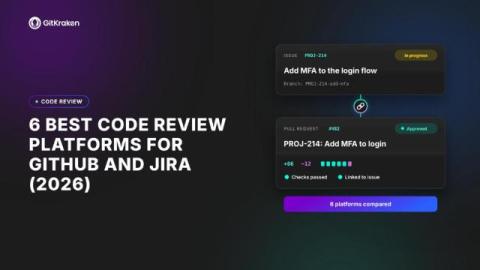
6 Best Code Review Platforms for GitHub and Jira (2026)

Your team runs on GitHub for code and Jira for planning. But when it comes to code review tools, those two worlds rarely talk to each other. Pull requests pile up on one side while issues stall on the other, and reviewers lose time switching between tabs to piece together context. GitKraken gives you a connected code review workflow that bridges GitHub and Jira, so your team spends less time chasing context and more time shipping.

Why AI-Generated code still needs tests

AI has made life easier for us developers. Dozens of AI tools are getting more advanced every day, shortening and speeding up the development cycle. Converting an idea into a concrete MVP is faster than ever before. Intelligent models turn your ideas into a working project with just a few prompts. End users or product owners can see the application, use the beta version, and give feedback on the spot.

3 Best Companies for Custom Warehouse Software Development

Custom warehouse software exists because off-the-shelf doesn't always cut it. Businesses use it for inventory management, daily operations coordination, and better order fulfillment. Standard warehouse management systems (WMS) cover common processes - but specialized workflows, multiple facilities, complex integrations? Companies dealing with those often need a solution built specifically for them.

6 Best Hosts for Running a Node.js App & Your Website on One Plan

Your WordPress site is already live, and you've built a small Node app that runs fine with npm start on your laptop. Maybe it's an Express API behind a booking form, or a little dashboard. Now it needs a home, and you'd rather not pay a second bill, keep a second login and track a second renewal date just for it. You can run both on one plan. Hostinger's Unlimited plan and Hosting.com's entry plan run both halves with no server work on your side, and DigitalOcean's $4 Droplet is the cheapest fixed price if you're willing to run the server yourself.

The Feature Flag Became the Kill Switch for AI Features

Traditional code fails loudly. A null pointer throws, a query times out, a 500 lands in the logs, and the on-call engineer has a stack trace to chase. AI code fails on a different axis. The response is syntactically fine, the latency looks normal, the error rate is flat, and the output is wrong in a way only a human reading it would catch.

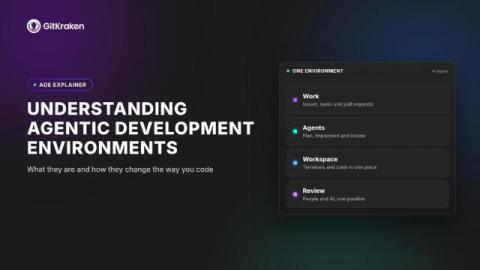
Understanding Agentic Development Environments

AI coding agents are rewriting the rules of software development, but running multiple agents across a real codebase creates a coordination challenge that traditional editors and terminals weren’t built to solve. That’s where agentic development environments come in. An agentic development environment (ADE) gives you a dedicated surface for launching, orchestrating, and reviewing the work of several AI coding agents at once.

Free Space APIs: Useful Data for Building Smarter Applications

Space data is no longer limited to government agencies, research institutions, and specialist aerospace companies. Developers can now use APIs to bring satellite imagery, orbital information, astronomy data and other space-related datasets directly into their applications. Free space APIs are particularly useful when testing an idea or building a prototype without committing to expensive infrastructure from the outset. The right option, however, depends heavily on the type of data you actually need.