Operations | Monitoring | ITSM | DevOps | Cloud

Sovereign cloud and open source: Why software freedom matters for digital sovereignty

The sovereign cloud conversation has been dominated by physical location and legal jurisdiction. Both matter. But there's a third leg most discussions skip: the software stack itself. If the platform running a sovereign cloud is proprietary code controlled by a company in another country, its sovereignty has a soft underside.

InvGate Asset Management as an AMDB: CI Dependencies And The Complete Asset Record

Ask an IT administrator what they mean when they say they need a Configuration Management Database (CMDB), and more often than not, they are describing something else entirely: knowing what assets they have, who is responsible for each one, and what breaks if one of them fails. That is the job of the Asset Management Database (AMDB), the lifecycle record built to answer exactly those questions.

Gremlin app for Dynatrace - DEMO!

Dynatrace gives engineering teams deep, real-time visibility into every service they run. That visibility is the foundation of every effective reliability practice, and it's exactly the foundation Gremlin is built to extend. Once you can see how your distributed systems behave today, the next step is knowing how they'll behave under failure tomorrow—and to do it before those failures happen.

AI cost governance: policies to control AI spend

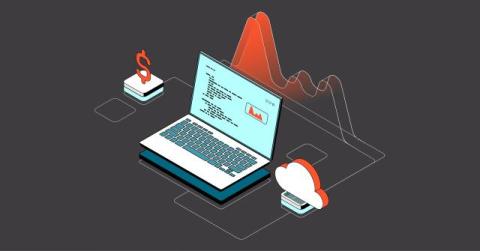
AI cost governance is the set of policies and controls that keep AI spend predictable and attributable: budget caps and token quotas set before deployment, prompt caching to cut repeat token costs, hard limits on reasoning steps and tool calls, and unified allocation so every dollar maps to a team, feature, or customer. Governance fails when it's advisory. It works when the caps are enforced in the platform and someone owns the number.

AI finds vulnerabilities faster than you can fix them

If an AI model can find a vulnerability for an attacker, the same model should help a defender fix it. In practice, the math doesn't favor the defender. This quick video digs into the real asymmetry AI-powered vulnerability discovery creates: The goal is models acting as tools for defenders, not weapons for attackers. Getting there means rethinking how much ground your team can realistically cover on its own.

Vertical SaaS vs Horizontal SaaS: Which Model Works Best for Australian B2B Markets?

For Australian founders building a B2B SaaS product, choosing the right market can be as important as deciding what to build. A horizontal SaaS product serves businesses across different industries, while vertical SaaS focuses on one industry or clearly defined customer group. The difference affects product scope, customer acquisition, competition, and long-term growth. A broad market may offer more potential customers, but a focused market can make it easier to understand customer needs and build a product around a specific workflow.

How to Make DevOps Dashboards and ITSM Content Easier to Read with Typography

Operations teams live inside text. They read alerts, dashboards, logs, runbooks, release notes, escalation messages, postmortems, service catalogs, and knowledge base articles. During normal work, that text helps teams understand systems. During an incident, it can decide how quickly people separate a signal from noise.

How AI Is Turning Job Search Into an End-to-End Digital Workflow

Job searching used to be a loose collection of tasks: a few bookmarked roles, a resume file named "final_FINAL," and a handful of half-finished applications spread across tabs. Now, it's starting to look more like an actual workflow-one with inputs, outputs, checkpoints, and iteration. That shift is partly driven by AI tools that help candidates move from "I should apply" to "application sent" with fewer dropped steps. Platforms like ResumeCoach are part of that wider trend: not just creating documents, but helping people build a repeatable process they can run again and again.

Dataset Bias in Computer Vision: How to Audit Human Image Data

Dataset bias in computer vision cannot be evaluated from one demographic percentage. The distribution available to a model is shaped by where images came from, how subjects entered the collection, which examples were retained, how labels were defined, what visual conditions were represented and how evaluation data was constructed. A useful dataset bias audit therefore examines the complete data pipeline.

ZTNA Security for Cloud Application Access: A Practical Overview

Nowadays, the average enterprise runs hundreds of cloud applications spanning from software-as-a-service platforms, infrastructure hosted in public cloud accounts, to internally built applications deployed on cloud infrastructure. So each of these has a different login flow, a different permission model, and an often completely independent definition of what a secure session looks like.