Operations | Monitoring | ITSM | DevOps | Cloud

How does website monitoring even work?

Every website manager knows that feeling when you look at your inbox only to find a customer notifying you that a core page of your site is down. The worst part of it all, you don’t know how long that page has been down for. If you’ve yet to experience that, count your blessings. Well, unless you decide to opt for a website monitoring solution before it happens to you. With website monitoring, you can ensure every page on your site is up and running at all times.

Lifespan of TLS certificates is getting reduced to 47 days

In a pretty significant shift for internet security and subsequently certificate management, the CA/Browser Forum has officially voted to reduce the maximum validity period of TLS certificates to just 47 days by March 15, 2029. This move aims to enhance digital security and trust across the web. But as these changes approach, it'll become increasingly crucial for organizations to understand their implications and prepare accordingly. Automation will likely become mandatory.

Running our test suite in parallel on GitHub actions

A couple of years ago, Laravel introduced a great feature which allows to run PHPUnit / Pest tests in parallel. This results in a big boost in performance. By default, it determines the concurrency level by taking a look at the number of CPU cores your machine has. So, if you're using a modern Mac that has 10 CPU cores, it will run 10 tests at the same time, greatly cutting down on the time your testsuite needs to run completely.

Why your business can't afford to skip website monitoring

Your website is your business’ storefront, sales team, customer service department, and potentially even your primary revenue channel. Just like you’d protect the physical presence of these aspects of your business with a security system, you also need to protect the online aspects too. That means keeping an eye on your website with monitoring.

How Do We Market Our SaaS? Here's What Worked And What Didn't

Oh Dear is the underdog in the website monitoring software space. We’re a small player in a market dominated by big, well-funded competitors. And yet, we’ve built a solid user base and created a profitable SaaS business. But how did we do it? And more importantly, what worked, and what didn’t? This is our honest story about marketing Oh Dear, our lessons learned, and the strategies that helped us grow.

Detecting and Resolving Broken Links Using Website Monitoring Software

Broken links are more than minor annoyances—they can significantly harm your website’s user experience, SEO rankings, and overall credibility. Whether managing a small blog or a complex e-commerce platform, ensuring that your site functions flawlessly is essential to keeping visitors engaged and search engines satisfied. However, identifying and fixing broken links manually can be time-consuming and error-prone. That’s where website monitoring software comes into play.

In & outside business hour notifications

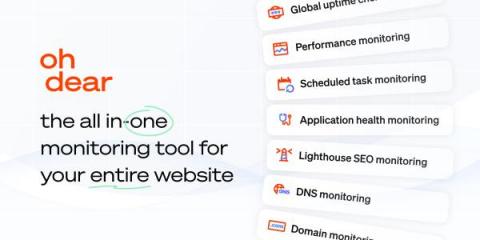
Developers, marketing teams and business owners rely on Oh Dear to monitor their entire website and applications. We offer a feature-packed, all-in-one service with simple pricing - designed specifically for your peace of mind. Oh Dear already has a flexible and powerful notification system and to date has performed over 38 billion checks and sent over 19 million notifications across Email, Slack, MS Teams, PagerDuty, webhook and more.