Operations | Monitoring | ITSM | DevOps | Cloud


The latest News and Information on Continuous Integration and Development, and related technologies.

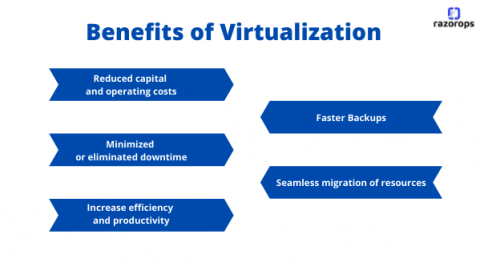
What is Virtualization & Top 5 Benefits of Virtualization
Virtualization uses software to create an abstract layer over the hardware. By doing this it creates a virtual computer system, known as the virtual machines (VMs). This will allow organizations to run multiple virtual computers, operating systems, and applications on a single physical server How Does Virtualization works: Virtual machine (VM) is a virtual representation of a physical computer.Virtual machines can’t interrelate directly with a physical computer, but.

Automating the deployment of LoopBack applications to Heroku
Before automation became commonly used by software development teams, bottlenecks, repetitive tasks, and human error were rampant. Automation has freed up valuable human resources for organizations while reducing the risk of human error caused by active human brains trying to perform mundane repetitive tasks. Recent strides in the area of continuous integration and continuous deployment (CI/CD) have made it more feasible to automatically deploy updates to software applications.

Deploy application environments on demand with the Quali Torque orb
Most developers care about building the next big thing. Automating your build, test, and release processes allows you to maintain focus on innovating and delivering value to your users. By combining the power of best-in-class CI/CD workflow orchestration with managed environments-as-a-service, developers can stay focused on building what’s next.

Test Splitting | Fundamentals, Benefits, & How to Split Tests on CircleCI

The Future is Continuous: Integration, Packaging and Delivery - DevOps Institute SKILup Day CI/CD
CircleCI & Arm Virtual Hardware

Synthetic Monitoring for CI/CD Pipelines
For DevOps teams, delivering quality software has long required reconciling a major tension: In a perfect world, you’d catch every issue in each new release of your application before you deployed the release into production. But in the real world, doing so is tricky, not least because it’s hard to collect data about application performance before the application is actually deployed.

Automating Flask deployments with PythonAnywhere
Now that development teams know about CI/CD, there is no reason for deployments to become a time-consuming and cumbersome process. CI/CD may start with continuous testing, but adding automated deployments takes your CI/CD practice to the next level. Continuous deployment slashes the time it takes to release so you can spend more time improving the quality of your applications.

A Guide To Continuous Integration
Before continuous integration was invented, developers had to work on code separately before merging it into the end product. This technique had a high chance of error. If something was left out, it took time to determine the problem. Furthermore, communication between team members became difficult as the project grew. The larger the project, the more developers, engineers, and project owners were supposed to be faithful to each other’s schedules.