The latest News and Information on Continuous Integration and Development, and related technologies.
AIOps helps DevOps teams in multiple ways, including by boosting developer productivity, improving the customer experience, and increasing the CI/CD cycle frequency.
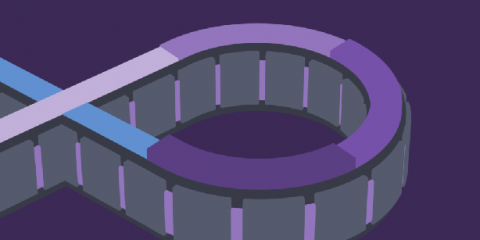
The DevOps infinity loop is a visualization that everyone reading this article is likely familiar with, and one that comfortably predates serverless computing. Yet despite the peculiarities of developing within the serverless paradigm, it’s still what guides our approach to CICD. But while the zoomed-out view might be the same, when it comes to adjusting for serverless, the devil is in the details.
Continuous integration tools like CircleCI let developers automate builds and tests, so that teams can merge changes into their codebase quickly and frequently. In this article, we’ll take a look at how to combine Sentry’s command line interface with CircleCI to automatically create Sentry releases. This will unlock some of our best features, like identifying suspect commits that likely introduced new errors, applying source maps to see the original source code within Sentry, and more.
For some organizations, even the best isn’t quite enough. That’s why JFrog Xray provides a way for you to specify your own additional data, to detect even more sensitive issues in your binaries before they can reach production. JFrog Xray is a tool for DevSecOps teams to gain insight into the open source components used in their applications.
We’re excited to announce the new and improved ConanCenter! Use our new center with an enhanced UI experience to discover your favorite Conan C/C++ packages. If you’re not familiar with Conan yet, it’s a decentralized package manager for C/C++ that empowers developers to share packages through a push-pull model similar to Git. ConanCenter is a central repository for open source Conan packages, created and maintained by JFrog.
Golang developers care a lot about security and as Go modules become more widely used, they need more ways to assure these publicly shared files are safe. One unique feature included with Golang version 1.13 is the foresight that went into authentication and security for Go modules. When a developer creates a new module or a new version of an existing module, a go.sum file included there creates a list of SHA-256 hashes that are unique to that module version.