The latest News and Information on Cloud monitoring, security and related technologies.
If you have worked in any part of the application delivery lifecycle long enough, there’s a very good chance you have directly used or been a consumer of Nagios. For a period of time in the early 2000s, it was the go-to solution for basic server monitoring and alerts. Fast forward 20 years and you might be surprised how many organizations still rely on Nagios for mission critical workloads — although not without a fair amount of duct tape and super glue challenges.
Heroku is a platform for deploying, running, and managing applications, which is written in a variety of programming languages, including Python, Java, C#, JavaScript, PHP, and others. Heroku's goal is to free you up to focus on your applications rather than infrastructure management. Logging is usually included in infrastructure management. Heroku provides a high-level log maintenance tool. In this Heroku logging article, we'll learn how to get the most out of Heroku logs.
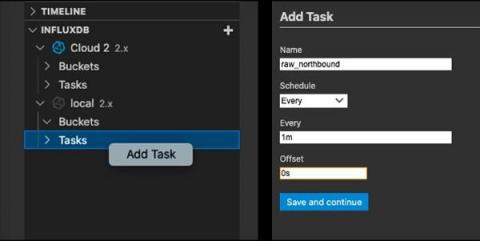
InfluxDB is increasingly being used in IoT solutions to store data from connected devices. Now it can also be used on IoT edge gateways as a data historian to analyze, visualize and eventually transmit aggregated IoT data up to a centralized server. In this article we’re going to look at three simple ways you can connect an instance of InfluxDB on your IoT Edge device to another instance of InfluxDB in the cloud.
“It’s in the cloud!” Whether you’re talking about workplace technology or struggling to explain file-sharing to a technologically-challenged relative, we’ve all been trying to learn the ins and outs of cloud computing over recent years. It’s no easy task, as cloud computing has been changing rapidly – which brings us to the latest evolution: the distributed cloud.
One of the benefits of deploying software on the cloud is allocating a variable amount of resources to your platform as needed. To do this, your platform must be built in a scalable way. The platform must be able to detect when more resources are required and assign them. One method of doing this is the Elastic Load Balancer provided by AWS. Elastic load balancing will distribute traffic in your platform to multiple, healthy targets. It can automatically scale according to changes in your traffic.