Operations | Monitoring | ITSM | DevOps | Cloud

The latest News and Information on Containers, Kubernetes, Docker and related technologies.

From Blueprint to Production: Building a Kubernetes MCP Server

As Large Language Models (LLMs) evolve from simple chatbots into agentic workflows, the need for a standardized way to connect them to external data and infrastructure has become critical. In a recent workshop hosted by Nir Adler, Innovation Engineer at Komodor, we explored how to bridge this gap using the Model Context Protocol (MCP).

#052 - The "Short Long Path": Mastering Abstraction, Culture, and Kubernetes Scale with Shemer M...

In this episode, Itiel joins forces with Shemer, Director of Platform Solutions at the gaming giant Playtika, and Scott Rosenberg, Lead Architect at TeraSky, to discuss the realities of platform engineering at a massive scale. The trio dissects Playtika’s multi-year journey from a legacy, homegrown Kubespray infrastructure to a modern, holistic platform built on Spectro Cloud, all while running strictly on-premise to support 25+ games and high-volume traffic.

Building Trust in the Machine: A Guide to Architecting Agentic AI for SRE

The promise of Artificial Intelligence in Site Reliability Engineering (SRE) is seductive: an autonomous system that never sleeps, instantly detects anomalies, and fixes broken infrastructure while humans focus on high-value work. However, the gap between a demo-ready chatbot and a production-grade Autonomous AI SRE is vast. In complex, noisy environments like Kubernetes, a “naive” implementation of Large Language Models (LLMs) is not just ineffective, it can be dangerous.

The economics of a sovereign cloud

The BCG recently released a report on the cost of cloud. The findings? Hyperscalers are charging up to 30% more for their sovereign-cloud offerings. It supports an earlier notion that if you want control, compliance, and jurisdictional certainty, you have to pay a premium. At Civo, we think that is broken. As data volumes grow and AI workloads become central to business strategy, the economics of cloud computing are being re-examined.

How Civo is building the "cloud the way you want it"

As we move through 2026, the global cloud landscape is being reshaped by the drive for digital independence first discussed at Civo Navigate India 2025. This keynote featuring Mark Boost, Dinesh Majrekar, Josh Mesout, and Ben Norris laid the groundwork for a future where organizations no longer have to choose between the scale of the public cloud and the security of a private environment.

Calico Ingress Gateway: Key FAQs Before Migrating from NGINX Ingress Controller

We recently sat down with representatives from 42 companies to discuss a pivotal moment in Kubernetes networking: the NGINX Ingress retirement. With the March 2026 retirement of the NGINX Ingress Controller fast approaching, platform teams are now facing a hard deadline to modernize their ingress strategy.

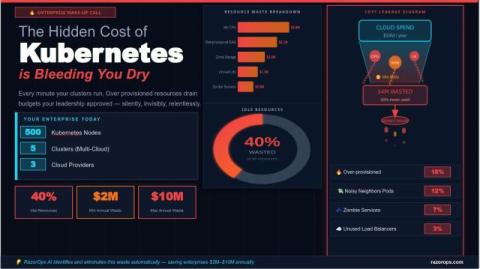
The hidden cost of "just using Kubernetes"

Kubernetes has become the default foundation for a lot of modern application infrastructure. It’s powerful, flexible, and widely supported, which makes it an obvious starting point for many teams building a cloud-native application platform (a standardized way for teams to deploy, run, secure, and operate applications in production). But there’s a distinction that often gets lost early in the decision process: Kubernetes is a framework. It is not a platform.

Komodor AI SRE vs. OSS AI Agent: A Technical Comparison of Agentic AI for Kubernetes Troubleshooting

Gartner predicts that AI agents will be implemented in 60% of all IT operations tools by 2028, up from fewer than 5% at the end of 2024. This acceleration has sparked an explosion of AI SRE solutions, from enterprise platforms to open-source alternatives, all promising faster root cause analysis and reduced MTTR.

How Qovery uses Qovery to speed up its AI project

Discover how Qovery leverages its own platform to accelerate AI development. Learn how an AI specialist deployed a complex stack; including LLMs, QDrant, and KEDA - in just one day without needing deep DevOps or Kubernetes expertise. See how the "dogfooding" approach fuels innovation for our DevOps Copilot.