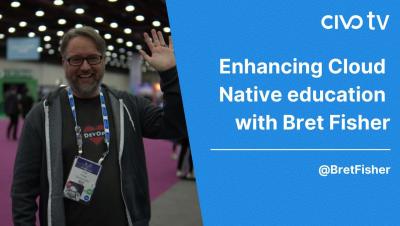
Enhancing Cloud Native Education with Bret Fisher - Civo TV
At KubeCon + CNC NA 2022, @Kunal Kushwaha spoke with @Bret Fisher Docker and DevOps about education in the Cloud Native space. Discover more from Bret.


The latest News and Information on Containers, Kubernetes, Docker and related technologies.
Kubernetes has come of age with more organizations adopting a microservices architecture at scale. But scale brings a whole slew of new challenges, especially with Kubernetes, which is designed to operate as a single cluster. However, the usage of Kubernetes, especially at leading-edge organizations operating at scale, has crossed the single-cluster threshold.
s3gw is an S3-compatible service, focused on deployments in a Kubernetes environment backed by any PVC, including Longhorn (https://longhorn.io). Since its inception, the primary focus has been on Cloud Native deployments, however, the s3gw can be deployed in a myriad of scenarios, provided there is some form of storage attached.
When working with containers in Kubernetes, it’s important to know what are the resources involved and how they are needed. Some processes will require more CPU or memory than others. Some are critical and should never be starved. Kubernetes defines Limits as the maximum amount of a resource to be used by a container. Requests, on the other hand, are the minimum guaranteed amount of a resource that is reserved for a container.
Monitoring any type of resource can be challenging. But Kubernetes monitoring is a special kind of challenge. Not only are there a variety of different Kubernetes layers and resource types to monitor, but collecting monitoring data from Kubernetes can be difficult if you use a managed Kubernetes service that limits your access to the underlying infrastructure. For all of these reasons, Kubernetes monitoring requires a different approach.
Content Learning how to monitor the Kubernetes API server is crucial when running cloud-native applications in Kubernetes environments. The Kubernetes API server can be considered as the front end of the Kubernetes control plane. Any interaction or request from users or internal Kubernetes components with the control plane go through this component. Ensuring you monitor the Kubernetes API server properly is of vital importance to ensure your Kubernetes cluster works as expected.