Operations | Monitoring | ITSM | DevOps | Cloud

The latest News and Information on Containers, Kubernetes, Docker and related technologies.

Kubernetes Master Class: Creating RKE2 Cluster Templates

Rancher 2.6 introduces a new Cluster-API based provisioning mechanism for RKE2 and K3s clusters. This also brings a completely new cluster templating system, which is based on Helm charts and is much more flexible compared to the old RKE1 cluster templates. In this master class, you will learn how the Cluster API works, how you can leverage it in Helm Charts, how to do versioning and how to create a nice UI wizard for them.

What Are the Differences Between Elastic Beanstalk, EKS, ECS, EC2, Lambda, and Fargate?

Life before containerization was a sore spot for developers. The satisfaction of writing code was constantly overshadowed by the frustration of attempting to force code into production. For many, deployments meant hours of reconfiguring libraries and dependencies for each environment. It was a tedious process prone to error, and it led to a lot of rework. Today, developers can deploy code using new technology such as cloud computing, containers, and container orchestration.

Rancher Desktop Now Includes The Rancher Dashboard

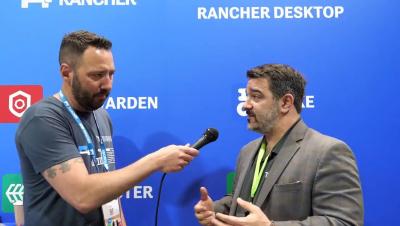
With the 1.2.0 release of Rancher Desktop, there are two new features available as a Feature Preview. Rancher, the multi-cluster Kubernetes manager, includes a dashboard which enables you see and interact with resources in a Kubernetes cluster. Rancher Desktop now includes this dashboard. The dashboard will enable you to view and interact with resources in your local cluster provided by Rancher Desktop.

Don't Forget About Kubernetes Jobs - Shipa Jobs Support

When I was making my first switch from a product engineering team to being field facing software engineer, one of my first projects was an integration project for a federal agency. The very first piece of enterprise software minus my productivity and development suite I was exposed to was BMC’s Control-M about 15 years ago. A lot of batch files to extract and transform data had to be run in order and on a daily basis; Control-M at the time was a job runner.

How to Scale your AWS Infrastructure - Part 2

Welcome to the second post in a series of “How to Scale your AWS Infrastructure”. In the first post, we talked about horizontal scaling, autoscaling, CI/CD, infrastructure automation, containerization, etc. In this post, we will continue the discussion around databases, loose coupling, caching, CDN, etc. Let’s start the discussion with database scaling.

What's new in Sysdig - March 2022

Welcome to another iteration of What’s New in Sysdig in 2022! The “What’s new in Sysdig” blog has fallen to me, Jason Donahue, for the month of March! I am a Solutions Engineer based in New Jersey and a member of the Sysdig US East Enterprise team since September, 2021. I have worn many hats in my career, from Networking to Systems Administration to Software Engineer.

6 Metrics to Watch for on Your Kubernetes Cluster

Kubernetes. Nowadays it seems companies in the industry are divided into two pools: those that already use it heavily for their production workloads and those that are migrating their workloads into it. The issue with Kubernetes is that it is not a single system the way Redis RabbitMQ or PostgreSQL are. It is a combination of several control plane components (for example etcd, api server) that run our workloads on the user (data) plane over a fleet of VMs.

5 takeaways from the CNCF Annual Survey 2021

The CNCF Annual Survey 2021 is in and makes for some very encouraging reading for the future of Kubernetes and its place in the tech landscape. The 2021 survey was the biggest yet, with some 3,829 developers, engineers, architects, and C-level execs in the cloud native space taking part. Here are some of our key takeaways…

How to Scale your AWS Infrastructure - Part 1

When designing a solution, you should keep future needs in mind. If the number of users increases dramatically in a short period of time, the solution should be scalable enough to handle the new growth. Making systems scalable on cloud is relatively easier as compared to scaling on-premises infrastructure. AWS has provided excellent tools/services to enable your applications for as much scalability as you want.