Operations | Monitoring | ITSM | DevOps | Cloud

The latest News and Information on Containers, Kubernetes, Docker and related technologies.

Introducing MinIO Support in Sematext

Sematext Logs is a Log Management-as-a-service. Think of it as your own central location for logs in the cloud. If you prefer or need to keep logs in your own environment instead of shipping it to the cloud Sematext Enterprise, designed to run on your own infrastructure, makes that possible. You can collect logs from any part of your software stack or infrastructure, IoT devices, network hardware, and much more.

Kubernetes GitOps with Rancher Continuous Delivery

As the number of Kubernetes clusters under management increases, application owners and cluster operators need a programmatic way to approach cluster management. Rancher CD solves this by creating a git driven engine for applying cluster changes. Declarative code is stored in a git repo. As changes are committed to the repo, linked clusters are automatically updated. Gitops keeps all your clusters consistent, version controlled, and reduces the administrative burden as you scale.

Sips - "Monolith to Microservices: The Developer Experience - 'It's so Complicated!'"

Coffee and Containers "Sips" are short clips from the regular Coffee and Containers web series. By 2022, IDC predicts that 90% of all new apps will feature a microservices architecture. Some of the drivers behind that are the improved ability to design, debug, update and leverage third-party code, and more. However, transitioning an existing application from a traditional monolith architecture to microservices architecture can be very challenging. How do we get started down the microservices path?

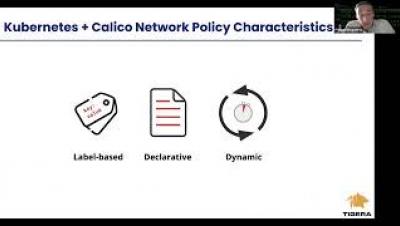
Tapping Native Controls in Kubernetes to Protect Your Cloud-Native Apps

As companies adopt container technologies, they face a significant challenge - how do we secure this new attack surface? It’s an issue that you often see backlogged in favor of solving storage, networking and monitoring issues. Add on the challenge of educating the workforce on one of the fastest-growing open source projects to date, and it’s no wonder security has lagged as the primary focus for teams.

Enabling Secure Kubernetes Multi-Tenancy with Calico Enterprise

When you have different teams interacting with a Kubernetes cluster you need to think about the security, privacy, and observability challenges associated with multi-tenancy: How to provide each team with access to the specific resources they need, in a way that allows the team to be agile, without risking impacting other teams? In this session, we’ll explore the Kubernetes multi tenancy concepts and design patterns needed for successful enablement of multi-tenancy within your Kubernetes clusters using key capabilities of Calico Enterprise.

Kubernetes GitOps with Rancher Continuous Delivery

As the number of Kubernetes clusters under management increases, application owners and cluster operators need a programmatic way to approach cluster management. Rancher CD solves this by creating a git driven engine for applying cluster changes. Declarative code is stored in a git repo. As changes are committed to the repo, linked clusters are automatically updated. Gitops keeps all your clusters consistent, version controlled, and reduces the administrative burden as you scale.

Speed Up Development with Automated Kubernetes Deployments

Are you or your team currently looking for your next-generation architecture? Or perhaps are you already there, but looking for the best way to automate and manage it. In this blog, we’re going to talk about deploying Rancher environments using the power of env0. Rancher is a complete software stack for teams adopting containers.

Sips - "Monolith to Microservices: Scaling - AKA, Blowing things Up!"

Coffee and Containers "Sips" are short clips from the regular Coffee and Containers web series. Often times, teams get really excited once they start to see benefits from a microservices architecture, and they start migrating everything. But scaling brings in an entirely new set of challenges. Gone are the days of simply throwing more load balancers at the problem. What are some additional challenges that teams are going to encounter when they start to scale and what are some strategies that can help them address some of these things?