Operations | Monitoring | ITSM | DevOps | Cloud

The latest News and Information on Containers, Kubernetes, Docker and related technologies.

Running ELK on Kubernetes with ECK - Part 1

More and more employers are looking for people experienced in building and running Kubernetes-based systems, so it’s a great time to start learning how to take advantage of the new technology. Elasticsearch consists of multiple nodes working together, and Kubernetes can automate the process of creating these nodes and taking care of the infrastructure for us, so running ELK on Kubernetes can be a good options in many scenarios.

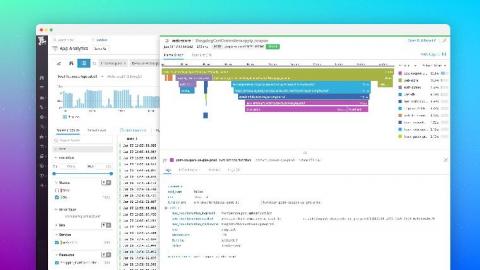
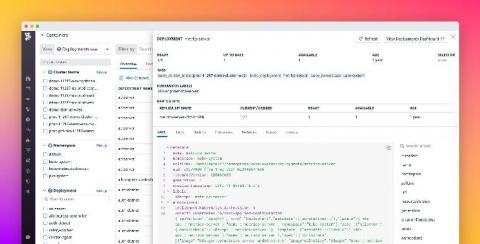
A Crash Course in Kubernetes Monitoring

Kubernetes monitoring can be complex. To do it successfully requires several components to be monitored simultaneously. First, it’s important to understand what those components are, which metrics should be monitored and what tools are available to do so. In this post, we’ll take a close look at everything you need to know to get started with monitoring your Kubernetes-based system.

See and Secure containers on AWS Fargate

Tune into our #LinkedInLive event on December 9 from 11:30am-12pm PST and join Sysdig and Amazon Web Services (AWS) experts, Pawan Shankar and Eric Carter, to learn how to scan #AWS #Fargate containers in under 4 minutes with Sysdig Secure. Join this live discussion to learn how Sysdig Secure closes the visibility and security gap by providing the first automated #Fargate inline scanning.

Preventing malicious use of Weave Scope

Intezer and Microsoft reported on Sept. 9 that TeamTNT hackers are deploying Weave Scope in compromised systems as an auxiliary tool in their intrusions. Weave Scope is a legitimate and powerful tool to manage server infrastructure that, once deployed, makes it easy to control all resources. In this article, we will describe how this tool can be used maliciously, and how to add specific checks in your security set up to look for it.

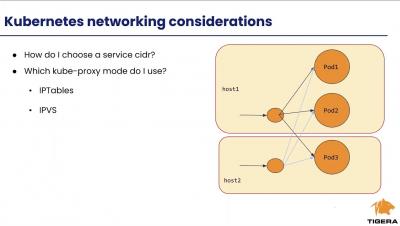
Getting Up and Running with Calico for Windows

Calico is the only cross-platform CNI and networking and network security policy engine available today. It currently powers more than 150,000 known clusters across millions of nodes worldwide. Calico is also unique in supporting multiple dataplanes: Standard Linux, eBPF, and Windows HNS. Many organizations have .NET and Windows workloads that they have or eventually will modernize and deploy to Kubernetes. However, this may be uncharted territory for teams that are using Windows. This session is intended to inform and ease your adoption of Kubernetes on the Windows platform.

Get Up and Running with NVIDIA GPUs in Rancher Kubernetes Clusters

With massive adoption of Kubernetes at enterprises worldwide, we are seeing Kubernetes going to new extremes. On the one hand, Kubernetes is being adopted for workloads at the edge and delivering value beyond the data center. On the other hand, Kubernetes is being used to drive Machine Learning (ML) and high-quality, high-speed data analysis capabilities.

Introducing KubeQuest: The fastest way to learn the basics of Kubernetes on Civo

I joined Civo just over a year ago (straight out of a web development bootcamp) and had to quickly become familiar with concepts of Kubernetes and modern cloud-native software development as we prepared to launch our #KUBE100 beta. So, I, along with the rest of the team, thought about how we could help new users learn the basics of Kubernetes in a simple, practical, and fun way. This is how KubeQuest was born.

Kubernetes Master Class - Service Mesh with Istio in Rancher 2.5

The release of Rancher 2.5 introduced some significant changes to the Istio Service Mesh integration. In addition to those changes, the Istio project has also undergone some significant redesign in recent versions. Staying current in this fast moving space can be a challenge. Fear not! In this Master Class, Rancher Field Engineer Jason Skrzypek will summarize the notable changes, discuss the rationale behind some of them, and demonstrate the possibilities that this new implementation unlocks.

Sips - "Monolith to Microservices: What advice can we give for getting started?"

Coffee and Containers "Sips" are short clips from the regular Coffee and Containers web series. By 2022, IDC predicts that 90% of all new apps will feature a microservices architecture. Some of the drivers behind that are the improved ability to design, debug, update and leverage third-party code, and more. However, transitioning an existing application from a traditional monolith architecture to microservices architecture can be very challenging. How do we get started down the microservices path?