Operations | Monitoring | ITSM | DevOps | Cloud

The latest News and Information on Containers, Kubernetes, Docker and related technologies.

Getting started with Minikube: a Minikube tutorial

Minikube is a utility you can use to run Kubernetes (k8s) on your local machine. It creates a single node cluster contained in a virtual machine (VM). This cluster lets you demo Kubernetes operations without requiring the time and resource-consuming installation of full-blown K8s. A screenshot of the Minikube interface. 💯 emoji use. This flexibility enables you to try out Kubernetes deployments, perform development tasks, or test configurations easily.

Steer OCI to Kubernetes with Artifactory and Helm 3

With the latest release of JFrog Artifactory, your Kubernetes world just got a lot bigger. Artifactory’s Docker registries are now compliant with the Open Container Initiative (OCI). Repository support for images compatible with OCI and support for the Helm 3 client mean you can run K8s with a high degree of versatility. Once you’re no longer locked exclusively into Docker, you can run either part of your container ecosystem or all of it using any OCI-compatible client.

Container security on IBM Cloud

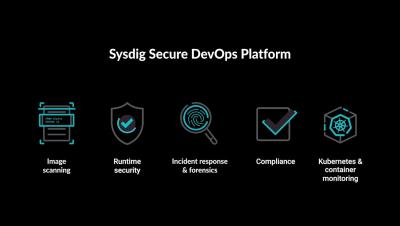
If you’re running containers and Kubernetes on IBM Cloud, you can now enable the key security workflows of Sysdig Secure as a service within your IBM Cloud deployments. This makes it easier for you to implement security tools and policies to ensure your containers and your Kubernetes environment are protected and running as intended. The new container and Kubernetes security features are integrated into IBM Cloud Monitoring with Sysdig and offered as an additional service plan.

Kubernetes network policies with Sysdig

Microservices and Kubernetes have completely changed the way we reason about network security. Luckily, Kubernetes network security policies (KNP) are a native mechanism to address this issue at the correct level of abstraction. Implementing a network policy is challenging, as developers and ops need to work together to define proper rules. However, the best approach is to adopt a zero trust framework for network security using Kubernetes native controls.

How to Monitor Kubernetes Applications

Software companies large and small are embracing microservices as a superior approach to application development and management, compared to the earlier monolithic model. These software teams tend to reach out for containerization as their preferred way of packaging and shipping applications. Containers provide a lightweight encapsulation of any application, whether it is a traditional monolith or a modular microservice.

Troubleshooting Kubernetes Networking with Calico

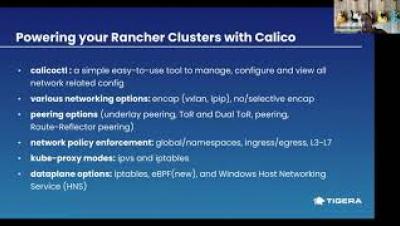
Troubleshooting connectivity problems in distributed networks is difficult enough, but doing it in a Kubernetes environment is even more challenging. However, there are tools in Calico that can ease the burden and speed problem resolution. Join this session that discusses the components that makeup Calico and best practices for troubleshooting connectivity problems in your Kubernetes cluster when things go wrong.