Operations | Monitoring | ITSM | DevOps | Cloud

The latest News and Information on Containers, Kubernetes, Docker and related technologies.

Introducing Fast, Automated Packet Capture for Kubernetes

If you’re an SRE or on a DevOps team working with Kubernetes and containers, you’ve undoubtedly encountered network connectivity issues with your microservices and workloads. Something is broken and you’re under pressure to fix it, quickly. And so you begin the tedious, manual process of identifying the issue using the observability tools at your disposal…namely metrics and logs.

Shipa Integration with CircleCI

Kubernetes can bring a wide collection of advantages to a development organization. Properly leveraging Kubernetes can greatly improve productivity, empower you to better utilize your cloud spend, improve application stability and reliability, and more. On the flip side, if you are not properly leveraging Kubernetes, your would-be benefits become drawbacks. As a developer, this can become especially frustrating when you are focused on delivering quality code, fast.

Filling gaps in Kubernetes observability with the Sensu Kubernetes Events integration

Kubernetes and its various APIs offer a wealth of information for monitoring and observability. In a recent webinar with the CNCF (as well as a whitepaper based on that webinar), Sensu CEO Caleb Hailey goes in-depth into the most-useful APIs for cloud-native observability. In this post, we’ll focus on the Kubernetes Events API — including why it matters and how it can add context for your observability strategy.

Monitor Distributed Microservices with AppDynamics and Rancher

Kubernetes is increasingly becoming a uniform standard for computing – in Edge, in core and in the cloud. At NTS, we recognize this trend and have been systematically building up competencies for this core technology since 2018. As a technically-oriented business, we regularly validate different Kubernetes platforms and we share the view of many analysts (e.g. Forrester or Gartner and Gartner Hype Cycle Reports) that Rancher Labs ranks among the leading players in this sector.

Getting up and running with Calico on your Rancher Kubernetes Cluster

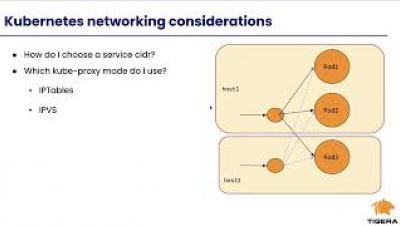
Rancher is a great way to deploy and manage Kubernetes clusters across a broad range of environments, abstracting away many of the differences between the environments, and using Canal for run-anywhere networking. But what if you want to up your networking game to squeeze the most out of your clusters? In this training session you’ll learn about the various networking options available to you in Rancher, and considerations to take into account in order to select the best option for your environment.

Best Practices and Considerations for Multi-Tenant SaaS Application Using AWS EKS

Today, most organizations, large or small, are hosting their SaaS application on the cloud using multi-tenant architecture. There are multiple reasons for this, but the most simple and straightforward reasons are cost and scalability. In a multi-tenant architecture, one instance of a software application is shared by multiple tenants (clients).

Keep Watch on Docker Hub Pulls with JFrog Log Analytics

Have you heard? Docker Hub now limits usage by free anonymous and credentialed accounts. After the number of pulls from an IP address exceeds a fixed threshold within a six hour period (100 for anonymous, 200 for credentialed), Docker Hub throttles bandwidth. You’ll still get your Docker images, but at a much slower speed. You can read our earlier blog post to learn more about the Docker Hub policy changes.

Docker: Secure, but comfortable images.

While developing Docker images for Icinga 2, Icinga Web 2 and Icinga DB we stumbled over OpenShift which doesn’t allow images to run as root by default. One has to enable that explicitly. Also admins of K8s environments being more permissive by default may decide not to allow running as the superuser. So we’ve added a USER directive to our Dockerfiles to make our customers‘ compliance departments happy.

How to monitor coreDNS

The most common problems and outages in a Kubernetes cluster come from coreDNS, so learning how to monitor coreDNS is crucial. Imagine that your frontend application suddenly goes down. After some time investigating, you discover it’s not resolving the backend endpoint because the DNS keeps returning 500 error codes. The sooner you can get to this conclusion, the faster you can recover your application.