Operations | Monitoring | ITSM | DevOps | Cloud

The latest News and Information on DevOps, CI/CD, Automation and related technologies.

10 practices that are changing in software today with Alex Williams

Rob sits down with Alex Williams, founder and editor in chief of The New Stack, to discuss the several changes occurring in software development. Alex shares what he's been hearing on everything from API management to synchronizing supply chain to programmable infrastructure. Tune in today to find out how your team can stay ahead of the complexities of the ever-changing landscape of software.

How to rename an API Connection thru the Azure Portal

Starting building Logic Apps thru the Azure Portal is, without a doubt, the most intuitive and fast approach. It doesn’t require any additional tool or software, it doesn’t require a Visual Studio license, and almost all beginner tutorials or documentation use this approach. And finally, all types of users are familiar with the Azure Portal. But not everything is perfect, and one of the most difficult best practices to implement is a proper API Connection naming convention.

Linux Mint vs Ubuntu: Who will win?

Linux is an open-sourced operating system for computers, smartphones, servers, mainframes, and embedded devices. The main advantage of Linux over other operating systems is that Linux is an open-source operating system, which means that you can view, edit, customize, enhance, and share the code with anyone. The release of Linux garnered a huge community of contributors that created a variety of features and distributions for users at no added cost.

What is embedded Linux? Part I

“Hello everybody out there using minix – I’m doing a (free) operating system (just a hobby, won’t be big and professional like gnu) for 386(486) AT clones. The above is an excerpt from Linus Torvalds’ original announcement of what came to be known worldwide as the Linux operating system (OS), dated August 1991. In hindsight, it is inconceivably modest now that we are in a much better position to appreciate the full revolutionary extent of his post.

Kubernetes 1.23 rc testing with MicroK8s

Today, Kubernetes 1.23 release candidate was made available upstream for testing and experimentation. General availability is planned for December 7th, so now is the time to report back any issues or bugs. Developers, DevOps and open source software enthusiasts can try out the latest features using MicroK8s. MicroK8s is a lightweight, CNCF-certified Kubernetes distribution with a streamlined UX.

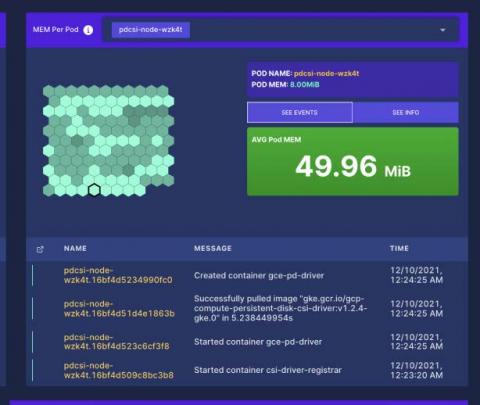
VirtualMetric's Heatmaps

Within just a couple of seconds, you can see your entire server infrastructure’s status in a visual format in VirtualMetric's Heatmaps. All hardware and performance-related issues will be highlighted in the form of visual cues in neatly organized heat maps. The information is also updated in real-time, thus allowing you to catch errors before they pass the threshold. 👉 Flexible and scalable option VirtualMetric, being cloud-based, can quickly adapt to changing server requirements and infrastructure setups.

ARM vs Intel: What Are They? What is the Difference Between Them?

Most computing devices today are likely to have an Intel processor, or an ARM (Advanced RISC Machine) processor, such as the CPU in your smartphone or tablet. Both chip architectures are optimised for low-power operation in order to provide mobile devices with the long battery life they require. However, they reflect different mindsets from a technical standpoint.

Announcing support for Graviton2-powered AWS Fargate deployments

AWS Fargate is a serverless compute engine that allows you to deploy containerized applications on services like Amazon ECS without needing to provision or manage compute resources. Now, Datadog is proud to be a launch partner with Amazon for their support of AWS Fargate workloads running on Graviton2, Amazon’s proprietary ARM64 processor.