The latest News and Information on DevOps, CI/CD, Automation and related technologies.
Recent headlines surrounding big-name IPOs, such as that of Slack and Lyft, have highlighted the very real costs of operating in the cloud. Companies like these are on the hook to pay AWS and other public cloud vendors tens or hundreds of millions of dollars every year, just to run their services.
Cloudsmith establishes a new era as it introduces the Ultra Velocity Team pricing plans, alongside a new Service-Level Agreement (SLA). Find out more here.
The reliance on digital transformation and data is ever increasing for businesses to be successful in the current environment. The agility at which the business can respond to real-life situations is proportional to the level of digitization that has been implemented in the business. For a business to nimble and agile, it is imperative that all the processes be delivered as a digital service that can be provisioned, monitored and remediated as by an automation logic at the core of the business.
Serverless has the potential to bring massive ops advantages to projects of all sizes, but while it presents great business benefits, we need to spare a thought for how teams develop on serverless. I recently published ‘Serverless Development is Broken’ a list of concerns about how developers can work with long deploy times inherent in a cloud-only code environment.
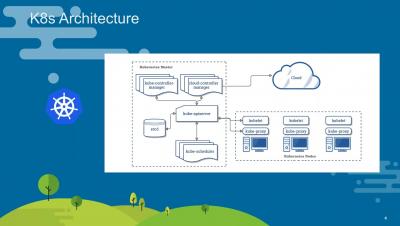
Kubernetes (K8s) is a prevalent open-source system for automating the deployment, scaling, and management of containerized applications. However, maintaining the service can be difficult and expensive. For that reason, it is easy to find platforms offering Kubernetes as a managed service. In this article, we will analyze three of the most popular services currently available: Google Kubernetes Engine, Azure Kubernetes Service, and Amazon Elastic Container Service for Kubernetes.
When it comes to cloud strategy, companies rank “cutting costs” as their top priority for 2019, according to a recent Datamation survey. That’s not to say that they plan to cut back on cloud spending in general; in fact, those budgets are very much expected to grow. Rather, companies are looking for ways to reduce unnecessary costs and optimize cloud spend.
Many people writing about AWS Lambda view Node as the code-default. I’ve been guilty of this in my own articles, but it’s important to remember that Python is a ‘first-class citizen’ within AWS and is a great option for writing readable Lambda code. Take a look at these two starter examples of writing functionality in Python.