Operations | Monitoring | ITSM | DevOps | Cloud

The latest News and Information on DevOps, CI/CD, Automation and related technologies.

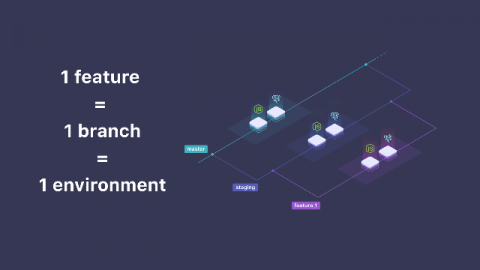
3 ways of cloning an application and a database per git branch

Back in the early days of software development, having multiple developers working on the same application was a tough challenge. That’s why VCS (Version Control System) like Git was created and methodology like Feature Branching was introduced. The basic idea of working per git branch (also known as Feature Branching) is that when you start to work on a feature, you take a branch of your repository (e.g: git) to work on that feature.

A Guide to Structuring Full-Service Ownership Teams

IT industry research has repeatedly shown that DevOps-oriented teams that can ship software quickly and effectively routinely outperform their slower counterparts in terms of company profitability, market share, and just about every competitive business metric that matters. That sort of success comes from restructuring teams in ways that empower them to move faster and get closer to their customers.

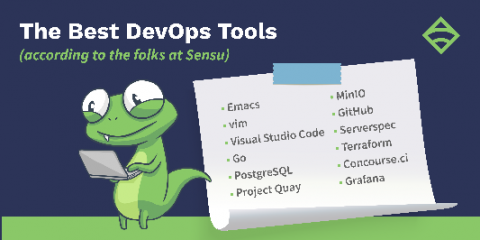
The best DevOps tools (according to the folks building Sensu)

Because Sensu is a tool made for (and by!) operators, I wanted to share our own favorite tools in the DevOps ecosystem (aside from Sensu, of course!). I surveyed the fine folks who work at Sensu on what their favorite DevOps tools are, and why. And while we don’t always agree on a specific tool (everyone has their own favorite text editor), it’s safe to say that open source is a constant theme. Read on to learn about our tools of choice for editors, programming, storage, IaC, and more.

Running and Deploying Elasticsearch Operator on Kubernetes

Have you ever grown tired of running the same kubectl commands again and again? Well the good folks over at the Kubernetes team understand you. With the addition of custom resources and the operator pattern, you can now make use of extensions, or addons as I like to call them, to the Kubernetes API that help you manage applications and components. Operators follow Kubernetes principles including the control loop.

Migrating Production Data in Elixir

When requirements change for your product, there arises a need to change not only the codebase but also the existing data that already lives in production. If you’re performing the changes locally, the whole process seems fairly simple. You test your new feature against a sparkling clean database, the test suite is green, and the feature looks great. Then you deploy, and everything goes to hell because you forgot that production was in a slightly different state.

Episode 0: Introducing Request Metrics

Request Metrics is a web performance tool that records how fast your production Page and API endpoints are from your users’ perspective. We are doing something a bit different as we build Request Metrics: all our development sessions are recorded! Follow along as we work our way towards the Version 1 release. We’ll edit out the wrong turns and dead ends, saving you the time we lost along the way.

Episode 3: SSH Keys For Server Authentication

In the previous video, we created a build for our new project. Now we are configuring access to the development server using SSH keys. Follow along as we create a new SSH key pair using Git Bash. We'll use PuTTY and the new key to SSH to our Linux server from a Windows machine. Generating a new SSH key is not too difficult, but there are a few gotchas when using Windows. We are going through this exercise because Eric and Jordan develop on Windows. Todd watches in amusement as his MacOS machine "just works".