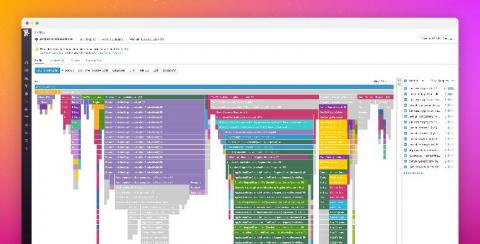
Early FireHydrant video series recording
One of the earliest videos from the FireHydrant Video series that lead to www.firehydrant.io
The latest News and Information on DevOps, CI/CD, Automation and related technologies.
One of the earliest videos from the FireHydrant Video series that lead to www.firehydrant.io
Everyone’s infrastructure is growing – today mostly in the container space. As we learned in Part 1 of this series – Docker Container Monitoring and Management Challenges, monitoring for containers is different from traditional server monitoring. In Part 2 we had a glance at key container metrics and in Part 3 we compared several open source tools for container monitoring.
Serverless computing is all the rage at the moment, and why wouldn’t it be? The idea of deploying code without having to worry about anything like servers, or that pesky infrastructure everyone complains about seems pretty appealing. If you’ve ever used AWS lamdba or one of its related cousins, you’ll be able to see the freedom that triggering functions on events brings you.
Gigantic amounts of data are being generated at high speeds by a variety of sources such as mobile devices, social media, machine logs, and multiple sensors surrounding us. All around the world, we produce vast amount of data and the volume of generated data is growing exponentially at a unprecedented rate. The pace of data generation is even being accelerated by the growth of new technologies and paradigms such as Internet of Things (IoT).
The Kubernetes ecosystem contains a number of logging and monitoring solutions. These tools address monitoring and logging at different layers in the Kubernetes Engine stack. This document describes some of these tools, what layer of the stack they address, as well as best practices for implementation including an example from the field, a quick start, and a demo project.
Stackdriver Monitoring contains a wealth of information about cloud resource usage, both for Google Cloud Platform (GCP) and and other sources. This post will explain how to use the Stackdriver Monitoring API to read, downsample, and export data from Stackdriver to BigQuery. Pub/Sub metrics will be used to demonstrate this.
In the words of the UFC's icon Bruce Buffer, with a 180 degree spinning announcement - "we...are...live..." and finally after a long beta period, we're ready to launch to the public as a whole. The beta period has been an excellent experience for us, and of course, a great learning curve.
Docker 18.09 offers the possibility for a Docker client to communicate with a remote daemon via ssh. Here’s how.