The latest News and Information on Cloud monitoring, security and related technologies.
You’ve probably seen Rush Hour, a logic puzzle where you have to slide cars and trucks out of the way to steer the red car towards the exit. In real life, when your customers are responsible for tracking hundreds or thousands of data points from dozens of valuable, mission-critical sensors, you’re tracking engine speed, network signal level, distance from the RF, and more—and not just through traffic but across continents.
Azure Advisor analyzes your configurations and usage telemetry and offers personalized, actionable recommendations to help you optimize your Azure resources for reliability, security, operational excellence, performance, and cost. Azure Advisor is a free service and can be accessed via the GUI on the Azure portal where recommendations are collated and can be manually examined. Azure Advisor makes recommendations for potential improvements in several areas, including.
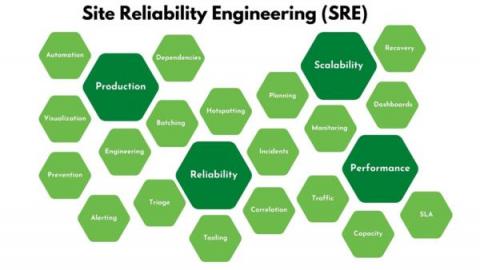
Site crashes and outages can cost hundreds of thousands in lost revenue and inconvenience users. Site Reliability Engineering helps build highly reliable and scalable systems, particularly important for companies that depend on their software to support their customers performing critical operations. Hiring a Site Reliability Engineer is the best way to ensure a software system stays up and running at all times. Not only will they help manage infrastructure and applications, but they'll also be able to advise on how to scale a business as it grows - keeping downtime and incidents at a minimum!
When building systems that need to scale above a certain number of users, we usually can’t stay on one machine. This is where cloud providers like AWS usually come into play. They allow us to rent VMs or containers for small intervals. This way, we can start a few different machines when more traffic hits, and when it goes down later, we can simply turn off our extra capacity and save money. The question is, how does all this traffic get to our new machines? AWS Elastic Load Balancing!
We’ve entered a time when hard drives are becoming less important than data speeds, syncing, and remote storage. More and more end-users are saving their files in the cloud for convenience, safety, and cost savings. That said, some people still have concerns about cloud computing -- namely around security. How safe are files that are stored hundreds or thousands of miles away, on some other organization’s hardware?