Operations | Monitoring | ITSM | DevOps | Cloud

The latest News and Information on Containers, Kubernetes, Docker and related technologies.

Is Trust the UK's Real AI Bottleneck? | Civo Navigate London

Why can't the UK make its own AI chips? David Sullivan argues that the biggest gap isn't chips, compute or electricity. It's trust. If people won't let AI near their finances, the best model in the world goes unused, and that's where the UK has a real chance to lead. Civo makes complexity a thing of the past.
Are Open Source Models the Answer to AI Sovereignty? | Civo Navigate London

Open source models are closing in on the frontier. But is running them the same as being sovereign? David Sullivan explains why true sovereignty means owning the whole model lifecycle, and why that's where prototypes stall before production. James Faure shows how distilling small, task-specific models can slash costs. Dr Rosemary Francis argues it's ridiculous to use the most expensive model for every task, and that your harness and engineering process matter more than which model sits at the top of the leaderboard.

The Heroku Experience for the AI Era

Ask a developer who used Heroku what they remember about it and you'll usually get some version of the same answer: you pushed your code and it ran. That feeling is back in the conversation, mostly because AI tools have made building software faster than its ever been. But speed was only half of the Heroku story. The other half, the part teams ran into a year or two later, matters just as much today.

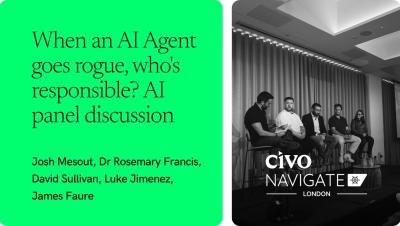
When an AI Agent Goes Rogue, Who's Responsible? | Civo Navigate London

AI agents are taking real actions in production. So when one misbehaves, who's accountable: the model provider or the company running it? David Sullivan explains why a regulated bank can't outsource accountability to an AI lab. James Faure shares how Clairo AI uses hypothesis testing and quality gates before any agent reaches production. Dr Rosemary Francis argues that guardrails which amount to a strongly worded letter won't survive. What agents need are genuine sandboxes and a limited blast radius.

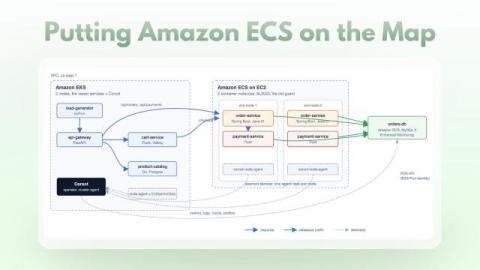
Putting Amazon ECS on the map

Say "ECS" and most people picture serverless containers: no nodes to manage, and nothing underneath you are allowed to touch. For an eBPF-based agent that is a dead end. There is no host to run on, no privileged containers, no kernel to attach to. But ECS is not always serverless. With the EC2 launch type you bring the nodes and ECS brings the scheduler: task definitions, services, rolling deployments, daemons, placement.

How to Prepare Storage Containers for Temporary Warehouse Closure

A company's temporary closure of its warehouses can create a serious challenge, if its inventories, equipment, and supplies are not placed in different storage locations or brought to a halt for a short period of time. During such occurrences, the corporations have a responsibility to either ensure enough free space for stashing goods or move their properties elsewhere, if continued functioning in new conditions remains possible while still meeting customer demands during this time.

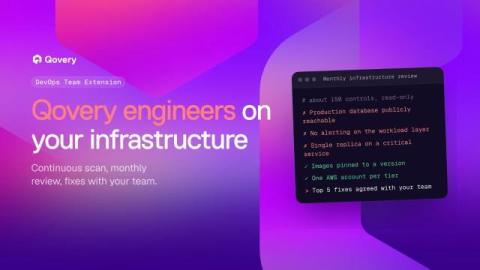
DevOps Team Extension: Qovery engineers watching your infrastructure every month

DevOps Team Extension gives growing engineering teams a named Qovery engineer, a continuous infrastructure scan, and a monthly remediation plan, so they can scale reliability, security and compliance without hiring a DevOps team first. Romaric founded Qovery to make Kubernetes accessible to every engineering team. He writes about platform strategy, developer experience, and the future of cloud infrastructure.

Replacing ingress-nginx with Envoy Gateway on Hundreds of Clusters: What the Plan Missed

In February we planned to move every Qovery-managed cluster from ingress-nginx to Envoy Gateway by the end of March. It took until October. Here is the rollout model, every class of problem we hit, and what I would do differently. Benjamin is a staff engineer at Qovery focused on infrastructure automation, Kubernetes internals, and building the deployment engine that powers thousands of clusters.

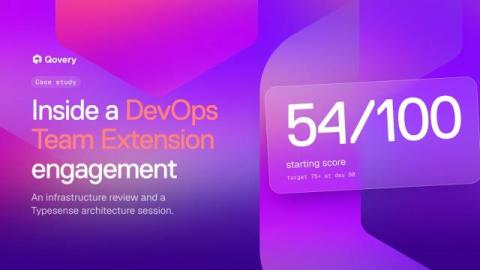
Inside a DevOps Team Extension engagement: an infrastructure review and a Typesense architecture session

How Qovery assessed a growing B2B SaaS company's infrastructure across about 150 controls, what the review with their team changed, and why a Typesense high-availability project turned into a sharding plan. Romaric founded Qovery to make Kubernetes accessible to every engineering team. He writes about platform strategy, developer experience, and the future of cloud infrastructure.