Most organizations are moving applications and workloads to the cloud. Our APM survey found that 88% of organizations had some form of cloud technology deployed already. At the same time, there are several misconceptions about the cloud. There are many who believe they don’t need monitoring tools for the cloud because their cloud provider will take care of all of their performance needs. This is a myth because cloud provider SLAs are mainly around infrastructure availability.
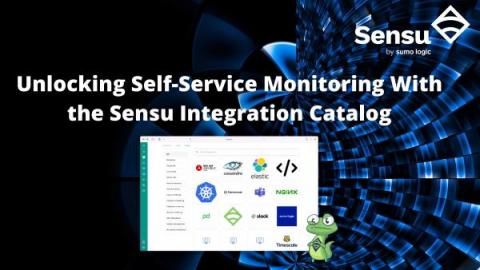
Introducing the Sensu Integration Catalog — a marketplace-like UX for simplifying new user onboarding, and deploying production-ready monitoring in a matter of minutes. The Sensu Integration Catalog is also an open marketplace that new and existing users can contribute to by sharing Sensu configurations. Continue reading to learn more!
With the expansion of remote and hybrid workforce and an ever more complex technology set, it is more important than ever to manage the digital employee experience. But how do we measure digital employee experience? One of the most common ways is to use surveys – for example post-incident surveys or annual customer satisfaction surveys. But these surveys, on their own, can be reactive, time-delayed and limited in scope.
If those von Trapp Family singers from The Sound of Music collectively woke up in a really, really bad mood and decided to write a song about their least favorite things, then it’s a safe bet that not being able to connect to a website would make the list (alongside airline passengers who tilt their seat back, and clam shell plastic packaging).
Miss O11y is delighted to welcome our newest band member: Martin Thwaites! Martin has been a member of the Honeycomb user community practically since its inception. He is a UK-based consultant who specializes in helping teams scale up and tackle challenging business problems, and a long-time contributor to the Azure and.NET communities. We think he looks ✨amazing✨ in a tiara.
When clients make HTTP POST requests to ping URLs, Healthchecks captures and stores request body data. You can use this feature to log a command’s output and have it available for inspection later: Same thing, using runitor instead of curl: You can view the request body data in the web UI: Healthchecks also captures and stores email messages, when pinging by email.
Another post inspired by our weekly internal enablement office hours [should we open this up to the public?] and a few conversations at DevOps Days Atlanta, talking about the experience with Kubernetes can reverberate some sighs. Though in our weekly enablement office hours, the blunt question was asked “well why is Kubernetes so difficult?”. Industry thought leaders would state that Kubernetes is a platform to build other platforms.
The latest version of the Splunk Operator builds upon the release we made last year with a whole host of new features and fixes. We like Kubernetes for Splunk since it allows us to automate away a lot of the Splunk Administrative toil needed to set up and run distributed environments. It also brings a resiliency and ease of scale to our heavy-lifting components like Search Heads and Indexer Clusters.