Operations | Monitoring | ITSM | DevOps | Cloud

Can You Prove Your AI Agents Are Paying Off? Most Developers Can't

We put a blunt question to developers on a recent live webinar: right now, could you actually prove AI agents are paying off for you or your team? Only 24% said yes. The other 76% were guessing, unsure, or already suspicious that agents are costing more than they’re saving. That gap between adoption and proof is the real story in agentic development right now. Teams aren’t behind on running agents. They’re behind on knowing whether it’s working.

SAP HANA Monitoring Tools 2026: How to Compare Options and Simplify Monitoring

If your team works with SAP HANA, the main challenge usually isn’t finding another dashboard. The real difficulty is identifying which tool can quickly help you trace vague complaints about slow transactions to their root cause. In many setups, SAP HANA monitoring is divided among native SAP interfaces, cloud monitoring, infrastructure dashboards, and the broader monitoring systems used by the rest of IT. This fragmented approach can slow down root cause analysis.

dbForge Studio for PostgreSQL + AI Assistant: Features and Use Cases

PostgreSQL database development involves much more than writing and executing queries. Developers build applications, DBAs maintain database performance and reliability, analysts turn raw data into insights, and DevOps teams automate database delivery through CI/CD pipelines. In this video, you will see how dbForge Studio for PostgreSQL brings database development, management, data analysis, reporting, and automation into a single AI-powered PostgreSQL IDE.

Moving Beyond OOM Kills: Introducing Memory QoS in Kubernetes 1.37

Table of Contents For most of Kubernetes’ history, memory management has been a blunt instrument. Cross your limit, and the kernel kills your container. There has been no equivalent to CPU throttling, no graceful backpressure, just a hard stop. With Kubernetes 1.37, that changes: Memory QoS, built on cgroups v2, graduates to Beta and is enabled by default.

See It, Approve It, Revoke It: Scoped OAuth for Public Apps

This blog post is part of PagerDuty’s ongoing series on how we’re helping customers navigate their journey towards autonomous operations. Read on to learn about how Scoped OAuth for Public Apps, now in Early Access, builds towards this vision. Your security team asks a simple question during a routine review: which third-party apps can reach our PagerDuty data right now, and what exactly can they do with it?

PD Automation Runner: Automation That Finally Reaches Your On-Prem Stack

This blog post is part of PagerDuty’s ongoing series on how we’re helping customers navigate their journey towards autonomous operations. Read on to learn about how PD Automation Runner, now in Early Access, builds towards this vision. Your on-call engineer gets paged for a critical alert on a self-hosted Kubernetes cluster. If this were a cloud-hosted service, Workflow Actions and the SRE Agent would already be working the problem: pulling logs, checking health, surfacing a fix.

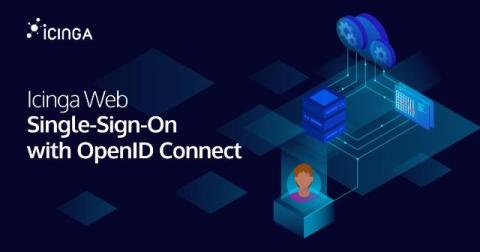
Icinga Web SSO walkthrough

The ability to log into all corporate applications with one username and password is pretty convenient, even compared to a password manager. As a benefit, the IT department can centrally enforce one desired two-factor auth mechanism. Now we, Icinga, also provide a so-called OpenID Connect integration for single sign-on. By the end of this text you’ll know how to connect your Icinga Web instance to the ID provider of your choice.

6 Signs a Dedicated Log Tool Fits Better Than a Full Observability Platform

Most growing teams eventually consolidate onto a full observability platform, and for teams correlating logs, metrics, and traces across a complex system, that’s often the right call. But a dedicated log tool still wins for a specific set of teams: ones that need to move fast, keep costs simple, and get real answers from logs without carrying the weight of a platform they don’t fully need yet. Here’s when that’s you.

Policy-as-code vs. policy-as-documentation: The difference that matters

A documented policy only works if every engineer remembers it, every time, under deadline pressure. That's the gap policy-as-code closes. This video covers what that actually looks like in practice: The instructions don't change. What changes is whether something actually enforces them, or just hopes someone reads them.

ITSM Maturity Model: The 5 Levels And Where AI Fits at Each One

An ITSM maturity model is a practical framework for measuring where your Service Management stands across people, processes, technology, and governance, then turning that baseline into a prioritized improvement plan. Most models describe five levels — from ad hoc to optimized — with clear characteristics and outcomes at each stage. This guide explains the levels, how to assess your current state, how to map capabilities to ITIL 4 practices, and actionable steps to get started.