Operations | Monitoring | ITSM | DevOps | Cloud

Sponsored Post

Understanding Security Log Analytics vs. SIEM for Midsized Companies Targeted by Cybercriminals

SecOps teams at midsize companies face a unique set of challenges when it comes to managing organizational cybersecurity. Midsize companies (those with 100-999 employees and $50 million-$1 billion in annual revenue, according to Gartner) possess significant financial resources and valuable data that may be targeted by digital adversaries. But, unlike larger enterprise organizations, midsize companies can't always afford to invest heavily in the expensive security tools and dedicated IT security staff needed to prevent cyber attacks.

Syslog Implementation: Servers, Integration and Best Practices

Syslog is a fundamental protocol for collecting messages and event data from various devices and applications across a network. Think of it as a universal language that allows your servers, routers, firewalls, and software to send their operational insights to a central logging point. Born from Unix systems, Syslog has evolved to become the industry standard, forming the backbone of effective log management and providing a unified view of your infrastructure's activity.

Introducing Logz.io Dashboards (Beta): Shaping the future of unified Observability with Open 360

We’re thrilled to announce the Beta launch of Logz.io Dashboards – a major step forward in how engineers and DevOps teams visualize and analyze their telemetry data. For the first time, Logz.io users can now create dashboards that bring together logs, metrics, and traces in a single unified view — making it easier than ever to monitor performance, detect issues, and troubleshoot incidents without switching tools or losing context. This launch is more than just a product update.

Kubernetes Logs: How to Collect and Use Them

If you’ve worked with Kubernetes, you know logs are essential for understanding what’s happening inside your clusters. However, unlike traditional servers, Kubernetes logs present their unique challenges. Pods frequently start and stop, containers restart regularly, and logs stored locally can be lost quickly. Because of this, managing logs in Kubernetes requires a different approach.

Elastic and AWS collaborate to bring GenAI to DevOps, security, and search

Today, we are happy to celebrate Elastic and AWS committing to a five-year strategic collaboration agreement (SCA). Our collaboration underscores the efforts of Elastic and AWS to provide you with increased speed and greater flexibility as you adopt generative AI technology.

Cloud Cost Management & Trends in 2025: Strategies to Optimize Your Cloud Spend

Cloud computing has become the backbone of modern business operations, powering everything from day-to-day collaboration to large-scale digital transformation initiatives. As organizations deepen their reliance on cloud services, the financial stakes continue to grow. According to Gartner, global spending on public cloud services is projected to reach over $720 billion in 2025, a significant increase from nearly $600 billion in 2024.

Graylog vs Loki: Key Differences and Use Cases

Logs are a key part of building and running software, but managing them can get complicated fast. As your apps grow and generate logs from many sources, choosing the right tool to store, search, and analyze those logs becomes important. Graylog and Loki are two popular options, each with a different way of handling logs. In this blog, we’ll break down the main differences between Graylog and Loki, how they work, and which types of projects they suit best.

VPC Log Format: Custom and Advanced Configurations

VPC Flow Logs come with a default format that gives you basic network traffic details. But you can tweak the format to capture exactly what you need. This can lower costs, speed up processing, and make your logs fit better with what you’re trying to monitor. If you want to improve security, keep an eye on performance, or save money, adjusting your VPC logs can make a big difference. Let’s take a look at some practical ways to customize your logs beyond the default settings.

Motadata AIOps | Monitoring Infrastructure Using Monitors & Monitor Settings

In the world of IT infrastructure management, having a real-time understanding of the health and performance of your systems is essential. Motadata AIOps introduces the Monitors, a way to provide comprehensive insights into your IT environment, empowering you to proactively manage and optimize your infrastructure.

Motadata AIOps - AI-Driven Network Monitoring Software

What positions Motadata AIOps as a standout among the premier network monitoring tools available in the market? In a crowded market of network monitoring tools, Motadata AIOps distinguishes itself through its intelligent and future-proof approach. The Network Observability tool leverages the power of AI to monitor your network and predict and prevent problems before they occur. This helps you achieve unmatched scalability for your growing network needs, while its open architecture and integration capabilities ensure a unified view of your entire IT environment.

How to Troubleshoot Faster with LM Logs

When an alert fires, your goal is clear: fix the problem—fast. But traditional troubleshooting rarely makes that easy. You’re immediately thrown into decision mode: All the while, the clock is ticking. The longer you’re stuck guessing what to do next, the longer your downtime drags on, and the more non-value-added engineering time you burn.

Using the OpenTelemetry Operator to boost your observability

If you’ve ever wrangled sidecars or sprinkled instrumentation code just to get basic trace data, you know the setup overhead isn’t always worth the payoff. But what if it was… just easier? That’s where the OpenTelemetry Operator for Kubernetes steps in… and it plays great with Coralogix out of the box!

How to implement business observability

It sounds simple: You define metrics for success, you track them, and if they fail, you fix them. For decades, this was how businesses monitored their systems. However, a reactive monitoring approach, which alerts businesses about failures only after the issue has already impacted operations, became insufficient as digital architectures grew more complex.

Enhancing workflow efficiency with Elasticsearch and Red Hat OpenShift AI

Elastic collaborates with Red Hat on the validated pattern to enhance financial analyst workflows with RAG-powered search. We’re excited to share that Elastic and Red Hat have partnered to create validated patterns that integrate Elasticsearch’s generative AI (GenAI) and vector search capabilities with Red Hat OpenShift AI. This integration can run on accelerated hardware on-prem or in IBM Cloud to power retrieval augmented generation (RAG) solutions.

Logz.io AI Agents: Transforming Observability Through Intelligent Automation

Let’s be honest. AI features can sound cool on paper, but too many tools overpromise and underdeliver. At Logz.io, we didn’t want to build “yet another AI chatbot.” We wanted to create something our engineers and yours would actually use when incidents hit, logs explode, or someone asking, “What just happened to production?” Here’s how our AI Agent evolved from a basic chat interface to an incident-resolving, log-analyzing, doc-digging, context-aware assistant.

Supercharge Telemetry Pipelines: Introducing Sources and Destinations in Cribl Packs

Cribl Packs have always provided a powerful way to package and share configurations across Cribl Stream environments. From pipelines to lookups, knowledge objects to functions—Packs make telemetry pipelines simple and portable. Now, we’re excited to announce a game changing expansion: Sources and Destinations can now be included in Cribl Packs!

.NET Logging with Serilog and OpenTelemetry

Debugging modern.NET apps isn’t as simple as scanning logs anymore. With services spread out and systems growing more complex, it's easy to miss the bigger picture. Serilog gives you clean, structured logs. OpenTelemetry brings in traces and metrics to connect the dots. This guide covers how to wire up Serilog with OpenTelemetry, send logs to traces, and build an observability setup that helps you troubleshoot, without digging through disconnected logs for hours.

Top 11 Application Logging Tools for DevOps Engineers in 2025

When something breaks in production, logs are usually where you start. They help you figure out what happened, where, and why. But with microservices architecture, logging isn't simple anymore. In a traditional monolithic application, logs live in one place. With microservices, they're scattered across multiple services, containers, and sometimes even data centers. What used to be a simple grep command now feels like solving a mystery without most of the clues.

Logs in Sentry: Now in Open Beta

You’re looking at an error in Sentry—a failed payment in your Flask backend or an unexpected null in your Node API. You’ve got the stack trace. The request details. Even the full trace. What you don’t have: the logs your app emitted right before everything went sideways. With Sentry Logs (now in open beta), you can send application logs straight to Sentry and see them automatically connected to the errors and traces you already use.

Why a No-Index Observability Architecture is Essential

When was the last time you asked about the architecture behind your observability provider? For most IT professionals whether in development, operations, or security, it’s not a question that naturally comes up. Yet, this architectural detail could be the difference between insight at scale and runaway costs. People are drawn to the features, the shiny things. They promise to unlock insight, drive faster response times, and tighten security.

Transforming Observability: Simpler, Smarter, and More Affordable Data Control

At Mezmo, we’ve always believed that observability should empower innovation, not hold it back with complexity and unpredictable costs. However, as organizations scale and data volumes continue to explode, the old ways of managing telemetry data aren’t sustainable.

Synthetic Testing Examples: User Flow Testing, APIs Validation, Custom Metrics, Log Ingestion, and More

Starting from scratch with synthetic testing of your web properties and APIs can be difficult. Questions like “what should we be testing?” will very quickly become exercises in figuring out “how can we actually do that?” which may involve sifting through various elements of the DOM or JSON responses. But there are shortcuts to synthetic testing mastery!

Linux Security Logs: Complete Guide for DevOps and SysAdmins

Security logs are the quiet sentinels of your Linux systems, recording critical information that can mean the difference between detecting an intrusion and discovering a breach months too late. For most DevOps professionals and system administrators, these logs contain valuable insights that often go untapped. While they're essential for compliance, their real value lies in providing visibility into your system's security posture and operational health.

Improve user access and admin controls with the latest platform updates from Sumo Logic

By centralizing your mission-critical logs, metrics, traces, and events from all of your systems into one platform, Sumo Logic enables teams across development, security, and operations to operate from a single source of truth. While this unified approach is crucial for fast issue identification and minimizing downtime from infrastructure failures or security breaches, not everyone on your team needs access to every bit of data.

Contextual Observability: Using Tagging and Metadata To Unlock Actionable Insights

Observability isn’t about collecting more telemetry — it’s about making that telemetry data meaningful. Contextual observability transforms raw telemetry into actionable insights by enriching it with consistent tagging and metadata. Without context, telemetry data remains fragmented, troubleshooting slows, and aligning with business priorities is nearly impossible.

Debug Logs and Analyze Trends with Log Data Rehydration

Everyone in your organization needs logs to perform the critical functions of their job. Developers need them to debug their applications, security engineers need them to respond to incidents, and support engineers need them to help customers troubleshoot issues. These various use cases create general requirements for enriched log data, often including accessing insights from outside typical retention windows.

Getting Started With Lakehouse: Not Even White Lotus Can Match the Hospitality of Cribl's Lakehouse

Cribl recently introduced Lakehouse, a powerful new feature within Cribl Lake that enables fast queries on the freshest data. But it’s so much more than just speedy searches. Lakehouse redefines how organizations collect, store, manage, and analyze telemetry data at scale, ensuring a future-proofed, cost-efficient, and flexible approach to data management.

Business Process Automation, Explained

Business process automation no longer sits on the sidelines. What was once an emerging technology is now the engine behind modern business operations. In fact, around 60% of companies already use automation tools in their workflows, according to Duke University. This is not just companies — developers are also contributing to this shift by adopting low-code, no-code, and digital process automation platforms. These new tools remove barriers that once slowed innovation.

Building a Culture of Observability Through Ownership

There’s a problem in engineering culture that we don’t talk about enough: observability is an afterthought. It’s treated as tooling, not thinking. As a checkbox, not a habit. And that mindset gap creates real consequences: longer outages, frustrated teams and massive business costs. Atlassian’s Incident Management for High-Velocity Teams overview cites a 2014 study by Gartner, that the average cost of IT downtime is $5,600 per minute.

Splunk Observability Cloud's AI Assistant in Action | Practical Examples | Part 2

In this video, we'll explore practical ways to utilize the AI Assistant in Splunk Observability Cloud. Through real-world scenarios, learn how the AI Assistant can help you interpret metrics, contextualize data, onboard new team members to your organization, and automate tasks via the Splunk Observability Cloud API. AI Assistant in Splunk Observability Cloud enhances observability by providing actionable insights and streamlining workflows.

Ubuntu Cron Logs: A Complete Guide for Engineers

Troubleshooting failed cron jobs without proper logging can be frustrating. Ubuntu cron logs record the execution of scheduled tasks, helping you identify what's working and what isn't. This guide covers what engineers need to know about Ubuntu cron logs – from finding them to analyzing their contents and setting up effective monitoring solutions.

From Logs to Metrics Part 2: Building an Open-Source Logs-to-Graphite Pipeline

Monitoring doesn't always need to be complex. In this guide, we'll show you how to transform some raw logs into usable metrics using a lightweight, open-source setup. We'll also use the Telegraf agent to convert logs into Graphite metrics that you can easily visualize and alert on. This is ideal for system admins, DevOps beginners, or anyone interested in building more innovative monitoring pipelines from scratch.

How to benchmark Elasticsearch performance with ingest pipelines and your own logs

When setting up an Elasticsearch cluster, one of the most common use cases is to ingest and search through logs. This blog post focuses on getting a benchmark that will tell you how well your cluster will handle your workload. It allows you to create a reproducible environment for testing things out. Do you want to change the mapping of something, drop some fields, alter the ingest pipeline?

The Best Open-Source Dashboard Tools for 2025: Expert Guide to Choosing the Right One

Table of Contents In today’s digital operations, dashboards aren’t just nice-to-haves—they’re essential. Teams across engineering, product, operations, and business intelligence rely on real-time data visibility to monitor systems, analyze trends, and catch anomalies before they escalate. For many organizations, open-source dashboard tools offer the best combination of flexibility, transparency, and cost-efficiency.

Agentic AI in financial services: The rise of autonomous intelligence

Agentic AI is coming to financial services. Elastic provides the data foundation and tools to make it work. In a recent talk at Stanford University, Jamie Dimon, chairman and CEO of JPMorganChase, addressed the firm’s use of AI and ended with mentioning that agentic AI was the next frontier of AI at the firm, inferring it wasn’t ready to be deployed yet. Let’s break down why that may be the case and what the financial services industry can do to become more comfortable with agentic AI.

Introducing Coralogix Continuous Profiling

Debug faster, improve application performance, and lower your cloud costs - without slowing down production. Traditional profiling solutions come with a heavy price—added latency, excessive resource consumption, and performance degradation. At, we’re changing the game with Continuous Profiling, the first of its kind to offer real-time, kernel-level visibility into application performance without any code changes or production impact.

Meta-monitoring Loki (Loki Community Call May 2025)

In this Loki Community Call, we talk about the need for meta-monitoring Loki: why Loki needs to be monitored, what to watch out for, and how to do it. We talk about different ways to get information from Loki that allow you to make it reliable, consistent, and performant, including a Helm chart to deploy a meta-monitoring stack on Kubernetes. We discuss the Loki mixin for Grafana and how to use it to visualize data about Loki. On the call are Jay Clifford, Nicole van der Hoeven, and Dylan Guedes from Grafana Labs.

Splunk Observability Cloud's AI Assistant in Action | Practical Examples | Part 1

In this video, we’ll provide practical, real-time examples demonstrating how to effectively use the AI Assistant in Splunk Observability Cloud. You'll learn how the AI Assistant can quickly identify unknown issues in your environment, perform detailed root cause analysis, analyze service performance and deployment impacts, and even help manage infrastructure costs and compliance. TOC.

Modern Logging, Smarter Pricing: Why Graylog's Consumption Model Just Makes Sense

In the world of log management and security analytics, one thing is abundantly clear: data volumes fluctuate. Yet most pricing models haven’t caught up. Traditional ingest-based licensing models force organizations to size their license needs based on a worst-case capacity scenario—the “high-water mark”—whether those spikes are rare and/or expected.

Easiest Way to Monitor Loki Performance With Telegraf

Loki is a powerful, scalable log aggregation system designed by Grafana to efficiently collect, store, and query logs. It’s often deployed alongside Prometheus as part of modern observability stacks. Loki’s design emphasizes cost-effective storage by indexing only metadata, which makes it a great choice for high-volume environments. But while Loki excels at log ingestion and indexing, many teams overlook the critical task of monitoring Loki itself.
How Docker Logging Drivers Work

Troubleshooting containerized applications can quickly become complex when logs are scattered across multiple systems. Most DevOps teams face this challenge daily—what starts as a simple container deployment often evolves into a complex logging puzzle. This guide explores Docker logging drivers in depth, covering configuration options, best practices, and practical solutions.

Logz.io Integration for AWS and Kubernetes Observability

Ever feel like you’re flying blind in your AWS environment? You’re not alone. In the sprawling universe of microservices, containers, and serverless functions, trying to troubleshoot without proper observability is like trying to find a bug in a datacenter… with the lights off… while wearing sunglasses.

AI Data Management: Strategies, Tools, and Trends

Artificial Intelligence (AI) is revolutionizing businesses across industries. From personalized customer experiences to predictive analytics and process automation, there are hardly any sectors untouched by AI's impact. Its applications in data management aren't left behind. In fact, AI has the potential to transform traditional data management practices.

React Logging: How to Implement It Right and Debug Faster

React logging is the practice of recording relevant information about your application's behavior during runtime. Unlike traditional server-side logging, React logging happens in the browser and focuses on frontend concerns: component lifecycle events, state changes, user interactions, performance metrics, and network requests. Effective logging creates breadcrumbs that help you understand application flow and quickly pinpoint problems.

Apache Logs Explained: A Guide for Effective Troubleshooting

Apache logs are a critical tool for monitoring your web server, but they can often feel overwhelming. For DevOps teams, understanding these logs is essential for diagnosing issues and maintaining system reliability. In this guide, we'll explore the setup and analysis of Apache logs, offering practical tips to help you make sense of them and use them effectively for troubleshooting and optimization.

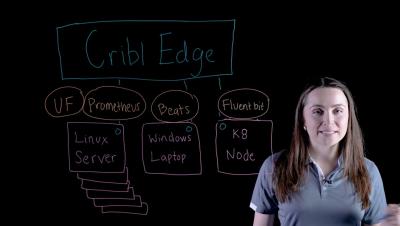
Cribl Edge: Unify Telemetry Collection | Lightboard Demo

Cribl Edge is a vendor-neutral, intelligent agent designed for the variety and scale of today’s modern architectures. With a unified telemetry collection system, you can have hundreds of thousands of agents at your fingertips to automatically discover and collect data from your Windows, Linux, and Kubernetes environments. Featuring a rich UI, centralized fleet management, and seamless upgrades, it’s time to transform your agent management.

Mission-Critical Visibility: How Observability Empowers the DoD

Tech is entering another wave of innovation with AI. With accelerated innovation comes increased complexity in already disparate environments. For Defense, those complexities are compounded by the need to maintain and operate mission critical infrastructure with highly sensitive data in air-gapped environments, often running on custom digital systems and applications. Accelerating the speed of innovation with leading technology is key for the military to maintain its competitive edge.