Operations | Monitoring | ITSM | DevOps | Cloud

Beyond polling: Why enterprises are exploring network telemetry

Polling has been the go-to approach for network monitoring for years, and it still plays an important role in keeping networks healthy. But as networks become more distributed, application-driven, and data-intensive, simply polling devices more often isn't always the most efficient way to gain deeper operational insights. That's where network telemetry comes in.

Is Your Network Holding Back Your Cloud Strategy?

Every layer of the modern network stack moves at cloud speed. If your connectivity doesn't, your entire strategy can stall. Co-authored by Fabio D’Avino This blog includes insights from Fabio D’Avino, a specialist in Network as a Service (NaaS) with more than seven years of experience researching, designing, and building global network services. Fabio’s work explores how organizations can modernize connectivity as cloud, hybrid, and AI-ready infrastructure strategies evolve.

Configuration drift in enterprise networks: Causes, impact, and management

Network admins want all devices with the same role to behave the same way. But in real environments, that consistency rarely lasts. Imagine two core switches in the same data center. They serve the same function and run the same OS version. One handles traffic without issue, while the other drops packets during peak hours. Logs show nothing obvious. Routing looks correct. The team spends hours checking links, hardware, and traffic paths.

CI Can't Keep Up With AI | Blacksmith CEO & Co-Founder Aditya Jayaprakash

AI coding agents are writing software faster than ever. But what happens when the systems responsible for testing and validating that code can't keep up? In this episode of Uplink, Michael Reid sits down with Aditya "JP" Jayaprakash, Co-founder & CEO of Blacksmith, to explore why continuous integration (CI) has become one of the biggest bottlenecks in modern software development.

Unleashing Enterprise Agility: The Power of Portfolio Kanban Flow States

In the world of enterprise Agile, we face a persistent paradox: How do we empower individual teams to establish their own unique processes, while ensuring leadership maintains a clear, consistent view of the entire organization’s progress? For a long time, the answer was a compromise.

What is Network Monitoring? A Guide for IT Teams

Over 90% of mid-sized and large companies estimate that a single hour of downtime now costs more than $300,000. The clock starts the moment something breaks, whether anyone has noticed it or not. And most outages don't start with alarms. They begin with a small issue inside the network: an overloaded switch, a saturated link, or an unstable interface. Left unnoticed, those small issues grow into user complaints, stalled work, lost revenue, and damaged customer trust.

Building a resilient workspace with an integrated security framework

Since 2020, the modern workspace has fundamentally changed, where employees now operate across a mix of office, hybrid and remote locations. Critical systems are now distributed between data centres and public cloud platforms, and most corporate data lives in the cloud. This shift has expanded the attack surface for many businesses.

Why Is Root Cause Analysis So Hard for IT Teams to Get Right?

In this video, learn what Root Cause Analysis (RCA) is and why it's essential for preventing recurring IT incidents instead of repeatedly fixing the same symptoms. Discover how effective RCA helps IT teams identify the real source of problems, reduce downtime, and improve operational resilience. In this video, you'll learn: Contact Us sales@motadata.com Resources Follow Us on Social Media.

What's New in Network Observability for Summer 2026

As a network engineer, you likely face two persistent operational challenges every day: When you have to manually track device lifecycles on spreadsheets or spend your scheduled maintenance periods troubleshooting software upgrades, you lose the time you need to proactively ensure network performance. Over the past six months, we have continued to enhance Network Observability by Broadcom. These latest enhancements directly address the operational challenges outlined above.

Chart Your Team's Analytics Journey with Customizable Dashboards in DX NetOps

DX NetOps now features customizable dashboards that give all users some important new features and capabilities. In addition, with the solution’s new integration capabilities, DX NetOps enables users of current analytics and reporting tools to add standardized dashboards over time.

Help Desk or Service Desk: Which Does Your Business Need?

In this video, learn the key differences between a Help Desk and a Service Desk and why choosing the right approach can significantly impact the growth and efficiency of your IT support operations. Discover when a help desk is enough, when a service desk becomes essential, and how modern IT teams can scale support effectively. In this video, you'll learn: Contact Us sales@motadata.com Resources.

Network Monitoring, the Netdata Way: Topology, NetFlow, SNMP, and Traps

Interface counters tell you a port is busy. Bytes in, bytes out, errors, drops. That’s enough to know a link is saturated, but not enough to know which conversations are saturating it, which devices are involved, or how a problem propagates across your network. For that you’ve traditionally needed dedicated network performance monitoring tools, usually expensive, usually a separate console from the rest of your monitoring.

How Does SNMP Keep an Eye on Every Device on Your Network?

In this video, learn what SNMP (Simple Network Management Protocol) is and why it remains one of the most important technologies for network monitoring. Discover how SNMP helps IT teams collect device health metrics, receive real-time alerts, and monitor thousands of network devices from a single platform. In this video, you'll learn: Contact Us sales@motadata.com Resources Follow Us on Social Media.

Optimizing Data Pipelines for High-Volume Loan Tech

High-volume lending systems require dependable backend infrastructure to manage continuous streams of financial data. When application numbers climb, standard databases often slow down and cause operational friction. Upgrading these data pathways helps firms maintain fast processing speeds during market surges. Efficient pipeline design removes technical barriers that restrict daily loan volumes. Companies can process files faster when data flows smoothly through automated validation checks. Modern software frameworks keep processing networks stable under heavy computational stress.

How does Radio Over IP Technology Maintain Communication During a Major Cellular Network Blackout?

When a major cellular network blackout strikes, modern reliance on data-driven mobile devices often collapses instantly. Connectivity that professionals depend on for coordination vanishes, leaving important operations in the dark. Radio over IP (RoIP) bypasses these fragile public infrastructures by digitizing voice signals and transmitting them across private, hardened networks.

How network change management could've prevented a costly switch misconfiguration

Unplanned outages often trace back to a simple but overlooked cause: an untracked configuration change. In many organizations, network device configurations are updated manually without approvals, documentation, or rollback plans. This lack of structure can lead to performance issues, downtime, and compliance risks. In this blog, we'll see how a core switch misconfiguration exposed the risks of unmanaged changes.

What Is a CMDB, and Why Is It Called the Heart of ITSM?

In this video, discover why a Configuration Management Database (CMDB) is considered the heart of IT Service Management (ITSM). Learn how a CMDB helps IT teams understand dependencies, assess change impact, accelerate incident resolution, and build a reliable foundation for service management processes.

LocalXpose: The Best ngrok UDP Alternative in 2026 - Review

When you need to share a local project with the world, spin up a quick webhook receiver, or test an API, ngrok is usually the first tool most developers grab. It is reliable, familiar, and handles standard HTTP, HTTPS, and TCP traffic effectively. But if you have tried to build or test anything that relies on User Datagram Protocol (UDP) traffic, you have likely hit a roadblock. Out of the box, ngrok does not natively support UDP tunnels.

AWS Summit London & NYC: what engineers want

Across two AWS Summit events in London and New York City, we had the chance to speak with more than 1,000 engineers. They came from startups building their first production stack, and enterprises managing large AWS and multi-cloud deployments. The energy was exactly what you'd expect: major AWS launches, dozens of new service announcements, wall-to-wall cloud conversations. And HAProxy right in the middle of it.

3 Signs Your Network Monitoring Is Failing You

Are users reporting issues before your monitoring tools do? Are critical alerts getting lost in the noise? Does root cause analysis take hours instead of minutes? These are 3 signs your network monitoring is failing. Discover how modern observability helps teams detect issues faster and resolve them with confidence.

KWhy? MSP Webinar

Most MSPs are sitting on a goldmine of data across their tools. The problem isn’t access, it’s knowing what *actually* matters… and how to use it to drive better outcomes. Join Amanda Doucette-Lachapelle and Kyle Christensen (Empath) as they walk through how to use KPIs to make smarter, more confident decisions, with real examples you can apply right away.

Tapirs, Trainings, and Team Dinners: My First Kentik Meetup

Gavin joined Kentik’s People Ops team less than a year ago, so when April brought his first team offsite and his first HR conference in San Diego, it was a lot of firsts at once. He writes about meeting his colleagues face to face for the first time, what he took away from HRA 26, and his new appreciation for tapirs.

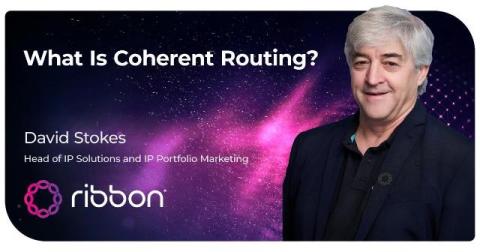
What Is Coherent Routing?

Coherent routing, Routed Optical Networking, Converged Optical Routing Architecture (CORA), are all names for the same concept: an advanced network architecture which integrates coherent optical transceivers directly into IP routers. This convergence of layers creates a simplified and highly efficient IP-over-DWDM (IP over Dense Wavelength Division Multiplexing) network.

Why Does Network Topology Decide How Fast Your Network Recovers?

In this video, learn why network topology plays a critical role in network resilience, troubleshooting, and recovery. Discover how understanding network dependencies, eliminating single points of failure, and maintaining clear visibility can help IT teams reduce downtime and accelerate incident response. In this video, you'll learn.

When Local Blocks Go Global: The India-Telegram BGP Incident

Yesterday’s leak of a BGP hijack intended to block Telegram in India is the latest routing mishap best described as intentional, but also accidental — a pattern dating back to Pakistan Telecom’s infamous hijack of YouTube in 2008, in which a domestic block escaped containment and disrupted the service worldwide.

Why route diversity is critical to resilient global connectivity

Subsea cables have long been the invisible backbone of the internet, carrying more than 95% of global data traffic beneath the ocean’s surface. Today, they are no longer just background infrastructure, they sit at the centre of an increasingly complex digital and geopolitical landscape. The rise of artificial intelligence, alongside continued cloud expansion and hyperscale data centre growth, is driving unprecedented demand for high-capacity, low-latency connectivity.

The Godfather of AI Ready Data Centers | OCOLO CEO & Founder Tony Rossabi

AI is reshaping digital infrastructure, but the biggest challenge isn't always building bigger data centers, it's finding the power to run them. In this episode of Uplink, Michael Reid sits down with Tony Rossabi, Founder & CEO of OCOLO, to discuss how AI is changing the data center industry and what it takes to deliver the next generation of infrastructure.

AI is only one of four things driving the data center boom

Tony Rossabi, aka the Godfather, has spent 30 years in this industry. Car washes to Telx to building data centers. He sat down with our CEO Michael Reid to break down what’s actually happening underneath the AI headlines, from where the real demand is coming from, to why a single megawatt of power is so hard to find, and how a team of eight is building 19 ten-megawatt facilities across two continents in 24 months.

MSP Summit: Why You Need Effective Documentation & How to Achieve It

Every year, MSP Summit unites some of the brightest minds in managed services. From tackling complex migrations that should have been straightforward to managing thousands of unique client environments, MSPs excel at adapting and rising to challenges, even as industry trends evolve. Even as industry trends evolve, though, one theme consistently comes up year after year: documentation.

How Zero Trust is Reshaping Federal IT Strategy

Zero trust sparked a paradigm shift for federal agencies, changing the way they approach IT and data management as they "assume breach" from threat actors. Brian Chamberlain, Public Sector Business Development Lead at SolarWinds, explains how starting with observability helps federal agencies lay critical groundwork for meeting zero trust directives.

How to Reduce MTTR: 5 Proven Strategies for Enterprise IT Teams

Every minute of downtime impacts your business. Mean Time to Resolution (MTTR) measures how quickly your team can resolve incidents and restore services. In this video, learn 5 proven ways to reduce MTTR using unified observability, AI-powered alert correlation, automated runbooks, and ITSM integration to resolve incidents faster and minimize downtime. In this video, you'll learn.

What is AWS Cloud WAN? Benefits, Use Cases, and Adoption Best Practices

Learn how AWS Cloud WAN works, key benefits, limitations, use cases, and adoption best practices. As AWS environments grow across multiple regions and accounts, networking can become increasingly difficult to manage. What starts as a handful of virtual private clouds (VPCs) can quickly evolve into a complex web of connectivity, routing policies, and security requirements.

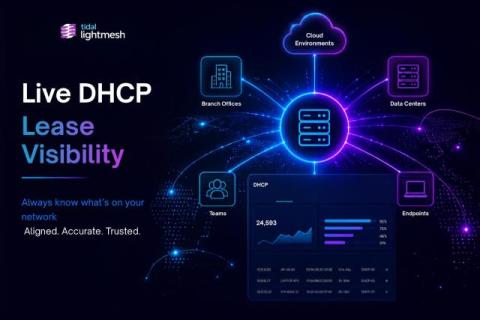
LightMesh DHCP Integration: Always Know What's on Your Network

Dynamic Host Configuration Protocol (DHCP) activity changes faster than most IP inventory systems can keep up. Devices reconnect. Leases expire. Infrastructure changes constantly across servers, endpoints, and cloud environments. If your IP inventory cannot reflect those changes automatically, teams quickly lose confidence in the data they rely on to operate the network.

How to Troubleshoot High CPU Usage on Network Devices

Most network teams only find out their firewall is overloaded after users start complaining. A slow VPN, dropped calls, and random packet loss at 2 pm every day. The usual suspects get blamed first: the ISP, the switch, the application server. The firewall gets a pass because the dashboard says 40% CPU and everything looks fine. Here is the problem with that picture. Standard SNMP monitoring polls every 5 minutes. A CPU spike that peaks at 95% and recovers within 90 seconds never shows up.

How AI is Reshaping IT Operations Management

AI is transforming IT operations through automated incident response, intelligent event correlation, predictive analytics, and agentic AI. But while technology is evolving rapidly, human judgment and strategic decision-making remain essential. In this video, explore what's changing in IT operations, what isn't, and how IT leaders can prepare for an AI-driven future with AIOps, observability, and automation. Learn how Motadata helps organizations build smarter, more proactive IT operations.

How Clover moved beyond blue-green deployments with HAProxy Fusion Control Plane

Clover’s platform handles more than just payments: inventory, employee management, online sales, and customer loyalty programs are all running on a single monolith called the Clover Operating System (COS). Releasing updates to that platform reliably and without disrupting merchants is one of the hardest operational problems a platform team can face. For a decade, Clover ran HAProxy at the center of its infrastructure.

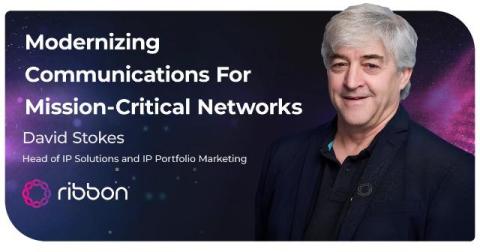
Modernizing Communications For Mission-Critical Networks

Mission-critical networks are changing fast. Utilities, transport operators, and critical infrastructure providers are under pressure to deliver more data, more automation, and more resilience—without ever compromising reliability. The challenge is simple: legacy SDH/SONET networks were built for a different era. They still deliver reliability. But they can’t support what comes next.

Proactive Alerting with AIOps

Modern IT environments generate huge volumes of telemetry across infrastructure, applications, cloud services, and networks. Teams now have more data than ever, but that does not automatically lead to better decisions. In many organizations, the real problem is no longer visibility alone. It is the ability to identify which signals matter, understand what they mean, and respond before users or business services are affected.

Centralize DHCP Visibility with the Windows Discovery Agent

Your Dynamic Host Configuration Protocol (DHCP) server already knows what’s connected to your network. The problem is that DHCP data rarely stays aligned with the rest of your infrastructure systems. Instead, it becomes fragmented across Windows servers, branch offices, spreadsheets, and disconnected operational tools. Lease data ages, assignments go untracked, and teams lose confidence in their network inventory.

G2 Names Auvik Network Management & Monitoring Leader Across Summer 2026 Reports

G2 reports are built around what customers say about the products they use. In the Summer 2026 Reports, that feedback helped Auvik earn top recognition across Grid Reports and Index Reports for Network Management Tools and Network Monitoring. Try Auvik Network Management Free to try! Setup takes less than 15 minutes and you will see results in an hour. Learn more now.

Automated Network Documentation 101: What You Need to Know to Get Started

Network documentation has a way of becoming everyone’s problem and nobody’s responsibility. Over time, diagrams become outdated, configuration changes go undocumented, and critical knowledge ends up living in the heads of a few senior technicians instead of somewhere the entire team can access it. That’s why organizations are turning to automated network documentation.

What is Automated Patch Management?

Learn why manual patch management creates unnecessary risk for IT teams and how automated patch management helps organizations improve security, compliance, and operational efficiency. Discover how automation eliminates repetitive tasks, reduces human error, prioritizes critical vulnerabilities, and accelerates patch deployment across the entire IT environment.

Devolutions Makes an Important Investment in Obkio

Obkio is proud to announce an important investment from Devolutions, one of the most respected names in IT security and remote access management. This investment marks a new chapter for Obkio as we accelerate our next phase of growth. This isn't a financial transaction between strangers. It's a partnership between two companies that have spent years building tools for the same people: IT professionals, sysadmins, MSPs, and the network engineers who keep critical network infrastructure running.

Oops! All Robots | SolarWinds TechPod

Chrystal Taylor and Sean Sebring explore the fascinating world of robotics, from consumer devices to advanced medical robots, and discuss the future of humanoid and non-humanoid robots in our lives. Chrystal and Sean, with guest Andy Garibay, explore the future of robotics, focusing on form, function, and societal impact. They debate why certain designs, such as dogs, dominate, the potential of automation in construction and security, and the ethical considerations of humanoid robots.


What is RDMA over Converged Ethernet (RoCE)?

Previous articles walked through RDMA (Remote Direct Memory Access) as a programming model and InfiniBand as the fabric that was built around it. Both led to the same conclusion, even if it was never stated outright: moving data, not compute, becomes the bottleneck once systems scale. So what happens when you want RDMA, but you’re already running an Ethernet network you’re not keen to replace? That’s usually where RDMA over Converged Ethernet (RoCE) enters the conversation.

An Architect's Guide to IPoDWDM

IPoDWDM is an architecture that integrates IP routing and Dense Wavelength Division Multiplexing into a single, converged platform. This integration is achieved by placing coherent optics directly into the ports of IP routers and switches, a fundamental shift from traditional network designs. Consequently, this approach eliminates the need for a separate, dedicated layer of optical transponders and their associated shelving.

Protecting against HTTP/2 Bomb vulnerability (CVE-2026-49975) with HAProxy

On June 2, 2026, security researchers disclosed a remote denial-of-service (DoS) exploit named the HTTP/2 Bomb. This flaw allows unauthenticated remote attackers to rapidly exhaust server memory, rendering major web servers inaccessible.

Bridging AI and Infrastructure: Introducing the Megaport MCP Server for Agentic Networking

Discover the Megaport MCP Server and how it enables AI-powered, agentic networking through natural language access to network infrastructure. By Miwa Fujii, Community Manager - Terraform and Ryan Tucker, Solutions Architect In the cloud networking era, we’ve moved from manual configurations in the Portal to Infrastructure as Code (IaC), Terraform. But the next frontier isn’t just code, it’s intelligence. We are pleased to announce the release of the Megaport MCP Server (Open Beta).

From Tee Time to Uptime: A True Cyber Resilience Story

In this 90-second customer case study, Mehdi Salehi from Golfbreaks shares the operational and security gains his team saw with N-central. Highlights include about 20% annual cost savings, around 20 minutes saved per end-user support session, a 90% increase in third-party patch coverage, and about 70% improvement in server OS update coverage. Watch the short video to see how automation and a central pane of glass helped reduce the burden on the team and deliver greater peace of mind.

Progress Wins at the Network Computing Awards

Progress has been named a winner at this year's Network Computing Awards, earning industry recognition for its ongoing commitment to innovation and delivering real-world value to customers. A standout event in the UK technology calendar, the Network Computing Awards celebrate organizations and solutions that are driving measurable impact across the industry.

Network Device Monitoring: Topology Maps and NetFlow

Most teams run one tool for SNMP polling, another for topology, and a third for flow analysis, then spend their time stitching the views together. This webinar shows how Netdata brings all three into a single dashboard, with 100+ vendor profiles out of the box, automatic Layer 2 topology mapping, and a flow collector that auto-detects NetFlow, IPFIX, and sFlow on a single port.

Live proxy stock visibility on NSOCKS for smarter pre purchase decisions

Buying proxy access becomes much more controlled when the user can inspect real inventory instead of relying on vague package promises. On the homepage, NSOCKS presents a model where specific IPs can be reviewed before payment, with visible details such as geolocation, speed, ISP data, protocol support, and live availability. That shifts the buying process away from blind subscription logic and toward deliberate selection based on current stock. The practical value of the service comes from this visibility layer, because it lets users judge what they are paying for before money leaves the balance.

INSOCKS for proxy governance quality control and scalable team workflows

Proxy infrastructure becomes more valuable when it is managed like a governed business resource instead of a one click purchase. For teams that need repeatable buying rules, visible quality signals, and cleaner reporting, INSOCKS can be treated as a platform for proxy governance rather than only a catalog of IP addresses. The service combines product variety, fraud screening, usage history, API access, and support channels in a way that helps teams build internal standards for selection, testing, approval, and renewal.

What Is IPoDWDM? A Guide to Converged IP and Optical Networking

IP over Dense Wavelength Division Multiplexing (IPoDWDM) is a network architecture that integrates optical transmission capabilities directly into IP networking equipment such as routers and switches. This approach represents a significant evolution from traditional network designs, where IP and optical layers were managed as separate domains with distinct hardware and operational teams.

Megaport Storage Marks the Next Step Toward Automated Infrastructure at Scale

Built as a globally distributed storage platform integrated directly into the Megaport backbone and co-located with Latitude.sh compute infrastructure, Megaport Storage simplifies how organizations store, move, and access data across distributed environments with a unified infrastructure experience spanning compute, network, and storage. For years, enterprise infrastructure has moved toward abstraction. Compute became elastic. Networks became software-defined.

Automating Device and OS Compliance in Air-Gapped Networks with Agentic AI

For network operations and security teams, maintaining compliance across device hardware and operating systems is a complex and time-consuming task. At any given moment, your network contains thousands of devices from dozens of different vendors. To keep this infrastructure secure, you must constantly know which devices are approaching end-of-life (EOL) milestones, and which platforms are vulnerable to active common vulnerabilities and exposures (CVEs).

Speed with Confidence: Managing Delivery Risk in an AI-driven Development World

In the modern development landscape, we are seeing a shift in how work is managed. The rise of AI-assisted development and highly distributed teams means that work is moving faster than ever before. However, this increased velocity often comes with a hidden tax: complexity. We are seeing more parallel work streams, more intricate dependencies, and a constant stream of shifting priorities. In this environment, simply moving fast is not enough to guarantee success.

Internet Performance Monitoring: Understand Digital Experience from the User's Perspective

Internet Performance Monitoring (IPM) provides end-to-end visibility into what happens between your infrastructure and your users, across networks and services you don’t own or control. The internet is your network now. Your apps live in the cloud, your users are everywhere, and the systems that deliver your applications and services to them use hundreds of providers, ISPs, and networks beyond your control. In practice, that means infrastructure monitoring is the foundation.

Announcing HAProxy 3.4

HAProxy 3.4 is a milestone release that significantly advances HAProxy’s legendary flexibility, performance, security, reliability, and observability. Dynamic backend management simplifies integration with modern architectures, memory efficiency improves across a broader range of workloads, native cryptographic operations at the proxy layer open new possibilities for API security architectures, and OpenTelemetry support makes HAProxy a first-class participant in distributed tracing pipelines.

A New Approach to Mac Patch Management

Managing macOS patching shouldn’t mean juggling tools, chasing failures, or leaving endpoints exposed. In this webinar, N‑able experts share a new approach to Mac patch management that brings visibility, consistency, and control into a single workflow. Join our product and engineering specialists as they walk through how modern patching is evolving beyond isolated updates into a unified endpoint remediation strategy. You’ll see how patching and vulnerability management are being brought closer together, helping you detect risks, prioritise actions, and remediate with confidence.

The Hidden Cost of Network Blind Spots (and How to Fix It)

Even the smallest gaps in infrastructure visibility can lead to major impacts to an enterprise. And with modern IT environments becoming more complex it creates rising expectations for uptime. Our recent webinar, The Hidden Cost of Network Blind Spots and Alert Noise, covered this exact topic. The Progress WhatsUp Gold product experts explored why traditional monitoring falls short and best practices to moving toward smarter, more proactive network management.

Optimizing Server Bandwidth and CDN Routing for High-Performance IPTV Networks

When a stream plays instantly without buffering, most users don't think twice. But behind that smooth playback lies a carefully tuned system of servers, bandwidth layers, and global routing paths working in sync like an invisible orchestra. Modern IPTV platforms such as the best IPTV in Canada depend heavily on this silent engineering layer, where even a small inefficiency can turn a perfect stream into a frustrating experience.

Shifting Streams and AI Surges: What Our Data Reveals About the OTT Landscape

OTT data from early 2026 shows streaming hierarchies holding steady while AI platforms reshuffled rapidly. Claude has substantially increased traffic since January, overtaking Gemini, and is on pace to challenge ChatGPT by fall. Doug Madory digs into the data in this new analysis.