Operations | Monitoring | ITSM | DevOps | Cloud

AI Was Supposed to Mean Working Less. For Some Developers, It's Doing the Opposite.

AI coding tools were supposed to mean developers work less. On a recent webinar recorded with LeadDev, senior engineering manager Vernon put words to something a lot of teams are quietly noticing instead: “It’s concerning because it’s the opposite of what was promised. We were supposed to be working less.”

Kepler and Insights: Built From Opposite Directions

Most companies buy AI tools for developers and hope the impact shows up somewhere. A faster sprint. Fewer escaped bugs. Something. What they don’t have is a way to actually see it happening, which means adoption becomes a leap of faith instead of a measured bet. That’s the gap Kepler and GitKraken Insights close together, and it’s worth understanding as one story, not two separate product updates.

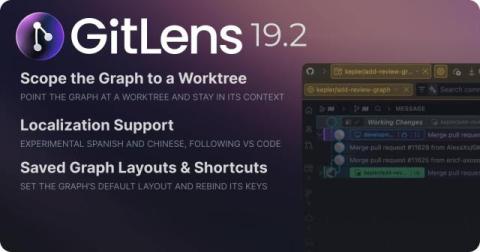
GitLens 19: The Commit Graph Reimagined for Parallel Development

Visualize branches and commits, manage parallel work and agents, and run your entire Git workflow from one view. AI changed how code gets written. It also changed what developers spend their time doing. Today, developers are reviewing AI-generated changes, coordinating parallel work across branches and worktrees, cleaning up commit history, resolving conflicts, and getting everything ready to merge.

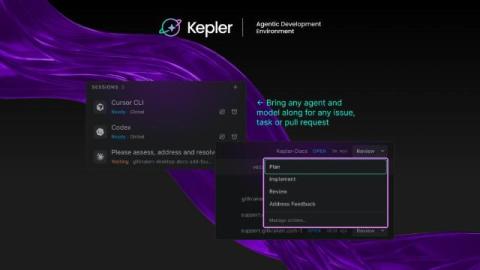
ACP: The Protocol Powering Kepler

The secret sauce that powers Agentic Development Environments (ADEs) like Kepler is a little thing called the Agent Client Protocol (ACP). In this context, Kepler is the Client and harnesses like Claude Code and the Codex CLI are the Agents. We’re going to go over some of the details about how it works, how we use it at GitKraken, and how the protocol may be changing for the better.

An 80% AI Adoption Rate Is Like an 80% Gym Membership Rate. It Doesn't Prove Anyone Got Stronger.

Leadership has stopped asking whether your team is using AI. They’re asking what you’re delivering with it. That’s a harder question, because most of the numbers teams have been reporting, adoption rate, seats activated, prompts run, don’t actually answer it.

Every AI Agent You Add Leaves Something Behind to Clean Up

Adding a second AI agent to a project feels like doubling your output. In practice, it usually means doubling your bookkeeping too. Every agent needs its own worktree so it can work without touching the branch someone else, human or otherwise, is using. Multiply that by five agents across three repos, and the isolation that made parallel work possible starts generating its own kind of work: which worktree goes with which branch, which ones are stale, which upstream nobody remembers creating.

Open Models Are Closing the Gap

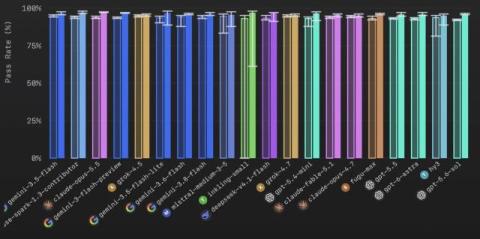
The frontier models have led the pack for a while now. It seems like the big players of Anthropic and OpenAI keep leapfrogging each other by a couple points in benchmark scores every other month. But, a trend we are starting to see is that open weight models are improving by leaps and bounds. They don’t hold the lead and probably won’t for a while, but the fact that open models are scaring the leaders is something to think about.