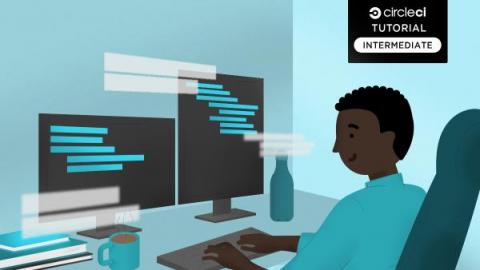
The CircleCI visual config editor (VCE) is now generally available as an open source project. Development teams can now create and modify CircleCI config files in a visual drag-and-drop, low-code environment. The VCE is a node-graph editor that you can use to modify CircleCI config elements and generate config files. It provides a frictionless way to build CI/CD pipelines and interact with CircleCI’s platform in an efficient, user-friendly visual interface.
This is the second tutorial in a two-part series. You can also learn how to automate AWS Lambda function deployments to AWS CDK.
This is one of a two-part series. You can also learn how to automate the deployment of FeathersJS apps to Heroku. In the software development lifecycle, testing offers benefits that reach far beyond the code itself. Testing assures all parties (developers, clients, project managers, etc) that, while the application may not be completely bug-free, it does what is expected, as expected.
Testing is a vital part of the mobile app development process. Your team can use testing to evaluate the quality, security, and reliability of mobile apps before releasing them to your users. Users who expect their applications to be highly performant and intuitive. There are two ways DevOps teams can perform testing for mobile apps: on-premise (also called self-hosted) or in the cloud. But which of these is the best option for your team?
When you build a cloud-based application, you can choose to deploy the resources using the GUI (Graphical User Interface) or CLI (Command Line Interface) provided by the cloud provider. This approach can work well with just a handful of resources, but as the complexity of your application increases, it can become difficult to manage the infrastructure manually.
When creating an application, developers often rely on many different tools, programs, and people. This collection of agents and actors involved in the software development lifecycle (SDLC) is called the software supply chain. The software supply chain refers to anything that touches or influences applications during development, production, and deployment — including developers, dependencies, network interfaces, and DevOps practices.
Web and browser technology continues to advance, narrowing the gap between the performance of web and native applications. Features that were once exclusive to native applications can be implemented in web applications. This is due in part to the emergence of progressive web applications (PWAs). Web applications can now be installed, receive push notifications, and even work offline.