Operations | Monitoring | ITSM | DevOps | Cloud

Dash Panel Discussion: What Users Really Want

Measuring user experience is typically done by tracking metrics like latency and purchase frequency. But these metrics can often obscure real user sentiment. In this panel session moderated by Miranda Kapin, you can learn about better ways to uncover how users are truly experiencing your application and methods for improving their engagement.
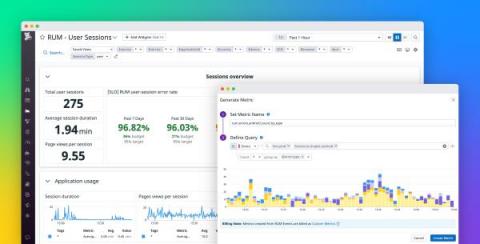
Generate RUM-based metrics to track historical trends in customer experience

Datadog Real User Monitoring (RUM) provides end-to-end visibility into the user experience and performance of your browser and mobile applications. RUM allows you to capture and retain complete user sessions for 30 days. This means you can pinpoint bugs, prioritize issues, and determine fixes with data collected across an entire quarter.

Building a Multi-Tenant Insurance Platform

In 2020, CoverWallet—a multi-tenant insurance platform—was acquired by Aon, which led to a rapid expansion in both the size and global presence of its engineering organization. In his talk, CoverWallet’s Hylke Alons walks through the changes that were necessary to meet their platform's new expectations, including improving growth and scalability while ensuring reliability, automating security, and reducing maintenance. He also discusses some best practices for scaling up engineering and product teams to handle demand in a complex and highly regulated industry like insurance.

Stress test your Kubernetes application with Speedscale's offering in the Datadog Marketplace

Properly testing a service’s APIs to ensure that it can handle production traffic presents many challenges for engineers—SREs need to guarantee the resiliency of their application, while developers must ensure that their features perform well at any given scale. Speedscale is a testing framework built for Kubernetes applications that enables you to load test with real-world production scenarios by replaying actual API traffic that your application has experienced.

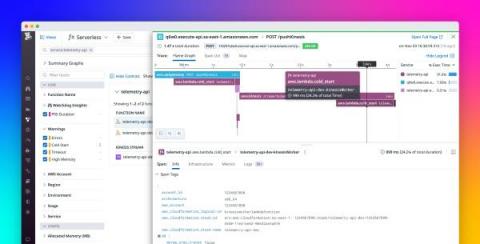
Expanded Datadog Lambda extension capabilities with the AWS Lambda Telemetry API

In 2021, we partnered with AWS to develop the Datadog Lambda extension which provides a simple, cost-effective way for teams to collect traces, logs, custom metrics, and enhanced metrics from Lambda functions and submit them to Datadog.

A practical guide to capturing production traffic with eBPF

Monitoring HTTP sessions offers a potentially powerful way to gain visibility into your web servers, but in practice, doing so can be complex and resource-intensive. Extended Berkeley Packet Filter (eBPF) technology allows you to overcome these challenges, giving you a simple and efficient way to process application-layer traffic for your troubleshooting needs.

Deploying OpenTelemetry Organizationally: From Proof of Concept to In-Production at Scale

Observability involves telling a coherent story about an entire system. Over the years, video streaming service Pluto TV has had to navigate many storytellers in terms of observability vendors, tools, and formats before settling on OpenTelemetry to analyze and compare features across its many destination platforms. During this presentation, you'll see how Bharathi Ramachandran—Engineering Manager at Pluto TV—used OpenTelemetry to implement his initial proof of concept and get his entire organization shipping observability data at scale.

Changing Perspectives: A Deep Dive into the Security Posture of 600+ Real-World AWS Environments

Earlier this year, Datadog released the “State of AWS Security” study, which examined real-world data from more than 600 organizations and AWS accounts to understand the security posture of global AWS users who also leverage the Datadog Cloud Security Platform. Join Datadog’s Christophe Tafani-Dereeper and Andrew Krug as they explore some important insights from this study, such as the top ways organizations are breached on AWS and how tooling like Datadog Cloud Security Posture Management can help.

Auditing Your Automation's Access: Using More Automation

Between CI/CD pipelines, container orchestrators, and developer debugging tools, more and more automation is needed to scale your systems. But how do you know if that automation is accessing the right systems at the right time? And how do you ensure that your automation is safe from exploits by unauthorized users?

I've Made a Huge Mistake: Implementing Agile on Infrastructure Teams

Bad planning methods can damage team morale and prevent teams from improving the systems they maintain. In this talk, Sam Handler from Shopify explains how his attempts to fix poor infrastructure planning processes through Agile methods failed. Drawing from this experience, he offers several principles that can help infrastructure teams improve the way they work.