Operations | Monitoring | ITSM | DevOps | Cloud

How easy is it to deploy a FastAPI Web App to Aiven Runtime?

For years Aiven has been an incredibly easy way to deploy your favorite open source databases... Now we're working to make it easier to deploy Apps too! Chapters AIVEN DATA PLATFORM The Aiven Platform is more than a collection of open source services for streaming, storing and analyzing data. The platform ensures that all services run reliably and securely in the clouds of your choice, are observable, and can easily be integrated with each other and with external 3rd party tools.
AWS saw the value of expanding support for Google Cloud #aiven #opensource #shorts

Tony’s first RFC landed in AWS’s OpenSearch migration project, a few people inside AWS asked, “Who’s this guy?” The first AWS maintainer he spoke with saw the value add Google Cloud support, and next, build the Terraform solution their customers want. AWS got what its customers asked for. Aiven customers benefited with being able to choose and so did anyone running OpenSearch on Google Cloud, even self-managed or with another vendor.

Predict Patch Compliance Before It's Too Late | Ivanti

Stop guessing whether you'll meet patch compliance deadlines. Every day, IT and security teams race against the clock to remediate vulnerabilities and meet compliance targets. The problem? Most organizations don't know they're going to miss those targets until it's already too late. Predictive Remediation from Ivanti changes that by giving you authoritative data on your deployment history and a forward-looking view of your compliance trajectory against SLAs.

12 Confluence Cloud Setups Every DevOps Team Needs

DevOps teams generate documentation constantly, and most of it is written under pressure. Runbooks are typed at 2 a.m. during an incident. Architecture notes appear in chat threads. Release steps live in one engineer's head until that engineer goes on holiday. The research backs up the cost. DORA, the program behind the Accelerate State of DevOps reports, measures documentation quality with eight metrics covering clarity, findability and reliability, and found it drives the implementation of every single technical practice it studied.

RISE with SAP Shared Responsibility: Security Monitoring Guide

Avantra handles RISE with SAP security monitoring for the layer that stays with the customer under the RISE with SAP shared responsibility model. SAP operates the infrastructure, network, database, and operating system, while the customer still owns application configuration, users and authorizations, custom code, and requesting the SAP Security Notes that SAP doesn’t apply proactively.

SAP Security Patch and Vulnerability Monitoring Guide

Avantra monitors SAP security patch status across entire landscapes, checking each newly published SAP HotNews note against every managed system and tracking which systems still need it. It covers the patch side of SAP vulnerability management, which is a different job from code-level vulnerability scanning.

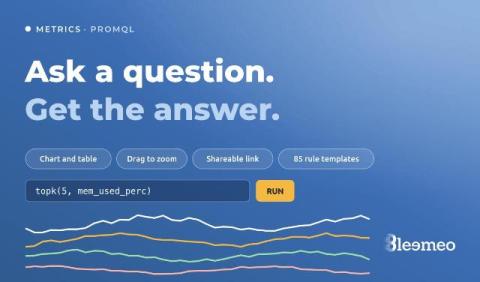
When you have a question, not a dashboard to build: the Metrics explorer and recording rule templates

Dashboards answer the questions you knew you would ask. The other kind — “is it only this server, or all of them?”, “since when?”, “what does memory look like on the ones that restarted?” — used to start with creating a dashboard, adding a widget, picking a metric, and deleting the whole thing afterwards. Bleemeo now has a page for those questions. It is called Metrics: you write a PromQL query, run it, and look at the answer.

VictoriaLogs Has Now a Long Term Support (LTS) Release

VictoriaLogs now runs in production everywhere, and many teams running it have told us the same thing: everyone wants new features, but it’s hard to keep upgrading their logging backend every few weeks. They want the mix of stability and up-to-date security that only LTS releases can satisfy. We’re happy to announce the first Long Term Support (LTS) release of VictoriaLogs: v1.52.1. This is the start of a new v1.52.x LTS line.

Dismantling Datadog's Monolith with Agentic AI - Developer Track

AI can write code, but how does it do with a large, organically built codebase with years of development? Datadog’s monolithic webapp had significant scale and support challenges, so we knew the time had come to break it up. But when the code has been written, revised and tweaked so many times (as we keep adding new features and capabilities), by so many teams, that becomes much harder.