Operations | Monitoring | ITSM | DevOps | Cloud

Using authentication decorators in Flask

Has your team worked on an API and wanted (somehow) to implement more powerful security features? If you are dissatisfied with the level of security in an API, there are solutions for improving it! In this tutorial, I will lead you through the process of creating API endpoints that are secured with authentication tokens. Using these endpoints, we will be able to make requests to the Flask API only for authenticated users.

Optimize your resource classes with the CircleCI resources dashboard

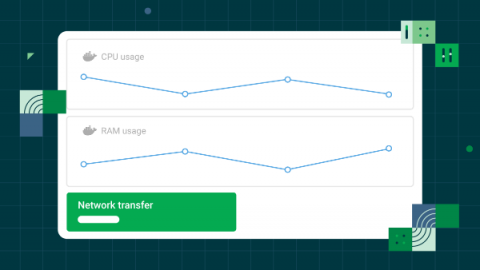
CircleCI cloud offers over 20 resource classes (varying CPU and RAM) across multiple execution environments. Finding the best resource class size for your job — not too big and not too small — can sometimes be a challenge. But now, you can view CPU and RAM usage for Docker executors within the UI. The new dashboard, found in the new Resources tab on the job details page, displays the CPU and RAM, for all parallel runs in your Docker job.

Let's talk engineering; building software by building community

For the past three years, I have been running and facilitating a community where folks from all levels and departments at CircleCI can come together to discuss diverse topics. We call it “Let’s Talk Engineering.” Some of the topics we’ve covered have been technical in nature, while others have focused more on leadership: how different teams operate, personal growth, and writing to name a few. Let’s Talk Engineering celebrates interdisciplinarity and multidisciplinarity.

IP ranges - better security for more confidence

Today, we’re announcing that one of our most popular feature requests, IP ranges, is now generally available for CircleCI Cloud customers. This feature enables teams to meet compliance requirements by limiting the connections that communicate with their infrastructure. No company wants to give the entire internet access to their artifact repositories or other sensitive environments. With IP ranges, teams are able to open up their IP-based firewalls to only CircleCI.

Running regular security scans with scheduled pipelines

Security is a vital part of application development, yet it may be neglected until an attacker takes advantage of a vulnerability in the system. The consequences of a security breach can damage an application’s integrity as well as a company’s reputation and revenue. Software architects and engineers need to pay special attention to securing the systems they work on.

API performance testing with k6

Performance testing measures how well systems perform when subjected to various workloads. The key qualities being tested are stability and responsiveness. Performance testing shows the robustness and reliability of systems in general, along with the specific potential breaking points. In this tutorial, you will use k6 to do load testing on a simple API hosted on the Heroku platform. Then you will learn how to interpret the results obtained from the tests.

Testing locally with CircleCI runners

Many development teams start their CI/CD journey with a local build box (or six) that run their tests. In several mobile teams I worked on, for example, we had a few Mac Mini boxes with physical devices plugged in that we used for running local UI and unit tests. Eventually we migrated to a cloud-based solution, which brought us much greater stability and many new features. But moving to the cloud also meant our local hardware was obsolete.

Build private CircleCI orbs on any organization

Using CircleCI’s orbs is a great way to share CI/CD configuration across projects. Public orbs work well for wide adoption, but private orbs have been helpful for organizations needing to share common internal configuration in a secure, non-public way. Private orbs work only within the organization that publishes them. We recently opened up private orbs access to all CircleCI customers, including those on the Free plan.

Getting started with continuous integration for Nest.js APIs

Nest.js is a scalable and efficient server-side Node.js framework built with TypeScript. Nest.js was created to provide a structural design pattern to the Node.js development world. It was inspired by Angular.js and uses Express.js under the hood. Nest.js is compatible with the majority of Express.js middleware. In this tutorial, I will lead you through building a RESTful API with Nest.js. The tutorial will familiarize you with the fundamental principles and building blocks of Nest.js.

CircleCI now offers the most generous free plan anywhere

TL;DR: Our free plan is newly re-launched, giving teams access to more build minutes, larger resource classes, and our most popular features formerly only available on paid plans. Visit our sign up page to get started today. Our mission has always been to help teams deliver software faster and better, and today marks a huge milestone for development teams everywhere: we are proud to now offer the most feature-rich and most generous free tier for CI/CD on the market.