Get More Out of OpenTelemetry With Honeycomb's Latest Updates
Just a few short months ago, we talked about a bunch of updates to Honeycomb’s support for OpenTelemetry. To the surprise of no one, we’ve got more updates to share!
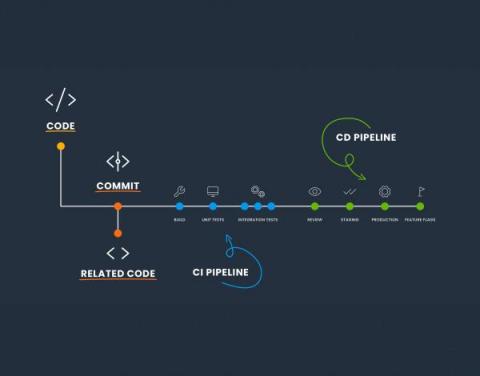
You know that old adage about not seeing the forest for the trees? In our Authors’ Cut series, we’ve been looking at the trees that make up the observability forest—among them, CI/CD pipelines, Service Level Objectives, and the Core Analysis Loop. Today, I'd like to step back and take a look at how observability fits into the broader technical and cultural shifts in technology: cloud-native, DevOps, and SRE.
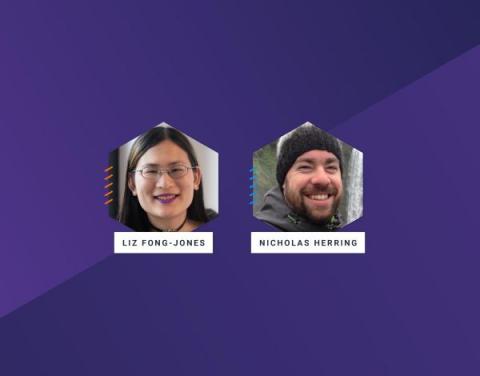
I am thrilled to share with you that Honeycomb now has a Field CTO: our very own Liz Fong-Jones. When Liz joined us, nearly four years ago, she was our first developer advocate and principal engineer. It was a bit of a risky move—on both our parts.
At Honeycomb, the datastore and query systems that we manage are sociotechnical in nature, meaning the move to observability requires a sociological shift as much as it does a technical one. We've covered the technical part in several prior discussions for our Authors’ Cut series, but the social aspect is a little squishier. Namely: How do you solve the people and culture problems that are necessary in making the shift to adopt observability practices?
Today, I’d like to tell you about a new community-contributed integration that connects Honeycomb to your ServiceNow workflows. My new integration reimagines what’s possible when connecting observability tools with ITSM systems. This post explains how it works and how to get started with it.
Another month has come to a close, so I’m back again to take you through what’s new and noteworthy from the month of September. If you missed last month’s blog, this will be a monthly recurring series to keep you posted with the latest and greatest at Honeycomb. There’s a ton to cover, so I’ll dispense with the preamble and dive right in.
Two years ago I wrote a piece in The New Stack about the Future of Ops Careers. Towards the end, I wrote: I described the second category as “operations engineering minus the infrastructure,” dedicated to evaluating and assembling a production stack of third-party platform providers, enabling software engineers to self-serve their services and own their own code in production. I said: That second category I was describing now has a name. We call those teams "platform engineering.".
Comprehensive observability starts with good instrumentation. OpenTelemetry, aka “OTel,” sets a unified standard, enabling you to instrument your applications once, then send that data to any backend observability tool of choice. OpenTelemetry’s standard for generating and ingesting telemetry data is slated to become as ubiquitous as current container orchestration standards. Because of this, development teams are increasingly adopting OpenTelemetry to their applications.
Complex, distributed software systems are chatty things. Because there are many components interoperating amongst themselves and with things outside their bounds like users, those components and the systems themselves emit many information signals. It’s the goal of monitoring, logging, and observability (o11y) tools to help the systems’ “stewards,” those developers and operators tasked with maintaining and supporting them, make sense of those signals.
We’re adopting Honeycomb with our teams, however, we’re trying to set up Availability Checks for our services like we’ve done with previous providers. How do we do that in Honeycomb?