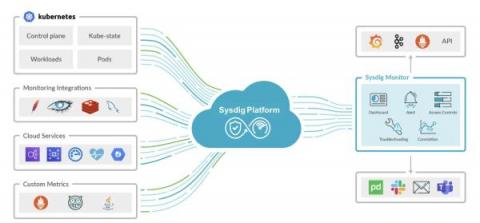
The way businesses obtain infrastructure has changed dramatically over the past decade, as Infrastructure-as-a-Service (IaaS) has taken the place of self-hosted infrastructure for most IT deployments. At the same time, it has become common to build complex infrastructures that blend components from multiple providers – such as two or more public clouds (aka. multicloud infrastructure) or mixing an on-prem data center and a public cloud (aka. hybrid cloud infrastructure).
Are you looking to build a Gatsby website with markdown? This post will take you through the Gatsby development process, from creating the project to deploying it in production on AWS. We will talk about the benefits of using Gatsby and show how to set up markdown, configure Gatsby, and build an article for your demo website.
Sentry recently launched Performance Issues, a feature to help developers discover and fix common performance problems in their projects. We tested this project internally and with alpha users, so when we finally turned it on for all Sentry users, we were delighted (and dismayed) to hear from Carlton Gibson, current Django fellow and great human, that Sentry had.
Don’t forget, it’s the hardware that makes the cloud The main issues we see with clients and cloud implementations are that it can be very difficult for them to get a clear idea of what it is they are buying and how well it will perform. While the consumption and billing models are clear, it can still be hard to know how much you will pay each month. But what is hard is predicting exactly what the level of performance you will get. Some of this is inevitable.
As the rapid digital transformation has put a lot of pressure on IT organizations to be more proactive and agile, DevOps principles and practices have been an invaluable resource. However, to remain at the top of the game, organizations need an even stronger solution. So, what’s the answer? AIOPs (artificial intelligence for IT operations), of course!