Operations | Monitoring | ITSM | DevOps | Cloud

Gremlin app for Dynatrace - DEMO!

Dynatrace gives engineering teams deep, real-time visibility into every service they run. That visibility is the foundation of every effective reliability practice, and it's exactly the foundation Gremlin is built to extend. Once you can see how your distributed systems behave today, the next step is knowing how they'll behave under failure tomorrow—and to do it before those failures happen.
AI finds vulnerabilities faster than you can fix them

If an AI model can find a vulnerability for an attacker, the same model should help a defender fix it. In practice, the math doesn't favor the defender. This quick video digs into the real asymmetry AI-powered vulnerability discovery creates: The goal is models acting as tools for defenders, not weapons for attackers. Getting there means rethinking how much ground your team can realistically cover on its own.

What Does Puppet 9 Mean for You?

Get ready for Puppet 9 with this clear guide on module compatibility, upgrade paths, and critical OS platform changes. Learn how to prepare your infrastructure for the upcoming migration to Puppet Core 9 and PE 2026. This webinar provides a technical breakdown of what is changing in the new release and what remains consistent for current users. It is designed for system administrators and module authors who need to plan their transition effectively. We cover the specific steps required to ensure your existing modules function correctly within the new environment.

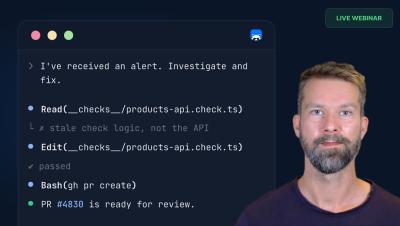
Let AI Agents Own Your Monitoring: From Setup to Auto-Fixed Incidents

Your AI agent can set up your monitoring, report on platform health, and open a PR to fix a failing check. All this works automatically. In this webinar, Stefan (Developer Relations at Checkly, Google Developer Expert & Playwright Ambassador) demonstrates how Monitoring as Code makes Checkly agent-friendly by design, and walks through three agentic workflows live.

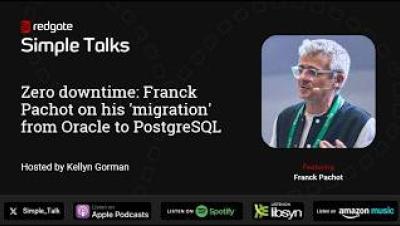
Zero downtime: Franck Pachot on his 'migration' from Oracle to PostgreSQL | The Simple Talk Podcast

We catch up with Franck Pachot, a longtime database community figure who has moved through Oracle, CERN, Yugabyte, MongoDB and, most recently, the PostgreSQL team at Microsoft. Hear stories from Franck's varied career, learn what makes technical content genuinely useful to developers, how PostgreSQL's MVCC and extension model differs from Oracle's, and what's really going on with Microsoft's growing family of PostgreSQL offerings (Flexible Server, Horizon DB, and DocumentDB).

Redgate Flyway Enterprise MCP for AI and Agentic Workflows

Huxley Kendell demonstrates how Redgate Flyway Enterprise enables safe, governed, and deterministic integration of AI and agentic workflows into database development processes. Local Workflows Huxley showcases how developers can use an MCP server to interact with Flyway Enterprise through local AI tools like Claude. Agentic Workflows The demo presents a future-ready, fully agentic workflow designed for enterprise automation through an autonomous copilot.

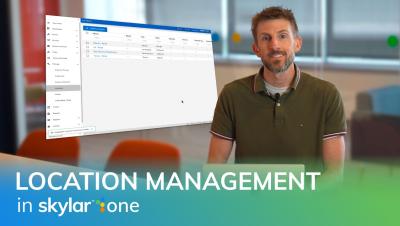
Location Management in Skylar One

Location Management in Skylar One gives IT teams a centralized way to create, maintain, and organize location data, building the foundation for trusted geographic visibility across distributed environments. In this walkthrough, Brian Harding, Director of Product Management at ScienceLogic, demonstrates how to create and manage locations in Skylar One. See how teams can define locations, associate them with the right organizations, and use accurate latitude and longitude data to establish the geographic context needed for devices, services, and Geographic Maps.

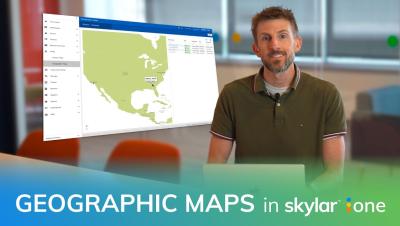
Geographic Maps in Skylar One

Geographic Maps in Skylar One give IT teams a faster, more intuitive way to understand infrastructure and service health across distributed environments. In this walkthrough, Brian Harding, Director of Product Management at ScienceLogic, demonstrates how to create and configure a Geographic Map in Skylar One. See how to create locations, align devices and services, use filters to control what appears on a map, and visualize infrastructure health based on real-world locations.

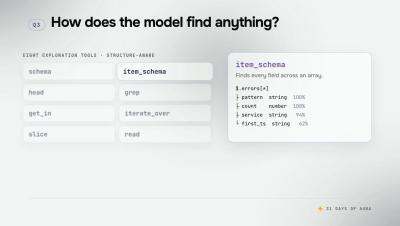
Why AURA Scratchpad Is Rad: Bound the AI SRE Agent Context Window

A big tool result does not have to be a big context cost. AURA moves it to disk and hands the model a pointer plus the tools to navigate what is there. A large MCP tool result can consume or overflow an agent's context window, and on a third-party server you do not control how much comes back. Scratchpad breaks the link between how big a tool result is and how much context it costs: the full output goes to disk, and only the slice the model asks for ever enters the window. Errors always pass through inline, so the model can react to them.