Introduction to the Logstash Grok
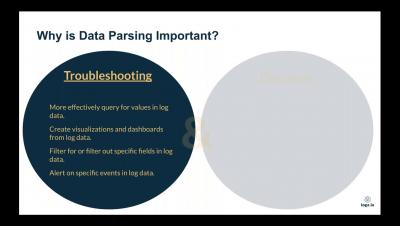
Watch this webinar to learn best practices for parsing your log data with logstash grok filters. You’ll see some real life examples of how these configurations can add a ton of value.


The latest News and Information on Log Management, Log Analytics and related technologies.
If there is one thing that all Software as a Service (SaaS) companies understand, it is the pressure of “being fired”, as SPS Commerce’s Andy Domeier puts it. SPS Commerce is a cloud-based supply chain management software company and Andy is a Senior Director of Technology there - so he knows what he is talking about. Part of the core value of buying SaaS solutions is that you are typically buying a subscription, which means that you can also cancel that subscription at some point.
Informatica is an enterprise cloud data management company, which means they have a full suite of products that focus on data integration and data management. In fact, they are a leader in 5 different magic quadrants including Enterprise Integration Platform as a Service, Data Quality Tools, and Master Data Management Solutions.
Event correlation tools are a fundamental instrument in your toolbox to detect threats from all sources across your organization in real time. A wise use of the right event correlation techniques through log management and analysis is the cornerstone of any reliable security information and event management (SIEM) strategy – a strategy that focuses on prevention rather than reaction.
At Logz.io we’re always keeping tabs on the latest and greatest in the DevOps world, for the benefit of both our own engineering team and for the teams that use our products. As the days get shorter and colder, we decided to look back on 2019 and share the top trends we’ve seen in 2019 so far. The acronym “CALMS” (Culture, Automation, Lean, Measurement, Sharing) is a helpful way to structure thinking about DevOps tools and techniques.
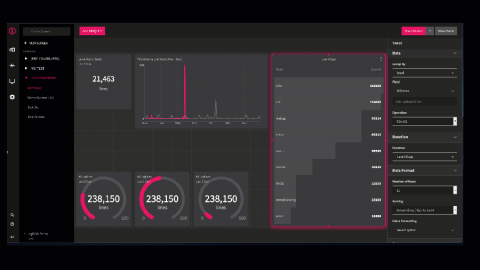
Screens display a series of widgets that you can use to share across your organization. Widgets can display your log activity, from the number of logs ingested in the last 4 hours, to a line graph comparing today’s logs to yesterday’s logs. You can control the data you want to display by creating a “Screen” with a combination of different widgets. Post your screen on a company monitor to provide your organization with a snapshot of your system’s activity.
Over the past few years, cloud computing has passed through its hype and early-adopter phases. Now we are hitting the peak of migration from on-premise to cloud-based infrastructure. Consequently, this transition and the advent of cloud computing has dramatically changed the way we think about security. Namely, the security paradigm has shifted towards a Zero Trust Security Model.