Operations | Monitoring | ITSM | DevOps | Cloud

Facade Pattern in Rails for Performance and Maintainability

In today’s post, we will be looking into a software design pattern called Facade. When I first adopted it, it felt a little bit awkward, but the more I used it in my Rails apps, the more I started to appreciate its usefulness. More importantly, it allowed me to test my code more thoroughly, to clean out my controllers, to reduce the logic within my views and to make me think more clearly about an application’s code’s overall structure.

Building a Rails App With Multiple Subdomains

In today’s post, we’ll learn how to build a Rails app that can support multiple subdomains. Let’s assume that we have a gaming website funkygames.co and we want to support multiple subdomains such as app.funkygames.co, api.funkygames.co, and dev.funkygames.co with a single Rails application. We want to ensure that proper authentication is performed for all subdomains and that there are no duplicate routes.

A Complete Guide to Rails Caching

Application performance is always a concern when building in the modern, competitive web and mobile space. At Scout, it’s why we created application performance monitoring tools in the first place. That said, there are steps you can take to build a more performant application. If you are using Ruby on Rails, caching might be one of the best tools on your belt to build a better application.

Performance Tuning a Rails App With AppOptics Dev Edition

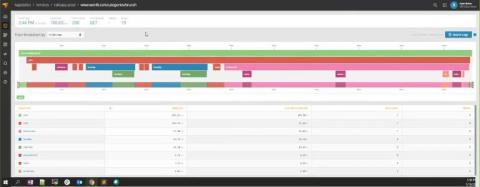
The other day I found myself trying to tune a Ruby on Rails app I had written as a side project. (The app lets me keep track of my favorite eateries and pubs. It’s searchable, includes multiple images, and has stored locations.) On past projects, I relied on SolarWinds® Papertrail™, path testing, a lot of trial and error, and a general feel to try to improve performance. This time I thought I would give SolarWinds AppOptics™ Dev Edition a try.