Operations | Monitoring | ITSM | DevOps | Cloud

How Catalog changes the game for long-term maintenance

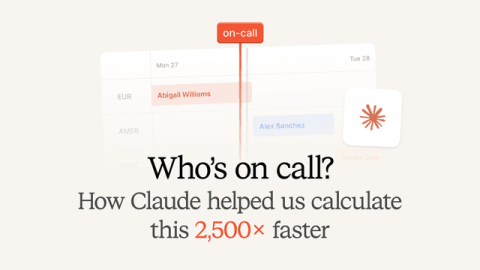
Every incident platform needs to know who owns what. Which team owns which service. Which backlog to send follow-ups to. Which escalation path to page when something breaks. The problem is that most platforms encode this ownership logic separately in every configuration: alert routing, workflows, ITSM ticket syncing, and more. Each one maintains its own copy of the same information, in its own format.

Beyond the pager: what to do when Opsgenie sunsets

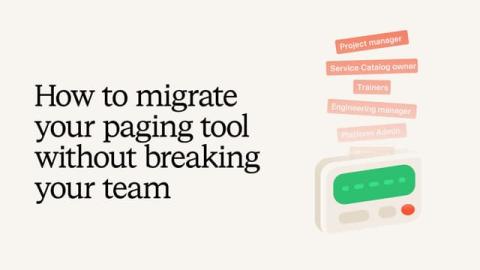
OpsGenie is going away in 2027, forcing a migration decision for thousands of teams. But this isn't just a tooling swap — it's a rare chance to upgrade how you respond to incidents. Because the real pain in incident response isn’t paging. It’s everything that happens after the alert: coordination, clarity, communication, ownership, and follow-through. Most teams solve this through heroics and tool-juggling across chat, tickets, and docs. That approach doesn't scale.

incident.io product showcase: Post-mortems

A full walkthrough of our completely rebuilt post-mortems experience. We cover AI-generated first drafts from your incident data, accuracy review, inline rewriting, a collaborative editor with live incident context, meeting notes with Scribe, and management tooling including dashboards, exports, and analytics. Post-mortems are included in incident.io Response. AI features and Scribe are available on Pro and Enterprise plans.

Win by Being Bold

Everyone your sales team is reaching out to is drowning in emails. The way to cut through isn't to send more of them. It's to get personal, get creative, and get bold. That's the philosophy baked into incident.io's sales culture: experiment constantly, celebrate the inputs as much as the wins, and never play it safe. This video gives you a real look at what it's like to be part of a sales team at one of the most exciting startups right now. There are many more wins to come, and we want the right people here for them.

The post-mortem problem

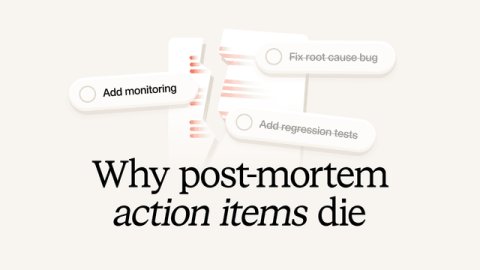
Post-mortems are one of the most consistently underperforming rituals in software engineering. Most teams do them. Most teams know theirs aren't working. And most teams reach for the same diagnosis: the templates are too long, nobody has time, and nobody reads them anyway. These aren't wrong observations. But they're symptoms, not causes. The actual problem is that somewhere along the way, the post-mortem stopped being a piece of communication and became a compliance artifact.

Keeping it boring: the incident.io technology stack

At incident.io we run a deliberately simple technology stack. Keeping things boring has allowed us to scale from a few hundred customers to several thousand, while having only two platform engineers. In this post I'll walk through the stack, explain some of the choices we've made, and touch on the challenges we're facing as we grow.

Secure access at the speed of incident response

Picture this: it's 2am, your pager goes off, and you're staring at a production database that's on fire. You know exactly what's wrong. You know exactly how to fix it. But you can't touch anything because you're waiting on someone to approve your access request. Meanwhile, your customers are down, your SLAs are bleeding out, and you're refreshing Slack hoping someone in security is awake to click "approve." This is the incident response tax that too many teams pay.

Response Team @ incident.io

When an incident hits, every second counts. The response team at incident.io builds the tools that make sure engineers aren't flying blind when it matters most. Sam, Tech Lead of the response team, takes us inside what it's really like to build the core of incident.io: the high technical bar, the art of prioritisation, and why there's no shortage of meaningful work to do. If you're an engineer who wants to work on something that genuinely makes other engineers' lives better, this one's for you.

AI Engineering at incident.io

Working on AI in incident management means there's no playbook. No million blogs. Just building at the forefront of what's possible with AI models.In this video, Martha, Product Engineer on our AI team, talks about what it's really like working with AI that helps engineers respond to incidents faster. This covers the shift from traditional engineering, learning the personalities of different AI models, and why you need to embrace constant change when new models drop all the time.

The post-mortem problem

Post-mortems are required, time-consuming, and widely disliked — but they’re also one of the biggest opportunities to improve reliability. In this webinar, we talked about how to run post-mortems that actually lead to learning and improvement. This covered why most post-mortems fall flat, how to structure them effectively, and walk through a real example to show what good looks like in practice. The goal: fewer wasted hours, better outcomes, and post-mortems that actually matter.