Operations | Monitoring | ITSM | DevOps | Cloud

Kimi API pricing in 2026: the K3 ladder, the August retirement, and what Moonshot really charges

Kimi API pricing, per million tokens: the flagship Kimi K3 costs $3 input and $15 output with a $0.30 cache-hit rate and 1M context. Kimi K2.6 and the coding-tuned K2.7 Code both run $0.95/$4.00 on 256K context. Kimi K2.5 and the legacy V1 family were retired August 31, 2026.
Shipped: Period-by-period costs in Explorer, no spreadsheet required

Finance teams reconcile cloud spend period by period. They want each month, week, or day in its own column, so they can scan across a row and see how a service or team changed over time. Explorer’s Aggregate view already answers “what changed and by how much.” But when the question is “what did we spend in June, July, and August, line by line,” that summary needs to become a grid.

Your AI Economics Pulse for October 2026

Across a same-store panel of 422 CloudZero customer organizations, AI reached 3.02% of the median company's cloud bill in September 2026, up 37 basis points from 2.66% in August, the largest monthly gain since we began tracking. The 75th percentile rose to 12.55%. The share of organizations spending at least $1,000 a month on AI barely moved, to 68.0%. Companies already spending drove the growth. Last month we called the median the least informative number in this report. September proved us wrong.

How to Manage Cloud Alerts: AWS, Azure, and Google Cloud

To manage cloud alerts effectively, define which conditions require immediate action, include useful incident context, and route critical notifications to the engineer currently on call. Add escalation rules for unanswered alerts and test the entire path from detection to response. This process applies whether your team uses AWS, Azure, Google Cloud, or several providers. Cloud monitoring can tell you something is wrong.

After-Hours IT Support: How to Build a Reliable On-Call Process

IT incidents do not follow a 9-to-5 schedule. A server can go down overnight, a critical application can fail on a weekend, or a high-priority support ticket can arrive when the IT team has already left the office. For IT teams, the challenge goes beyond simply providing after-hours IT support. They need a reliable on-call process that identifies the right responder, delivers critical alerts and ensures timely escalation when necessary.

Grape's error! Inside a Transaction Commits Your Data. Grape 4.1 Fixes It.

If your Grape API calls error! inside an Active Record transaction, the client gets an error response and the database keeps the writes. No exception, no warning, no rollback. The request looks failed from the outside and succeeded on the inside. A fix merged into Grape on October 3 and is queued for Grape 4.1.0. It’s not released yet, so every current Grape version still behaves this way. Here’s why it happens, how to check whether you’re affected, and what changes when 4.1 ships.

Analyze Data & Create Reports Across Databases with dbForge Edge

Analyze, visualize, and report database data across multiple database systems and cloud services with dbForge Edge. Write SQL queries or generate them with AI Assistant , analyze data with Pivot Tables, explore related records with Master-Detail Browser, visualize findings in charts, and create clear database reports — all within one multi-database solution.

Monitor Query Costs & Verify Database Changes Automatically - Harness Database DevOps + DBmarlin

See how Harness Database DevOps and DBmarlin work together to give you full visibility into query performance, automated deployment verification, and AI-assisted database change authoring - all inside your CI/CD pipeline. Most teams deploy database changes blind - they push a schema migration and hope nothing breaks. This demo shows a better way: DBmarlin surfaces the cost and performance of every query before and after a change, while Harness CV uses AI/ML to automatically detect regressions and block bad deployments from reaching production.

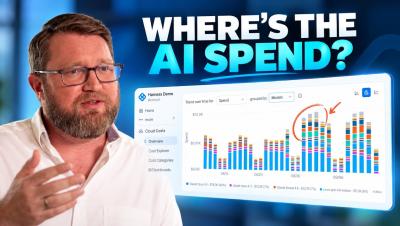
Where Is All Your AI Spend Going? | Harness AI Cost Management Demo

Where is all your AI spend going? From AI coding tools and LLM tokens to autonomous AI agents, understanding what you're spending and what you're getting in return is becoming increasingly important. In this demo, see how **Harness AI Cost Management** gives engineering teams visibility into AI spending across developers, models, and applications, helping organizations track costs, manage budgets, and measure AI ROI.

Harness Cost Management Agents Slash Cloud & AI Spending

Where is all your cloud and AI spending going? Harness Cost Management Agent helps companies track, understand, and reduce spending across cloud infrastructure, AI models, tokens, coding assistants, and AI agents. See who's driving costs, identify wasted spend, and get AI-powered recommendations to optimize your budget or automatically take action. It's not just about seeing your bill. It's about understanding what's driving it and how to reduce it.