Operations | Monitoring | ITSM | DevOps | Cloud

From Deployment to Confidence: Why Continuous Verification Is the Missing Piece in Modern CD Pipelines | Harness Blog

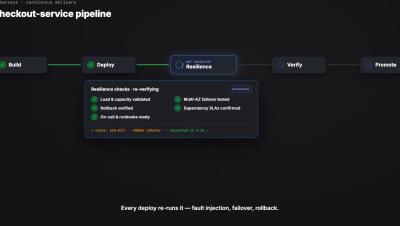
Modern engineering teams have become exceptionally good at shipping software quickly. With modern CI/CD platforms, what once required careful coordination, late-night release windows, and layers of approvals now happens almost invisibly. Pipelines execute in minutes. Releases flow continuously. The friction that once slowed everything down has been engineered away. From the outside, it looks like progress in its purest form. Automation removed bottlenecks. Cloud infrastructure removed limits.

Building for the Agentic Era: Engineering Excellence at Harness | Harness Blog

As AI agents become ubiquitous across the software development lifecycle, engineering teams must do more than adopt new tools; they must redesign how they build, verify, and operate software. This post distills the vision, priorities, and best practices that guide engineering excellence at Harness. Different products sit at the heart of the Harness platform.

What is Terragrunt and how does it simplify Terraform Workflows? | Harness Blog

Managing Terraform across dozens of AWS accounts becomes a maintenance nightmare fast. Teams end up copy-pasting the same backend configurations, provider blocks, and variable definitions hundreds of times. Terragrunt acts as an orchestrator above Terraform, eliminating this duplication through shared configuration inheritance and dependency management. When financial services teams manage 200+ microservices across multiple environments, these DRY patterns become essential for governance and consistency.

Chaos Engineering vs. Traditional Testing: What's the Difference? | Resilience Testing | Harness

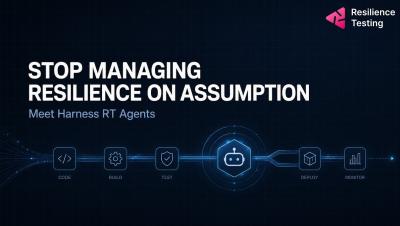
Stop treating system outages like surprises and start preparing for them. While traditional software testing is the bedrock of development, using unit, integration, and regression tests to verify that code meets specific requirements, it only accounts for what we expect to happen. Chaos Engineering takes a different approach by shifting the focus from bug prevention to system resilience. Instead of asking "does this work?", Chaos Engineering asks "how does this survive?" by injecting real-world turbulence like network latency or pod failures directly into production-like environments.

What Does Load Testing Measure? (Top 5 Performance Metrics) | Resilience Testing | Harness

Before you deploy, you need to know if your application can handle real-world traffic. In this video, we break down the 5 essential load testing metrics: Response Time (latency), Throughput (requests per second), Error Rates (system stability), Resource Utilization (CPU/Memory bottlenecks), and User Concurrency. Whether you're into Software Engineering, DevOps, or SRE, understanding these System Design fundamentals is the only way to prevent server crashes and ensure Software Scalability.

The Complete Guide to Feature Testing for Modern DevOps Teams | Harness Blog

Today’s teams are challenged to ship fast without breaking things. Traditional deployment strategies tie every code change directly to user exposure, forcing teams to trade velocity for safety and live with stressful, all-or-nothing releases. Feature testing changes that. In modern DevOps, you don't have to cross your fingers during a big-bang rollout.

7 Types of Load Testing Explained: Load, Stress, Spike, Soak & More | Harness

Discover the 7 most important types of load testing that every developer, DevOps engineer, and QA team should know in 2026. Whether you're building scalable applications, preparing for traffic surges, or ensuring system reliability, understanding these load testing types is essential for modern software performance testing. In this quick video from Harness, we break down.

A/B Testing Tools: The CTO's Guide to Safe and Measurable Change | Harness Blog

Picture this: It's 2 a.m. Your phone is buzzing. A new feature just went out to your entire user base, and conversion rates are tanking. Your on-call engineer is digging through logs, your Slack channels are on fire, and you’re left wondering, Why didn't we just test this first? Every CTO has a version of this story. And most of them have quietly vowed never to repeat it.

AI for Everything After Code: Ship Fast, Stay Safe

Recorded at @DevOpsLive Most teams have “done DevOps” and “built a platform,” but still wrestle with the same core problems: platforms that developers dodge, AI that accelerates coding while quietly degrading delivery performance, security and compliance that can’t keep up, cloud bills that keep climbing, and incident response that hasn’t caught up with cloud‑native complexity.

Why Release Management Is Broken and How to Fix It

Are you tired of slow, expensive, and ineffective Change Advisory Board (CAB) meetings? In this video, Eric Minick from Harness explores the evolution of release management and how to transition from traditional manual approvals to a streamlined, automated DevOps approach. What You'll Learn: Whether you are a release manager or a DevOps engineer, learn how to build a reliable audit trail while accelerating your software delivery.