Operations | Monitoring | ITSM | DevOps | Cloud

How to Scale Sandbox Environments with an Internal Developer Portal | Harness Blog

Here's a scenario that probably sounds familiar: a developer needs a sandbox environment to test something. They file a ticket. Then they wait. And wait. Maybe a day goes by, maybe three. Meanwhile, your platform team is buried in provisioning requests, and somewhere, someone has already spun up an unsanctioned workaround that bypasses every governance policy you've put in place. It's a lose-lose. Developers lose velocity, platform teams lose their sanity, and security gaps quietly multiply.

It's Time to Rethink Untrusted Code in Your Pipeline | Harness Blog

The catastrophic TeamPCP exploit in March 2026 demonstrated that "open execution" models, in which third-party code runs with full privileges, have made CI/CD pipelines a primary target for global credential harvesting. There are better architectures. On March 19th, the risks of running open execution pipelines — where what code runs in your CI/CD environment is largely uncontrolled — went from theoretical to catastrophic.

3 Biggest Myths of Chaos Engineering

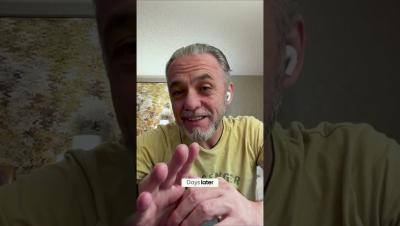
Are myths about chaos engineering preventing your team from building more resilient systems? In this video, Matt Schillerstrom, Director of Product Management at Harness and founding engineer of the chaos engineering program at Target.com, breaks down the three most common misconceptions about chaos engineering. Drawing from his experience building large-scale programs, Matt explains how to move past these myths to build confidence in your infrastructure.

Load Testing: An Essential Guide for 2026 | Harness Blog

This comprehensive guide covers the fundamentals of load testing, key differences from stress and performance testing, step-by-step execution methods, popular tools, and best practices to help teams build resilient systems with confidence. In today's always-on digital economy, a single slow page or unexpected crash during peak traffic can cost businesses thousands or even millions of dollars in lost revenue, damaged reputation, and frustrated customers.

What is Disaster Recovery Testing? Explained in 60 seconds | Resilience Testing | Harness

What happens when things suddenly break in your system? In this short video, we explain disaster recovery testing in simple terms. Learn why it matters, how it helps you stay prepared, and how you can make sure your system gets back up quickly when something goes wrong. Watch to understand the basics in under a minute.

Product Portfolio Management for New Paradigms - DevOps, AI, and Beyond - Job Task Analysis | Harness Blog

Taking a look back over the last ten years in enterprise technology, paradigm shifts are occurring more frequently. For example, the maturity of DevOps/Platform Engineering and Cloud Native infrastructure has occurred. The new frontier depending where you are in adoption is AI. As your adoption and maturity curve progress, operationalizing these paradigms become important.

Women's Day Panel: Navigating the Future of Engineering in the Age of AI

How is AI reshaping engineering—and what does it mean for the future of work? At our first GTA Boston Hub event of the year, we brought together engineering leaders from Boston Consulting Group and Athenahealth to dive into one of the most pressing topics today: the rise of generative AI. In this panel, we explore: Key takeaway: This isn’t “human vs AI”—it’s human augmented by AI. The real advantage lies in how we adapt, collaborate, and lead in this new era.

Build Numbers That Actually Make Sense: Branch-Scoped Sequence IDs in Harness CI | Harness Blog

You're tagging Docker images with build numbers. -Build is your latest production release on main. A developer pushes a hotfix to release-v2.1, that run becomes build. -Another merges to develop, build. A week later someone asks: "What build number are we on for production?" You check the registry. -You see,,, on main. The numbers in between? Scattered across feature branches that may never ship. Your build numbers have stopped telling a useful story.

AI Deployment in Production: Orchestrate LLMs, RAG, Agents | Harness Blog

For the past few years, the narrative around Artificial Intelligence has been dominated by what I like to call the "magic box" illusion. We assumed that deploying AI simply meant passing a user’s question through an API key to a Large Language Model (LLM) and waiting for a brilliant answer.

LiteLLM Compromise: Securing AI Pipelines from PyPI Supply Chain Attacks | Harness Blog

On March 24, 2026, the AI open-source ecosystem was impacted by a critical supply chain attack involving the widely used Python package LiteLLM. Attackers compromised the LiteLLM PyPI distribution pipeline and published malicious versions (notably in the 1.82.7-1.82.8 range), embedding a multi-stage payload designed to steal credentials and execute remote code.