Operations | Monitoring | ITSM | DevOps | Cloud

Improve network security with traffic filters on Elastic Cloud

Today we are pleased to announce new traffic management features for Elastic Cloud. Now you can configure IP filtering within your Elastic Cloud deployment on Amazon Web Services (AWS), Google Cloud, and Microsoft Azure. We are also announcing integration with AWS PrivateLink. These features help give you greater control over the network security layer of your Elastic workloads.

Practical security engineering: Stateful detection

Detection engineering at Elastic is both a set of reliable principles — or methodologies — and a collection of effective tools. In this series, we’ll share some of the foundational concepts that we’ve discovered over time to deliver resilient detection logic. In this blog post, we will share a concept we call stateful detection and explain why it's important for detection.

Introduction into Eland - DataFrames and Machine Learning backed by Elasticsearch

Introduction into Eland, a Python package to analyse, explore and manipulate Elasticsearch data. In this talk, Seth Larson introduces us to Eland. Eland is a Python Elasticsearch client for exploring and analyzing data residing in Elasticsearch with a familiar Pandas-compatible API.

macOS vs. Windows - What kernels tell you about security events: Part 2

This post continues this two-part blog series on further understanding the differences between macOS and Windows on the system level for effective endpoint security analysis. In Part 1, we covered process events. Here in Part 2, we’ll discuss file and network events. As with Part 1, my hope is to help cybersecurity professionals expand and enrich their experiences on a less familiar platform, ultimately helping them to be better prepared to face differences from past experiences.

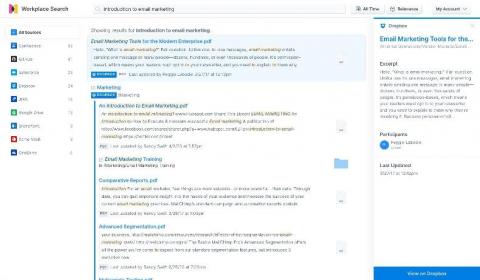
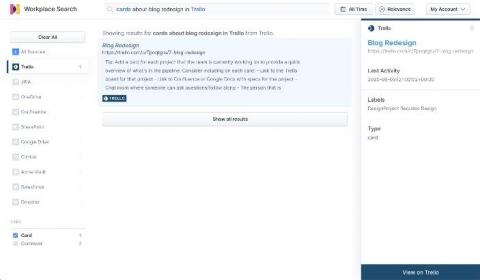
Elastic Workplace Search on Elastic Cloud: Enabling greater flexibility and speed

We recently announced that Elastic Enterprise Search — our combined solution of search products — is now available to deploy as a single solution on Elastic Cloud. While Elastic App Search has been available on Elastic Cloud since early 2020, this is a new and exciting deployment option for Elastic Workplace Search.

Enabling DevSecOps with the Elastic Stack

Software development and delivery is an ever-changing landscape. Writing software was once an art form all its own, where you could write and deploy machine code with singleness of purpose and no concern for things like connecting to other computers. But as the world and the variety of systems that software supports became more complex, so did the ecosystem supporting software development.

Machine learning in cybersecurity: Detecting DGA activity in network data

In Part 1 of this blog series, we took a look at how we could use Elastic Stack machine learning to train a supervised classification model to detect malicious domains. In this second part, we will see how we can use the model we trained to enrich network data with classifications at ingest time. This will be useful for anyone who wants to detect potential DGA activity in their packetbeat data.

Kubernetes observability tutorial: Metrics collection and analysis

This post is the second in our Kubernetes observability tutorial series, where we explore how you can monitor all aspects of your applications running in Kubernetes, including: We’ll cover using Elastic Observability to ingest and analyze container metrics in Kibana using the Metrics app and out-of-the-box dashboards.

Elasticsearch sniffing best practices: What, when, why, how

Elasticsearch powers search experiences for so many tools and apps used today, from operational analytics dashboards to maps showing the closest restaurants with patios so you can get out of the house. And in all of those implementations, the connection between application and cluster is made via an Elasticsearch client. Optimizing the connection between the client and the Elasticsearch cluster is extremely important for the end user’s experience.

Logstash and Maxmind - Not Just for GEOIP Anymore

The Logstash MaxMind filter enriches documents with GeoIP information from the open-source MaxMind database. But did you know that you can customize this filter to enrich documents with all kinds of other IP-related data? MaxMind uses its own database, which enables very fast searching based on IP address. Our experience is that this is the very best way to retrieve any type of IP-based information and store it upon ingestion without impacting performance.