In order to effectively manage and monitor your infrastructure, a web admin needs clear and transparent information about the types of activity going on within their servers. Server logs provide a documented footprint of all traffic and errors that occur within an environment. Apache has two main log files, Error Logs, and Access Logs.
Software is eating the world. How we spend time, what we eat, who we meet, how we communicate, where we travel... is defined by the code. Increasingly, software is calling the shots and telling humans what to do. With deep learning, this trend is just going to accelerate. The most powerful companies that used to rule the world with professional, skilled executives are becoming incumbents getting disrupted.
These days we spend a lot of time talking about modernizing our stack, modernizing our architectures, using new application components, modern application life cycles, etc. So, what is this all about and why do we spend so much time talking about it? First, there is a lot of self-serving vendor speak involved…starting with cloud providers and closely followed by open source commercialization shops and commercial ISVs (ourselves included) who have to spin the world in their own image.
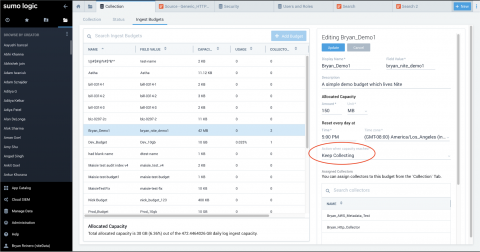
We are pleased to announce the release of Ingest Budgets, a new feature which enables our users to track and control how much data is ingested into Sumo Logic and avoid overages in environments where data ingestion can spike unexpectedly. With Ingest Budgets, users can create budgets with ingestion thresholds that either cap data ingestion to a daily limit or simply alert whenever the threshold is exceeded.
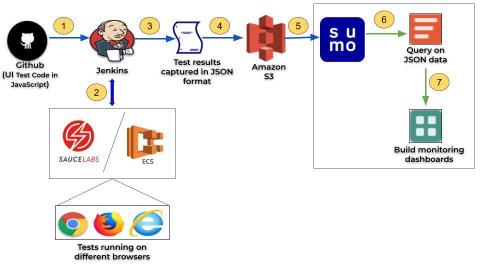
Site reliability engineers (SREs) rely on monitoring and analytics tools like Sumo Logic to guarantee uptime and performance of their applications and various components or services in production. The ability to visually monitor, automatically generate alerts and efficiently troubleshoot an issue in real time has become table stakes for any modern SRE team.
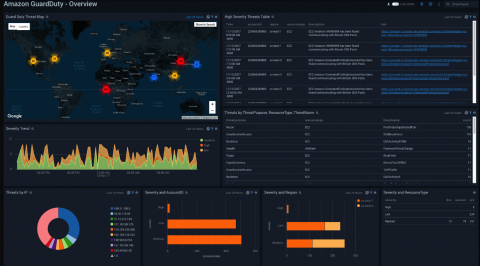
Cloud networks are popular targets for cybercriminals and organizations will inevitably face them. If you’ve ever administered a network of any type, you know that DDoS (distributed denial of service) attack attempts are really frequent, and there’s loads of malware out there too.
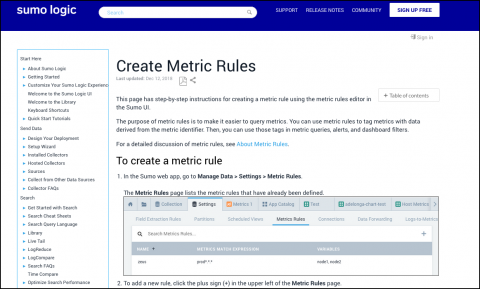
Democratizing data is one of our key product goals, and we share a similar approach to content. With over half a million words, our Sumo Logic documentation set is a substantial amount of information to provide to our users on the various ways you can collect logs and metrics, query that information, and turn it into meaningful visualizations. But the real trick is making sure that people can find what they need quickly.
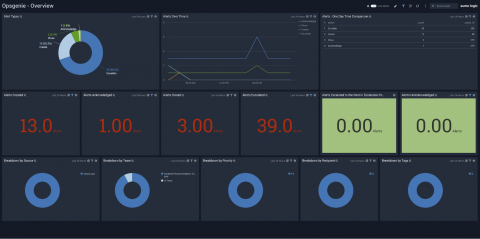
Dealing with IT outages and downtime is one of the biggest technical challenges of the modern era, costing North American businesses an estimated $700 billion per year. Today's world of interconnected cloud services and microservice architectures has created infinitely more opportunities for something to go wrong and disrupt service. When that happens, there's an urgent need to alert the right people or teams to fix things.
AWS is the most popular cloud platform for enterprises, and with good reason. Amazon has massive infrastructure around the world, and many years of experience with it. Whether your network is completely on the cloud or you have a hybrid network, using AWS saves your business a lot of money and physical space. You benefit from Amazon’s tremendous economies of scale, and a lot of the tedious work involved in maintaining a network can be delegated to them.