Operations | Monitoring | ITSM | DevOps | Cloud

The latest News and Information on API Development, Management, Monitoring, and related technologies.

Team-Based DLP: Give Each Group Its Own Redaction Rules

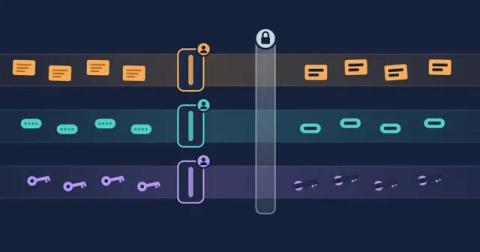
A shared Kubernetes cluster rarely belongs to one team. Payments runs checkout in one namespace, search runs search-api in another, and a risk team runs a scorer somewhere else. One Speedscale forwarder captures API traffic for all of them. Redacting that traffic before it leaves the cluster is what makes it safe to use for testing (the background is in The PII Testing Dilemma). Until now, that forwarder ran exactly one DLP rule. Every team that needed a field redacted had to edit the same JSON document.
Moving Alert and Email-to-Ticket Mail off SMTP AUTH to Microsoft Graph API

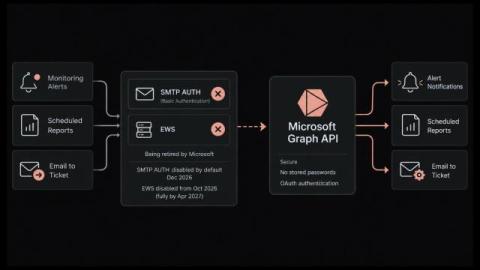
Every monitoring alert, scheduled report, and email to ticket conversion in your stack depends on a mailbox. Most monitoring and helpdesk management tools still reach that mailbox the old way. They log in with a username and password over SMTP or EWS. Exchange Online is closing both doors on a published schedule. The tools that fail will fail silently. In this blog, you will: By the end, you can run the change on a weekday afternoon and know nothing went quiet.

Use AI and traffic replay to test AI-generated code

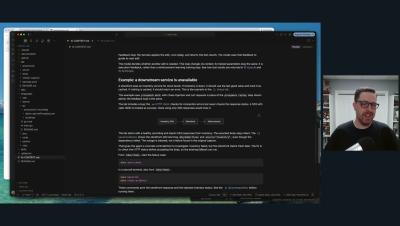
When I ask an AI agent to change code, I also want it to run the application and test what it changed. Asking it to write some tests is a start. But if it invents the expected responses from the same assumptions it used to write the code, those tests can miss the same mistake. Traffic replay gives the agent something concrete to test against: requests and responses captured from a working application.

Why Mocks Fail at Scale #softwareengineering #devops #softwaretesting #api #aicoding

Mocking for testing starts off easy, but once you scale to multiple teams and AI agents, handcrafted mocks become a serious form of technical liability. Instead of treating mocking as an individual software engineering task, shift your mindset to treat it as a platform engineering task focused on automation and continuously refreshed modern data. Watch to see how adopting technologies like traffic replay to simulate realistic backend sandboxes can transform your modern testing workflow!

eBPF: Correlating rustls Plaintext to TCP Connections Without a File Descriptor

In Under the Hood with Go TLS and eBPF, I left socket tracking as an exercise for later. The example used bpf_get_current_pid_tgid() and explicitly excluded concurrent TLS operations. Capturing plaintext was enough for that post. With rustls, later arrived: I could read the HTTP payload perfectly and still attach it to the wrong TCP connection. That’s a frustratingly convincing failure. The request looks right. The response looks right. The application works.

Are SOC 2's days numbered? #SOC2 #CodeReview #AICoding #DevOps #SoftwareDevelopment #LLM #SpeedScale

As companies adopt AI coding tools, code review processes are breaking down. Traditional compliance methods are slowing teams down, but human engineers aren't going to spend hours reading AI-generated low-level code forever. How will SOC 2 adapt to the era of AI-driven development? Drop your thoughts in the comments and subscribe for more tech insights! Learn more: speedscale.com.

Five Ways to Use OpenTelemetry Beyond Observability

OpenTelemetry graduated from the CNCF in May 2026 as, in the foundation’s own words, the de facto observability standard. The JavaScript API package alone did 1.36 billion downloads in twelve months. That kind of win has a side effect nobody plans for. Once a wire format is everywhere, has a receiver for every source, a transform language, and an agent your platform team already operates, people start putting things on it that have nothing to do with knowing whether a service is healthy.

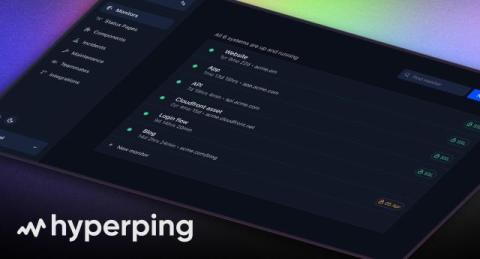
Best API Monitoring Tools in 2026 [31 Analyzed]

The best API monitoring tools are Hyperping for HTTP and API checks with on-call and status pages, Checkly for API monitoring as code, Postman Monitors for teams that already keep collections in Postman, Datadog for connecting failed checks to traces and logs, Grafana Cloud for teams using k6, Better Stack for checks inside a broader incident workflow, and UptimeRobot for inexpensive availability checks.

From Handwritten Mocks to proxymock: The Complete Loop

Handwritten mocks are cheap one at a time. This series built enough of them to show how quickly that stops being true. Nine posts took one package notifier from a function returning "delayed" to a captured response from a real carrier. Along the way, we hand-authored canned successes, failure cases, a spy, a stateful fake, an HTTP server, response fixtures, and contract-drift tests in four languages.