Continuous Full-Stack End-to-end Azure Monitoring
In this webinar, we discuss end-to-end performance monitoring for all your Azure resources, setting up alerts, and analyzing trends with customizable dashboards.


The latest News and Information on Cloud monitoring, security and related technologies.
A key metric for measuring how well you handle system outages is the Mean Time To Recovery or MTTR. It’s basically the time it takes you to restore the system to working conditions. The shorter the MTTR, the faster problems are resolved and the less impact your users would experience and hopefully the more likely they will continue to use your product! And the first step to resolve any problem is to know that you have a problem.
How much does your Kubernetes service cost to operate? This seems like a simple question, right? It’s one thing to say how much your Kubernetes cluster itself costs to operate — that, after all, is a group of real servers, associated with a specific number.
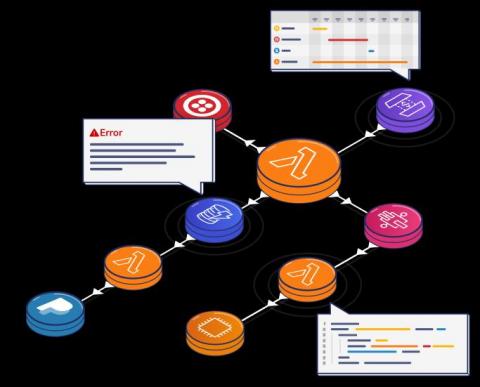
We’ve noticed interesting threads floating around the internet asking how would you explain serverless to a toddler. As it happens, we just turned three years old and to mark the occasion, we decided to take up the challenge and wrote a bedtime story, for serverless enthusiasts of all ages, about how serverless came to be, from the very beginning. It is a magical tale of the ingenious, life-changing journey that got us to a new universe called Serverless.
Data centers and cloud are undoubtedly an integral part of business continuity strategies of companies to run operations with a distributed workforce amid the lockdown successfully. The Covid-19 outbreak and the resultant work from home policies have pushed businesses across globe increase in adoption of cloud infrastructure services up by 80%. Managing the entire suite of enterprise technology is not easy for businesses that have several vendors on board.
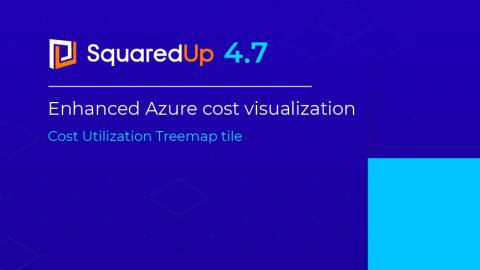
One of the big problems we hear about with Azure is managing costs and understanding where the money is being spent. In fact, when we launched SquaredUp for Azure back in 2019, the ability to visualize costs quickly became one of the most popular features. It helped our customers (and ourselves, too) get a grip on Azure costs – by making it easy to identify under-utilized resources and take the appropriate action to reduce costs.
We’ve heard from customers about how important it is to be able to reliably operate your applications and infrastructure running on Google Cloud. In particular, observability is critical to reliable operations. To help you quickly gain insight into your Google Cloud environment, we’ve added 21 new features to Cloud Operations, the observability suite we launched earlier this year, which gives you access to all our operations capabilities directly from the Google Cloud Console.