The latest News and Information on Containers, Kubernetes, Docker and related technologies.
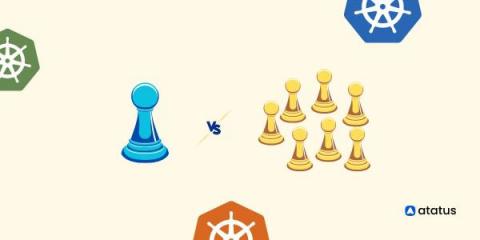
As Kubernetes continues its ascent as a leading container orchestration platform, it's common for users to encounter a perplexing choice between two prominent workload controllers: StatefulSets and Deployments. Despite both controllers being instrumental in managing high-availability workloads, they diverge significantly in terms of features and use cases. Grasping these distinctions is pivotal for fine-tuning the performance and scalability of your Kubernetes infrastructure.
Welcome to the world of Kubernetes - a powerful container orchestration platform. Before we dive deep into the concepts of Kubernetes, let's grasp the concept of containers - a lightweight, and isolated units that package applications along with their dependencies, ensuring seamless deployment and portability. In this blog, you will witness Kubernetes incredible abilities. It can handle the ups and downs of your applications, ensuring they scale seamlessly, even when facing tough challenges.
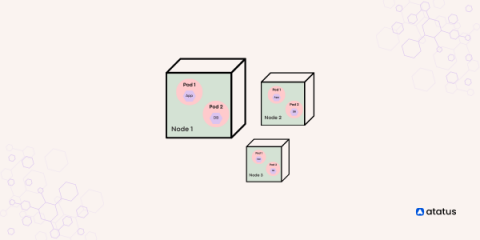
Kubernetes serves as a robust tool for managing and orchestrating applications across multiple computers. These computers are referred to as 'nodes.' Picture nodes as fundamental units in the ecosystem of your applications. Every node possesses its own computing resources, encompassing memory, processing capabilities, and storage capacity. Your apps are hosted and run by nodes. They give your apps the room and resources they need to work.
In recent years, the landscape of application development has experienced a paradigm shift, largely driven by the rise of containerization and microservices architectures. Amid this transformation, Express.js has emerged as a dynamic and versatile framework that stands as a one-stop shop for crafting robust web applications. Its popularity owes much to its minimalist approach, allowing developers to swiftly build APIs and web applications with ease.
Kubernetes has revolutionized how modern applications are deployed, managed, and scaled. As the container orchestration platform of choice, Kubernetes provides a dynamic and highly efficient environment for running containerized applications. At the heart of this ecosystem lies the intricate relationship between Kubernetes and the applications residing within its clusters. Applications within Kubernetes clusters are arranged through Pods, which are managed and scaled by various controllers.
In the ever-evolving landscape of modern software development and deployment, Kubernetes has emerged as a prominent solution to manage and orchestrate applications. This technology has redefined how applications are deployed and maintained, offering a flexible and efficient framework that abstracts the underlying infrastructure complexities. In Kubernetes, you define how network traffic should be routed to different services and pods.