Operations | Monitoring | ITSM | DevOps | Cloud

The latest News and Information on DevOps, CI/CD, Automation and related technologies.

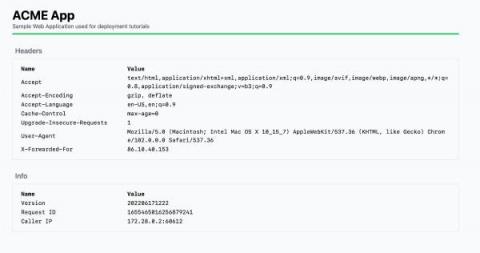
Your First Shipa Canary Deployment(s)

Lineage to the saying “canary in a coal mine”, the canary deployment/release methodology is an incremental release focused on safety. If the canary does not pass, the deployment does not continue or is rolled back. Taking a jog down memory lane, like Kubernetes the Hard Way, a few years ago a canary deployment in Kubernetes was quite the undertaking.

5 Simple Steps To Migrate From Heroku to AWS

While Heroku is ideal for startups because it provides tremendous simplicity and time-saving; Still, when your application starts growing and its architecture becomes complex, challenges related to DevOps, data security, and scalability begin to jump in. That’s where AWS takes over to overcome these limitations. In this article, we will walk you through exactly how to migrate your applications from Heroku to AWS in 5 simple steps with Qovery.

Calling all Reliability Practitioners: Participate in the 2022 SRE Survey

For the past four years, Catchpoint and various partners have been running a yearly SRE Survey. This year, Blameless is excited to partner with Catchpoint for the fifth annual survey. We want to hear from you if you are in a DevOps or SRE role or even if you work on reliability with some other title or role. There are tremendous, valuable learnings when we listen closely to practitioners.

Test Driving Machine Learning (ML) Anomaly Advisor

Netdata’s new Anomaly Advisor feature lets you quickly identify potentially anomalous metrics during a particular timeline of interest. This results in considerably speeding up your troubleshooting workflow and saving valuable time when faced with an outage or issue you are trying to root cause.

Monitoring Ubuntu 20.04 and Activating ML with Netdata

Sometimes a hat is just a hat, the truth is just the truth, and the clearly most popular example of a category is plain to see. In this case, Ubuntu is the most popular Linux distribution currently available. With the operating system’s superior popularity also comes an amazing amount of community support.

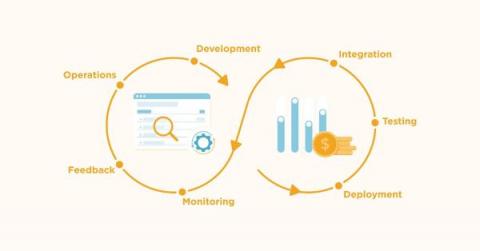
Continuous integration for a production-ready Dockerized Django application

Continuous integration has become a widely accepted practice for software projects. As more technologies are introduced in both continuous integration and software development, developers are looking for practical ways to benefit from them. Basic tutorials that cover toy examples are not always enough for real-life practitioners. As an actual user of Django, Docker, and CircleCI, this was certainly a pain point for me. That is why I wrote this tutorial.